 I was lucky enough to organise a Dr Check consult because I am in Australia, and also thinking of (maybe) cycling with him if things don't work out here at my clinic. I found him to be very helpful and patient with my questions, and although our discussion only lasted for 90 minutes - it began at 10.30pm his time and I wasn't the last one he had to speak to so he's clearly very very dedicated!
FSH: Cornell 2005 study said once someone's FSH has been above 15 (even once) then they must use donor eggs. He doesn't believe this and has had plenty of success encouraging women to try both naturally and with minimal stim cycles.
He said once you can achieve a 6-7-8 cell embryo then 65% of the time it should work if you are under 35 and if you are over 35 then 38-42% success (in the absence of other factors such as immune issues). A normal live pregnancy rate for someone 41-42 should be 20% per cycle (without distinguishing FSH as normal or abnormal).
WHY LOW DOSE STIM: He believes a high dose stim regime doesn't
fryour eggs, but it does somehow affect implantation and this leads to lower success rates.
HOW DOES LOW STIM WORK: their premise is you don't add FSH on high FSH, i.e. they like to use estrogen to bring down your FSH if it is elevated. After this, he likes to let your own FSH drive your follicle growth - so whether or not they add FSH, and how much, is driven by your own levels during your cycle.
ANTAGNOSIST VS AGONIST: although there are some published studies suggesting lower success rates for an antagonist cycle, he believes these were earlier studies and it is no longer the case. He believes there are benefits to an antagonist cycle in that it is easier.
ESTROGEN PRIMING PROTOCOL: while he was the first to introduce estrogen to lower FSH before a cycle, he's not in favour of the full EPP because it means a whole month (while you're 1st on BCPs) is lost, ie. it takes two months in total, and seems to be wasting time.
BACK TO BACK CYCLES: this is case by case, but generally where there is no risk of hyper stim, then it should be OK.
ANY DIFFERENCE IN DRUGS: in their experience (and no studies have been done to confirm), very high doses of GONAL F seem to have had the lowest pregnancy rates. However when you use low doses it doesn't seem to matter whether you are using Gonal F, Follitism or Bravelle - they are all essentially the same ... He does seem to prefer Cetrorelix vs Ganerlix (sp?) though for antagonist cycles.
WHEN IS ENOUGH, ENOUGH? So long as you are producing nice embryos then even if you are over 40 years old, you have a chance of success with your own eggs. On the other hand, he is a
pragmatist, so if you do want to increase your chances in any given cycle then donor eggs could boost success rates to 55%.
ABNORMAL FERTILISATION: I had a 3PN fertilisation on my last cycle and he suggested that it wasn't that my eggs are "suddenly old" but more likely a result of the protocol (very high stim of 900 Gonal F).
ICSI: in general he thinks
arranged marriages aren't that good,i.e. your eggs probably know how to pick out the best partner better than we do. But he can see why in my case (where I only get 1-3 eggs) it might seem better to use it - even psychologically, because if you don't use ICSI and then they don't fertilise well you'd be upset (although the same could even have happened with it).
ASSISTED HATCHING: should definitely be done for older than 40 years, as the embryo is avoiding vital enzymes available to it on its way down the fallopian tube.
DAY 2 OR 3 OR BLAST: on Day 2 you can't hatch embryos so, for this reason, DAY 3 is better. On the other hand, on Day 3 some think the uterus is more sensitive/cramps more, so ... the only real advantage to blast is if you have lots of eggs and don't have a good freezing program ... on the whole, the best environment for them is inside you not in the lab.
IMMUNOLOGY: His background is in reproductive immunology. If you have NK Cells in your uterus, then they can have a protein that acts as a progesterone blocking factor and this can cause implantation problems. He thinks the studies show LIT can work, but it is hugely expensive and he thinks something like Intralipids (a free fatty acid from soybeans which can bind to the NK cells and
deactivatesthem) works well too and is much cheaper ...
On the other hand, he doesn't think there are any tests which will reliably determine if you have got an NK Cell problem, so it would probably be best to just go off your history (ie, multiple IVF failures etc) ... Basically, he doesn't think anything else (like IVIG, etc) is needed and he wouldn't advocate them.
STERIODS: No good data to support the use of steriods (prednisone/dex) in IVF cycles. Doesn't think they are necessary.
HEPARIN: Only really helps people with implantation issues associated with APA. You can use it, but he doesn't really see a reason to do so.
MTHFR: I am homozygous, and he says it's quite common and heparin isn't really warranted - especially if you haven't got elevated homocysteine levels.
ASPIRIN: he hasn't seen any studies showing a difference in blood flow to the uterus or endometrial thickness based on aspirin. He thinks no aspirin (even low dose) is better.
VIAGRA/VAGINAL ESTROGEN: no good studies showing a significant difference in endometrial thickness with use of these, ie. wouldn't bother with them.
DHEA: he knows the Gleitcher (sp?) study showing higher implantation rates, but apparently it also showed higher miscarriage rates. Plus, he says it was a study on women around 30 years old where none of them had an FSH higher than 12. In other words, it's not convincing and he thinks pregnancy rates might be better without it.
ENDOMETRIOSIS: the studies are a little mixed. Some show no lower pregnancy rates in women with endo, some do. 2003 data showed IVF overcomes endo abnormalities, and 2005 studies showed endo does inhibit IVF success. If you have had multiple failed cycles without IVF then laparoscopy - a study showed 61% of women falling pregnant afterward vs 18% before. However, in my case where I have already had multiple laps for endo, he wouldn't advocate anymore.
HYDROSALPINX: I recently had my tubes removed due to hydrosalpinges (bilateral), and he said this is a good idea as plenty of research shows it impacts IVF success rates.
DIET/EXERCISE/SUPPLEMENTS: doesn't advocate anything special - regular healthy living etc ... don't have to give up exercise, sugar, meat or use only organic food etc etc etc.
GOLDEN EGG THEORY: the premise behind the high stim approach is the higher the better. The argument is our bodies are like a lottery - the higher the number of eggs achieved, the higher the probability of getting that
one golden eggfrom the (presumably) bad lot.
Dr. Check feels our body knows how to identify the best of the eggs in our basket, and kicks out this one each month - so even if you use a low stim approach and get only 2 embryos, it's not necessarily a worse outcome than someone using high stim and getting 9 embryos ...
Source: Check Consult - Summary of Info - (Long)
 |
| Photo credit: Catherine McDiarmid-Watt - All Rights Reserved |
Furthermore, the study would determine if delaying the maturation of the follicle by the use of ethinyl estradiol could improve the pregnancy rate.
Methods: The clinical and viable pregnancy rates of 32 infertile patients were matched to 32 similar controls who ovulated at or past day 11.
After 2-3 cycles of demonstrating ovulation before day 11 some patients were treated with ethinyl E[2], 20 mcg daily, from day 2 of the cycle until ovulation.
Results: Clinical and viable pregnancy rates for the normal ovulators (84.4%, 59.3%) were significantly higher than the rates for early ovulators (21.8%, 9.3%).
However, the pregnancy rates were 83.3% and 66.7% for the subset of early ovulators who were made to ovulate later by ethinyl E[2].
Conclusions: The short follicular phase per se reduces fecundity.
Journal Title
Clinical and experimental obstetrico and gynecology (Clin. exp. obstet. gynecol.) ISSN 0390-6663 Clinical and experimental obstetrics and gynecology
Source
2003, vol. 30, no4, pp. 195-196 [2 page(s) (article)]
Full article: Effect of short follicular phase with follicular maturity on conception outcome
TODAY'S BOOK SUGGESTION:
 Taking Charge of Your Fertility, 10th Anniversary Edition:
The Definitive Guide to Natural Birth Control, Pregnancy Achievement, and Reproductive Health
by Toni Weschler
-- For any woman unhappy with her current method of birth control; demoralized by her quest to have a baby, or experiencing confusing symptoms in her cycle, this book provides answers to all these questions, plus amazing insights into a woman's body.
Weschler thoroughly explains the empowering Fertility Awareness Method, which in only a couple minutes a day allows a woman to:
• Enjoy highly effective, scientifically proven birth control without chemicals or devices
• Maximize her chances of conception or expedite fertility treatment by identifying impediments to conception
• Increase the likelihood of choosing the gender of her baby
• Gain control of her sexual and gynecological health
 Paperback: 512 pages
Click to order/for more info: Taking Charge of Your Fertility
 |
| Photo credit: Grapefruit, Pomelo, by Victoria Rachitzky Hoch |
In a test tube study, quercetin was found to change estrogen metabolism in human liver cells in a way that increases estradiol levels and reduces other forms of estrogen.
This effect is likely to increase estrogen activity in the body.
However, the levels of quercetin used to alter estrogen metabolism in the test tube were much higher than levels found in the body after supplementing with quercetin.
There is evidence from test tube studies that another flavonoid in grapefruit juice, naringenin, also has estrogenic activity.
It has yet to be shown that dietary or supplemental levels of quercetin (or naringenin) could create a significant problem.
Grapefruit - In a small, controlled study of women with surgically removed ovaries, estradiol levels in the blood were significantly higher after estradiol was taken with grapefruit juice than when estradiol was taken alone. These results have been independently confirmed, suggesting that women taking oral estradiol should probably avoid grapefruit altogether.
Source: Interactions with Supplements
How the Drug/Grapefruit Interaction Works
Cytochrome P-450 is a group of enzymes located throughout the body, with the largest concentration found in the liver and the intestinal walls.
This family of enzymes is responsible for triggering the chemical reactions required to breakdown (metabolize) many different compounds, from food to drugs.
CYP3A4 is the most abundant member of the cytochrome P-450 enzyme family and is responsible for breaking down approximately 60% of the drugs we take.
Grapefruit — more specifically a compound in grapefruit that has yet to be identified — inhibits the activity of CYP3A4.
This means that when grapefruit or grapefruit juice is consumed, a compound within the grapefruit disrupts the CYP3A4 enzyme’s ability to metabolize a drug.
If a drug is not adequately metabolized, higher levels of the drug than intended may enter the bloodstream, which can lead to a potentially dangerous situation.
Grapefruit/drug interactions have been observed within a few hours after consuming grapefruit and may last for up to 24 hours.
As little as eight ounces or 250 milliliters can have an effect on the metabolism of some drugs.
Drugs that Interact with Grapefruit Juice:
Hormone replacement: cortisol, estradiol, methylprednisolone, progesterone, testosterone
Source: Is Grapefruit Dangerously Interacting With Your Medications?
TODAY'S BOOK SUGGESTION:
 The Fertile Kitchen Cookbook: Simple Recipes for Optimizing Your Fertility
by Cindy Bailey and Pierre Giauque
-- Are you one of the millions of couples desperately trying to conceive a baby? Are you aware that diet plays a critical role in fertility? Would you like to unlock the secrets to changing your diet and potentially increasing your chances of success?
Co-authors Cindy Bailey and Pierre Giauque -- when confronted with Cindy's medical prognosis of a two percent chance of conceiving a baby on her own -- unlocked those secrets to develop a fertility diet that four months later produced a viable pregnancy, and soon after a healthy baby.
The Fertile Kitchen™ Cookbook includes a variety of simple-to-make tasty dishes that make the diet easy to follow. In this cookbook, the authors share these flavorful recipes, along with the dietary guidelines that helped them succeed. Additional tips and even a section on cooking basics are included.
You will learn: The importance of diet in conception and pregnancy, what foods you can and cannot eat to enhance fertility, how to identify and shop for healthy ingredients and food items, how to prepare the nutritious and fertility-enhancing recipes included.
Paperback: 185 pagesClick to order/for more info: The Fertile Kitchen Cookbook
 |
Photo credit: Day 183/365 Doing nothing, by Daniel Oines |
Before this, she had lived through painful and heavy menstrual periods that lasted two weeks each time. Occasionally, Ms. Kyobe felt pain in her lower back. According to Dr. Rhona Mijumbi of International Air Ambulance, Ms. Kyobe exhibited
typical signs that one could be having enlarged fibroids.
Ms. Kyobe says that she had scanty knowledge of fibroids so there was no way she could suspect anything was wrong just because her periods were painful and heavy.
There are many women who have heavy or painful periods so I thought it was normal,she says. Dr. Mijumbi describes fibroids as non-cancerous swellings that grow in, on or around the walls of the uterus.
They could grow to as many as 20 or just one in varying sizes: they can be as small as a pea or as large as a basketball. The size, number, and location determine the severity and what effects they will have on their victims.
The most severe of effects are reproductive-related. They include birth by cesarean section, pregnancy loss, or failure to conceive in the first place. Frequent urination, a feeling of fullness in the lower abdomen, bleeding between periods and painful sexual intercourse could also indicate their presence. If they are growing on the outer lining of the uterine walls, the fibroids could cause the stomach to bulge.
In school, we were taught that fibroids affected women above the age of 35 but the reality in the field is that although it is prevalent (in that group), even women as young as 20 are diagnosed with them,says Dr. Mijumbi.
According to Dr. Charles Kiggundu, a gynecologist at Mulago Hospital, the prevalence rate for fibroids among Ugandan women is 30 percent. This accounts for three out of every 10 women in their 30s and four out of every 10 women in their 40s.
These are however based on the women that have been diagnosed, excluding those that have not gone for a medical check-up,he says.
Dr. Mijumbi says although over time, black women have been found to be more prone to developing fibroids than their white counterparts and 20 percent of sufferers worldwide are above 40 years of age. Kiggundu further explains that women who give birth late or have few children are more prone to fibroids.
This highlights the fact that the more affluent woman who takes a longer part of her life studying, making money and thus gives birth later in life to fewer children is at a higher risk of suffering from fibroids.
A hormone, estrogen favors the growth of fibroids while another called progesterone, which is produced in large amounts during pregnancy helps counter the possibility of developing fibroids. The earlier one bears children, therefore, the more progesterone they produce in their bodies which helps reduce their chances of developing fibroids,explains Dr. Kiggundu.
Having this in mind, many women have been driven to seek male companions in a rush to stop the hand of nature. Ms. Julia Nabunya says that when her 42-year-old aunt found out she had fibroids, she advised her to get a baby as soon as possible to avoid developing them as well.
Thus, at 22, Ms. Nabunya got pregnant, not caring much about who she picked for her child's father. Although early birth may reduce the risk of getting fibroids, there is no definite way to prevent them.
At best, the doctors advise medical examinations if any of the symptoms are experienced so that if fibroids are found early, one can plan on how to manage pregnancy, for example.
There are cases where we advise women to give birth early, but not to prevent them as some women think,Dr. Mijumbi says.
It is instead to ensure that one gives birth before the fibroids are too big to interfere with pregnancy.
In other cases, the fibroids are cut out if found severe and causing a lot of complications. At worst, the entire uterus is removed. According to doctors, fibroids are not known to have any direct effect on fertility but rather interfere with conception and pregnancy depending on their size and location.
If a fibroid is located at the entrance of the uterus or is blocking the fallopian tube(s) and is big enough to cause blockage, the sperm and ova might not get to meet and thus there is no fertilization,Dr. Paul Ssemugoma of International Medical Centre says.
Dr Mijumbi adds that in cases where a fibroid grows at the entrance to the womb, sex could be painful and delivery complicated resulting into birth by cesarean.
This is an example where we would need to operate and remove the fibroids but we can't operate when one is pregnant so we wait and see whether the foetus survives long enough to be delivered by caesarean then operate later before their next pregnancy,she explains.
The other instance where they are removed is when a swelling twists on its stalk. Fibroids have a stalk attached to the uterine wall. When one of the fibroid swellings begins to twist on its stalk, it causes unbearable pain. In that case, surgery to remove the fibroid has to be carried out.
Fibroid swellings thrive on estrogen - a female hormone produced by the ovaries which increases in the body during ovulation, menstruation, and pregnancy. They enlarge during heavy surges of the hormone in the body causing heavy and painful periods as they expand and contract.
Some patients are in fact injected with estrogen free hormones to hinder the development of the fibroids but this hormone impacts negatively on their fertility rates,says Dr. Mijumbi.
During pregnancy, they enlarge and if they are growing on the inner walls into the uterus, they compete for space with the fetus and usually win thus causing pregnancy losses or premature births. In most cases though, even when the doctors diagnose fibroids, the patients are left to live with them.
They are usually small and harmless save for the painful and heavy periods that most women can live with taking painkillers,says Dr Ssemugoma. Otherwise, the fibroids die out with menopause because the ovaries stop producing the estrogen they thrive on.
REAL LIFE EXPERIENCE:
It happened to me: Grace Areymo a 49-year-old mother of five shared her experiences with Winifred Agudo. When I was growing up, this complication was attributed to women who decided not to give birth. This was to change drastically in 1998 when my menstrual cycle became constantly heavier, more painful and would last two weeks.
I immediately sought medical help and fortunately, a female doctor attended to me. She recommended antibiotics for one week, thinking it was an infection. A week later, with no improvement, I was forced to see the doctor again, this time around however, it was a male doctor.
He prescribed pills for my pain for 30 days, thinking it was a hormonal imbalance. I was fooled into thinking the problem was gone when the bleeding stopped, but my next period was very painful so I was advised to see a gynecologist.
After several tests and sound scan in 2000, I was diagnosed with fibroids. My first reaction was shocked because society always had it that fibroids exist among Nuns and women who deliberately refuse to give birth, besides I am a mother. Since then my abdomen has gradually expanded so much, that it is uncomfortable.
People who knew me before keep wondering what happened and this has put pressure on me to look like did before. Thinking back now, remember this complication could have started when was in my 30s, though I ignored it then.
I have tried some preventive methods like herbal medicine, which has slightly reduced the size of my tummy. I am still hesitant to have an operation because of the side effects.
TODAY'S BOOK SUGGESTION:
 Pregnancy Miracle
by Lisa Olsen
-- A 279-page, instantly downloadable e-book presenting a 5-step, sure-fire, 100% guaranteed, clinically proven holistic and ancient Chinese system for permanently reversing your infertility and your partner's infertility disorders and getting pregnant quickly, naturally and safely within 2-4 months without drugs, dangerous surgeries, side effects, or expensive infertility treatments.
It's probably the most powerful infertility reversal system ever developed, and currently the best-selling e-book of its kind on the entire Web!
Here's what the author Lisa Olson had to say about her incredible program:
After 14 years of trial, error, and experimentation, I finally discovered the answer to infertility and developed a fool-proof system to getting pregnant the natural way - no drugs, or surgery necessary.
It took a lot of research to get to where I am today, to know exactly what works and what doesn't. Yes, after desperate trial and error, countless of useless treatments, disappointments, and agony, a simple holistic system opened the door to my new and much brighter life of motherhood.
I was also excited to see that my other infertility related symptoms had diminished. After years of waiting, I was finally free from Infertility! I have become a proud mother of two.
And now I'm finally revealing my secrets in this new 'encyclopedia' of pregnancy called, Pregnancy Miracle.
I will be your own personal coach, take you by the hand, and lead you through the lousy advice, hype and gimmicks... and directly to the sort of inner balance perfection that will end your battle with infertility forever and help you become a proud mother of your healthy children.

Click to order/for more info on this helpful program:
Pregnancy Miracle

Here are some of the functions of estrogen:
It stimulates the rebuilding of the uterine lining after menstruation; it helps cells in the Fallopian tubes, uterus and vagina divide and mature, and it helps to maintain the structure of the vagina and prevent atrophy.
It helps to form the shape of the breasts and hips during puberty; it helps to dilate blood vessels to carry more oxygen, and helps maintain a healthy cholesterol balance.
It also helps to maintain the blood supply and prevent atrophy in the urinary tract, and in the skeleton, it slows the rate of bone loss in the maturing body; in the brain, it helps to regulate the menstrual cycle and the body's thermostat.
When you are trying to get pregnant, there is a lot of talk of not having too high of Estrogen. One concern is that if your estrogen is over 75 pg/ml, it may mean your FSH is falsely low. Also mid-range levels of estrogen usually mean you will stim better for the RE.
And if your estrogen levels are very high, you could have a functional cyst, or even diminished ovarian reserve. All these mean that you may have harder time getting pregnant, or getting medical help.
Hormone to Test : Estradiol (E2)
Time to Test : Day 3
Normal Values : 25-75 pg/ml
What Value Means : Levels on the lower end tend to be better for stimulating. Abnormally high levels on day 3 may indicate existence of a functional cyst or diminished ovarian reserve.
Source: Maternity, Newborn, and Women's Health Nursing
But what if your estrogen is too low? Can that be a problem too? Yes, if your estrogen is low on day 3 of your cycle, and doesn't climb, it may take you a very long time to ovulate - or you may not even ovulate that cycle.
If you are having a long unending cycle, and your estrogen is still low, taking Prometrium or Provera to try to kick-start your next cycle, probably won't work.
If you can't maintain your estrogen levels in your luteal phase (from ovulation to menses), you may not be able to maintain a pregnancy. Your body needs both estrogen and progesterone to maintain a pregnancy.
Symptoms of Low Estrogen – Hot flashes, Shortness of breath, Night sweats, Sleep disorders, insomnia,Vaginal dryness, Dry hair/skin, Hair loss, Anxiety, Mood swings, Headaches, Depression, Short term memory loss, Frequent urinary tract infections, Heart palpitations, Frequent yeast infections, Vaginal shrinking, Loss of pubic hair, Painful intercourse, Inability to reach orgasm.
More:
Excessive exercise, low body weight, and eating disorders all adversely affect the pituitary gland, so that it doesn't send proper signals to the ovary. Women with these conditions are found to have very low levels of estrogen; they do not bleed in response to the progestin challenge. These women also do not release eggs and hence can not ovulate
Treatment for low estrogen levels.
In situations where a woman is not getting her periods normally (ovulating only four to six times a year) and the underlying cause can't be changed, estrogen-containing medications can help to induce ovulation. Natural remedies such as tofu, dong quai and yams have some estrogenic qualities, but there has not been much medical literature published on their benefits.
Certainly, it's crucial from a medical perspective to diagnose and treat low-estrogen levels. In addition, low estrogen levels can also have harmful emotional and psychological effects arising from late puberty or hampered fertility.
Source: Can Low Estrogen Levels Affect Ovulation?
Estrogen Maintains Pregnancy, Triggers Fetal Maturation:
With one hormone triggering the production of another, which in turn regulates the development and release of still others, and with cells changing structure and function as they mature, it’s a complicated story. Estrogen regulates progesterone, protecting pregnancy. It also kick-starts one of the major processes of fetal maturation. Without it, a fetus’s lungs, liver and other organs and tissues cannot mature.
Source: Estrogen Maintains Pregnancy, Triggers Fetal Maturation
Luteal Estrogen Supplementation In Pregnancies Associated With Low Serum Estradiol Concentrations
The frequency of preclinical pregnancy losses among the 102 women with hCG less than 5mIU/ml and E2 [100pg em=
emml=
ml](p=0.04) The increase in preclinical pregnancy loss rates among women not receiving luteal E2 resulted in a decrease in ongoing pregnancy rate (8%), compared to those receiving luteal E2 supplementation (31%) (p=0.002). Our results indicated that a subset of women losing pregnancies preclinically after GnRHa and FSH stimulation due to low luteal phase serum E2 level may benefit from luteal estrogen supplementation.
Source: Luteal estrogen supplementation in pregnancies associated with low serum estradiol concentrations
TODAY'S BOOK SUGGESTION:
Pregnancy Miracleby Lisa Olsen
-- A 279-page, instantly downloadable e-book presenting a 5-step, sure-fire, 100% guaranteed, clinically proven holistic and ancient Chinese system for permanently reversing your infertility and your partner's infertility disorders and getting pregnant quickly, naturally and safely within 2-4 months without drugs, dangerous surgeries, side effects, or expensive infertility treatments.
It's probably the most powerful infertility reversal system ever developed, and currently the best-selling e-book of its kind on the entire Web!
Here's what the author Lisa Olson had to say about her incredible program:
After 14 years of trial, error, and experimentation, I finally discovered the answer to infertility and developed a fool-proof system to getting pregnant the natural way - no drugs, or surgery necessary.
It took a lot of research to get to where I am today, to know exactly what works and what doesn't. Yes, after desperate trial and error, countless of useless treatments, disappointments, and agony, a simple holistic system opened the door to my new and much brighter life of motherhood.
I was also excited to see that my other infertility related symptoms had diminished. After years of waiting, I was finally free from Infertility! I have become a proud mother of two.
And now I'm finally revealing my secrets in this new 'encyclopedia' of pregnancy called, Pregnancy Miracle.
I will be your own personal coach, take you by the hand, and lead you through the lousy advice, hype and gimmicks... and directly to the sort of inner balance perfection that will end your battle with infertility forever and help you become a proud mother of your healthy children.
Click to order/for more info on this helpful program:
Pregnancy Miracle
 |
| Photo credit: MerckManuals.com |
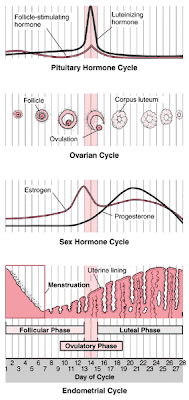
The menstrual cycle begins with menstrual bleeding (menstruation), which marks the first day of the follicular phase. Bleeding occurs when levels of estrogen and progesterone decrease, causing the thickened lining of the uterus (endometrium) to degenerate and be shed.
During the first half of this phase, the follicle-stimulating hormone level increases slightly, stimulating the development of several follicles. Each follicle contains an egg. Later, as the follicle-stimulating hormone level decreases, only one follicle continues to develop. This follicle produces estrogen.
The ovulatory phase begins with a surge in luteinizing hormone and follicle-stimulating hormone levels. Luteinizing hormone stimulates egg release (ovulation), which usually occurs 16 to 32 hours after the surge begins. The estrogen level peaks during the surge, and the progesterone level starts to increase.
During the luteal phase, levels of luteinizing hormone and follicle-stimulating hormone decrease. The ruptured follicle closes after releasing the egg and forms a corpus luteum, which produces progesterone. Later in this phase, the level of estrogen increases. Progesterone and estrogen cause the lining of the uterus to thicken more.
If the egg is not fertilized, the corpus luteum degenerates and no longer produces progesterone, the estrogen level decreases, the lining degenerates and is shed, and a new menstrual cycle begins.
Full article: MerckManuals.com
TODAY'S BOOK SUGGESTION:
 Perfect Hormone Balance for Fertility: The Ultimate Guide to Getting Pregnant
by Robert A. Greene M.D. and Laurie Tarkan
-- You have more than one hundred hormones circulating in your body – reproductive hormones, pregnancy hormones, sex hormones, metabolic hormones, and stress hormones – relaying messages from tissue to tissue, organ to organ, brain to body, and body to brain.
An equilibrium, a perfect balance in both partners, often determines your ability to conceive and support a pregnancy.
When your body is imbalanced, conception becomes very difficult. Luckily, hormonal imbalances can be corrected.
Drawing on the latest research in this field – which links underlying hormonal issues with infertility in men and women – Dr. Robert Greene, fertility specialist, ob/gyn, and reproductive endocrinologist, has created the Perfect Balance Fertility Program to help patients attain the optimal hormonal health that is necessary for conception.
Paperback: 352 pagesClick to order/for more info: Perfect Hormone Balance for Fertility
Start reading Perfect Hormone Balance for Fertility on your Kindle in under a minute!Don't have a Kindle? Get your Kindle here, or download a FREE Kindle Reading App.
 This discussion of the FSH test took me back to my menopausal transition, reminding me of some of the more horrifying absurdities foisted on me by the medicalization of menopause.
For example, when, at 48, heavy bleeding drove me to the doctor's office, I was given the test - as part of a general check up to see what was going on, or so I thought.
When the results came back the doctor told me they would have to perform an endometrial biopsy to
check for cancersince my FSH was
similar to a 29 year old's.Great.
So, then, after the (very painful for me) endo. biopsy showed nothing abnormal, they put me on ever-increasing doses of Provera to curtail the bleeding - which paradoxically increased to the point where I had a 70 day continuous bleed accompanied by cramps just this side of childbirth. Weak from exhaustion/anemia, I dragged myself in again to the same doctor who then gave me a second FSH test. (The fact that I was taking 20 mg of provera a day seemed immaterial to him!)
Studying the new FSH results, he then told me because of my unexplained POSTmenopausal bleeding I would require a more-or-less immediate hysterectomy. I should sign up right then and there because he was
very busyin October.
When I reacted with shock, since the biopsy, which was normal, was also based on the FSH results which suggested a NON post-meno. status, the doctor became very condescending. He indicated that this second blood test indicated that my FSH had gone from 9 to 51 (in a couple of months) and suggested that I was now, suddenly, POST menopausal. Then he began to hint darkly at the possibility that I may have cancer or at least fibroids because POST menopausal bleeding is one of the major signals of serious trouble. As angry as it makes me to recount this, it also strikes me the fact the doctor was an insensitive jerk helped in the long run since my distrust prompted me to check out things on my own.
Fortunately, by this time, I'd discovered alt.support.menopause and was reading Susan Love's book (Dr. Susan Love's Menopause and Hormone Book: Making Informed Choices) as well as a number of books on hysterectomy, including Cutler's. Looking back and checking my
bleeding journal,the entire situation reminds me eerily of childbirth, in which case, the fetal monitor, like the FSH test, is often the excuse for rampant, unnecessary intervention in a normal physiological process... an intervention which may, in the end, have dire consequences (such as the loss of perfectly healthy body parts). Incidentally, this doctor's remark to me when I fired him to get a second opinion, was
don't come crying to me when you get ovarian cancer.
PS. To the newbies: I am doing just fine now. I feel better than I have since my 30s and have not bled for two years. I take no drugs other than the occasional ibuprofen and a multi-vitamin when I think about it. My only
symptoms(hate that word) were a few hot flashes for several months as I made the adjustment to a drug free state. After what I went through, it was hard to go back to a doctor regularly though I do reluctantly get an annual PAP and mammogram.
Gail Gillespie
________________________________________
I'm shocked because I went to the doctor and he did a blood test called FSH which showed I'm menopausal even though I'm having regular periods. How can this be?
Hormonal blood tests are notoriously unreliable as hormone levels vary widely from day to day and even during the day. The FSH test is basically useless for determining what stage of the perimenopausal transition anybody is in.
Here are statements from the abstracts of three studies you can find on Medline. You might like to print out the whole abstracts and show them to your doctor if you want to convince him. Of course he *could* simply mean
perimenopausal- the two words are often used interchangeably (and confusingly!)
________________________________________
Extract from: Canadian Consensus on Menopause and Osteoporosis (Update Sept 12, 2002)
RECOMMENDATIONS:
A2 Healthcare providers should not use random serum markers of follicle-stimulating hormone (FSH), luteinizing hormone (LH), and estradiol E2 for the purpose of predicting menopause since clear markers for predicting menopause are yet to be identified. (II-2)
________________________________________
Pituitary-ovarian function in normal women during the menopausal transition.
Clin Endocrinol (Oxf) 1981 Mar;14(3):245-255
It is concluded that the appearance of high levels of FSH and LH is characteristic of the perimenopause and often precedes the sustained loss of sex hormone secretion by the ageing ovary. Postmenopausal biochemical parameters are no guarantee of the postmenopausal state.
________________________________________
Perimenopausal patterns of gonadotrophins, immunoreactive inhibin, oestradiol and progesterone.
Maturitas 1993 Dec;18(1):9-20
It was concluded that typical postmenopausal hormone patterns may occur at the time of entry into the normal menopausal transition, and in some women with anovulatory infertility, but may be completely and relatively abruptly reversible. Elevation of serum FSH into the postmenopausal range, with undetectable INH concentrations, does not provide reliable evidence that the menopause (or permanent ovarian failure) has occurred. INH contributes to elevations of serum FSH during the menopausal transition.
________________________________________
Diagnostic role of follicle-stimulating hormone (FSH) measurements during the menopausal transition--an analysis of FSH, oestradiol and inhibin.
Eur J Endocrinol 1994 Jan;130(1):38-42
It is concluded that FSH measurement is of little value, if any in the assessment of women during the menopausal transition because it cannot be interpreted reliably and because, apparently, ovulatory (and, presumably, potentially fertile) cycles may occur subsequent to the observation of postmenopausal FSH levels. Both oestradiol and inhibin are important negative feedback regulators of circulating FSH.
________________________________________
Extract from Menopause 1999;6:29¬35. © 1999, The North American Menopause Society
Among U.S. women aged 35¬60 years, median FSH and LH levels began to increase for women in their late 40s and reached a plateau for women in their early 50s.This study supports the previously reported association between serum FSH and age (i.e., serum FSH and LH levels increase with age) and smoking (i.e., current smoking was associated with an increased level of serum FSH). At FSH levels of = or greater than 15 IU/L or = or greater than 20 IU/L, 70 and 73% of women, respectively, were postmenopausal. Our study also found an interaction between age and oophorectomy. In addition, the present data suggest that women with only one ovary may have higher FSH levels than women with both of their ovaries.
________________________________________
So what are
normallevels for FSH?
Note the wide range and overlap:
Normal values:
male: 4 to 25 U/L
female:
premenopausal: 4 to 30 U/L
midcycle peak: 10 to 90 U/L
pregnancy: low to undetectable
postmenopausal: 40 to 250 U/L
Note: U/L = units per liter
TODAY'S BOOK SUGGESTION:
 50 Things You Can Do Today to Increase Your Fertility
by Sally Lewis and Nim Barnes
-- Practical advice and a holistic approach to help you conceive, including simple dietary and lifestyle changes and do it yourself complementary therapies.
In this accessible and informative guide, Sally Lewis explains how age, sexual infections, diet, excess weight, stress, and anxiety affect fertility.
Teaching how to discover the best time for conception; understand the link between body, mind, and fertility; and manage stress and relax to prevent anxiety, this is the ultimate guide to increasing the likelihood of conception at any age.
Paperback: 128 pagesClick to order/for more info: 50 Things You Can Do Today to Increase Your Fertility
Start reading 50 Things You Can Do Today to Increase Your Fertility on your Kindle in under a minute!Don't have a Kindle? Get your Kindle here, or download a FREE Kindle Reading App.

Low estrogen can give you constant headaches, little to no EWCM [egg-white cervical mucus] and long delayed ovulation and may prevent you from hanging onto a pregnancy.
The only time I don't have a headaches lately is as ovulation approaches and during the early part of my Luteal Phase (LP), before my estrogen starts to fall. During some natural monitor cycling, I had bloodwork that showed me when my estrogen was too low.
So I started a
campaignto get my estrogen back up. I used Soy Isoflavones 200mg/day from day 3-10. I got some estrogen cream from my hormone doctor, 5mg Biest, and I use it every single day. This cycle, up till ovulation, I used it once/day, but once I got a +OPK, I started using it 2x/day.
I also have been drinking pomegranate juice, eating oatmeal, carrots, green beans, peas, beets, potatoes, rice and rye bread. Pre-ovulation, I took Garlic (500mg) and Evening Primrose Oil (EPO) (1,000mg). All these seemed to help to increase your estrogen.
The previous two cycles, it took me till day 29 to ovulate. But starting this
campaignlast cycle, I had no headaches during my LP, and my estrogen stayed over 125 as of 7 days past ovulation (dpo).
Now this cycle, I ovulated on day 19, I had plenty of EWCM (egg-white cervical mucus), and so far the headaches are better. So I know it's helping, though it may need to be tweaked more.
Other foods that raise estrogen are alfalfa, anise, apples, barley, cherries, clover, fennel, hops, licorice, parsley, red beans, sage, sesame seeds, soybeans, sprouts, wheat and yeast. Herbs are: Black Cohosh, Blessed Thistle, Red Clover, Boron and Ginseng.
What I don't know is, if some foods work better than others? I haven't been able to find any sort of break-down, just a list of foods and herbs. So I just eat what foods I like, and hope for the best!
BTW, if you are taking Vitex or False Unicorn Root, they lower estrogen.
But I hope that give you some ideas.
Now, of course, the problem with estrogen and headaches is that they can be caused by low estrogen, high estrogen or even surges of estrogen. It really depends on how your hormones affect you.
This is why some women get a migraine at ovulation, from the surge of estrogen. There is also a second surge around implantation.
You really can't know for sure without blood work, and I recommend it highly before starting to play around with herbs, etc. If your estrogen is already high, it can make your problems much worse if you work to increase it, thinking it is low...
In fact, most women have too high of estrogen at this point. It will all depend on how you process your hormones, what's normal for you. Some women sail thru peri-menopause without a problem, and some suffer terribly. Most are somewhere in between. As everything else, it's just the luck of the draw!
From the article Is Too Low of Estrogen a Problem? :
Symptoms of Low Estrogen – Hot flashes, Shortness of breath, Night sweats, Sleep disorders, insomnia, Vaginal dryness, Dry hair/skin, Hair loss, Anxiety, Mood swings, Headaches, Depression, Short term memory loss, Frequent urinary tract infections, Heart palpitations, Frequent yeast infections, Vaginal shrinking, Loss of pubic hair, Painful intercourse, Inability to reach orgasm
TODAY'S BOOK SUGGESTION:
 The Garden of Fertility: A Guide to Charting Your Fertility Signals to Prevent or Achieve Pregnancy--Naturally--and to Gauge Your Reproductive Health
by Katie Singer
-- A guide to using fertility awareness - that is, reading fertility signals in order to prevent or achieve pregnancy.
Certified fertility educator Katie Singer explains how to observe and chart fertility cycles to determine when a woman is most fertile to increase chances of conception, or to exercise birth control naturally - a method that, when followed precisely, is as effective as the Pill.
Unlike other books on fertility awareness, The Garden of Fertility also describes how to use the charts to gauge gynecological health and offers non-medical options for strengthening reproductive wellness.
This book provides all the information women never learned in sex education class, but should have.
Paperback: 320 pagesClick to order/for more info: The Garden of Fertility
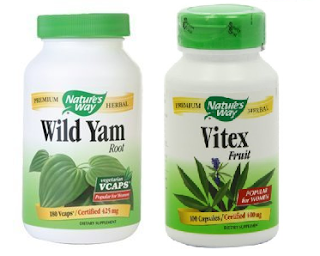
Herbs like Wild Yam and Vitex have been found to encourage ovulation, but only if you have the imbalance known as kidney yang vacuity (which includes luteal phase defect and low progesterone levels,) according to the pattern differentiation of Chinese medicine.
If you are deficient in yin energies (like estrogen), taking wild yam and/or vitex will make your scenario worse.
Yin deficiency symptoms include hot flashes, night sweats, dry eyes, mouth, vagina, lack of cervical mucus, etc.
Herbs like angelica and asparagi would be appropriate here to restore reproductive balance.
Yang deficiency symptoms include low back pain, cold hands and feet, nighttime urination, low libido, etc.
Herbs like Vitex and wild yam will help this scenario restore endocrine health.
TODAY'S BOOK SUGGESTION:

 Murphy Lives Here
by Dr. Merryl J. Polak
-- Initially apprehensive about becoming a mother, Emma mapped out her life plans steered by fulfillment of a happy marriage and career.
She thought she might one day feel ready and willing to add the role of mother to her life's responsibilities, but she had not quite figured out when that would occur.
When Emma's biological clock smacked her upside the head and she suddenly craved motherhood over every other aspect of life, she was stunned to discover that she could not get pregnant.
After a year of ovulation test kits and timed baby making under her belt, it was inevitable that other avenues needed exploration.
After pursuing every option, including adoption, Emma learned that becoming a parent was not as simple a process as she had always envisioned.
Paperback: 226 pagesClick to order/for more info: Murphy Lives Here
Start reading Murphy Lives Here on your Kindle in under a minute!Don't have a Kindle? Get your Kindle here, or download a FREE Kindle Reading App.

Washington DC (PRWEB) January 17, 2008 -- Men's sperm counts appear to be declining in some places around the world.
If the drop proves real -- and persists -- it could become a significant discontinuity with disruptions ranging from shifts in male-female dynamics to widespread population declines, explains senior analyst Kristin Nauth in a recent report by the Washington DC-based futurist research and consulting firm Social Technologies.
A British survey suggested 10% of men in the UK may suffer from low sperm counts, and in Australia, reports indicate one in 20 men is infertile. France, Denmark, and Germany have also found declines in sperm density,she reports.
What is triggering the apparent decline?
Scientists don't know, but obesity, increasing use of antidepressants, estrogen-like chemicals that are common in plastics and the environment, and diets rich in hormone-fed beef are among the possible culprits, Nauth says, adding:
The bottom line is that this trend points to the possibility of a major fertility crisis, with serious impacts for both consumers and businesses.
DRIVERS
Nauth says she could foresee this wildcard affecting foods, chemicals, pharmaceuticals, genetic services, childcare and education providers, adoption services, dating practices, and more.
It could also lead to explosive growth in the use of fertility treatments, or -- at the other extreme -- the possibility of women using genetics to conceive without men's participation,she adds.
Consider some of the factors that appear to be driving the trend:
• Endocrine disruptors - These natural and synthetic estrogens and estrogen-mimickers come from a variety of sources including birth-control effluent in municipal water supplies, plastic beverage bottles that contain estrogen-like bisphenol-A or phthalate esters, and chemicals like nonylphenol that are found in cleaners and pesticides.
• Consumption of hormone-fed beef - Consumption of hormone-fed beef four or more times per week by pregnant women may affect testicular development in their male offspring. For instance, men born in the US from 1949-1983 were found to have lower sperm counts if their mothers ate beef daily during pregnancy.
• Mobile phone use - Prolonged mobile phone use has also been fingered by several studies to impact sperm counts.
In one, men who talked more than four hours/ day on a mobile phone produced 40% fewer sperm than men who never used a mobile; in another, men experienced a 30% drop in sperm count when they carried a mobile in their pants pocket.
OBSTACLES
But Nauth says there are some factors that could reverse the trend, including:
• Organic foods - A broad move by consumers to organic foods and household products -- and/ or a move by producers to
greenermanufacturing -- could counter this wildcard.
• BPA-free containers - Compelling new evidence about the hazards of estrogen-mimicking chemicals might force companies to switch to containers made from corn-based or other innovative plastics that are free from BPA and other endocrine disruptors.
• Government intervention - Levels of endocrine disruptors in the environment may be too low to cause the kinds of damage that have been imputed to them.
The US Food and Drug Administration, and its counterparts in Japan and Germany, have stated they see no threat from BPA, for instance.
OUTCOMES
With any wildcard, the outcomes could go in a variety of directions, Nauth says.
At present, sperm count declines are geographically limited, but if chemical culprits are clearly identified in a particular area, regulators and industries around the world would likely ban, restrict, or replace the culpable chemicals with alternatives.
Additionally, though signs of rising infertility have been most pronounced in World 1, they could show up in any region -- especially those with significant chemical contamination.
That suggests infertility could begin to rise in China or other places where regulation is low and chemical use is rising rapidly,Nauth suggests.
If that happens, she believes the market for fertility treatments would surge in response to mass infertility. Consider these potential outcomes:
• Pharmaceutical manufacturers might divert substantial levels of R&D funding to fertility treatments.
In turn, other kinds of health issues could increase in the face of reduced funding,Nauth warns.
• Services could arise to provide
fertility certificationsto men in the marriage market.
• Medicalized conceptions could become the norm.
• International adoptions would increase.
Ultimately, women could seek to conceive without the participation of men.
How would that last outcome come to fruition?
In 2007,Nauth explains,
German scientists announced they will be able to produce sperm cells from bone marrow by 2010 -- raising the possibility that women's own bone marrow could be used to create 'female sperm' and allow women to bear daughters without fathers.
About ) Social Technologies
Social Technologies is a global research and consulting firm specializing in the integration of foresight, strategy, and innovation. With offices in Washington DC, London, and Shanghai, Social Technologies serves the world's leading companies, government agencies, and nonprofits. A holistic, long-term perspective combined with actionable business solutions helps clients mitigate risk, make the most of opportunities, and enrich decision-making. For information visit http://www.socialtechnologies.com, our blog: http://changewaves.socialtechnologies.com, and our newsletter: http://www.socialtechnologies.com/changewaves.
Photo credit: Dave Stressed,
by Click on MorgueFile
Some rights reserved
TODAY'S BOOK SUGGESTION:

 Infertility and Adoption: A Husband and Father's Perspective
by Roy Sokol
-- Roy Sokol offers men a chance to be heard and women a rare opportunity to view the struggle with infertility from a male perspective.
Infertility and Adoption: A Husband and Father's Perspective brings to life the frustration, anger, humor, heartbreak, and sense of helplessness and a mental philosophy learned in Marine Corps training that helps in overcoming the psychological barriers.
While miracles in technology have brought joy to new families, those very advances have placed many couples into a spiraling cycle of hope and heartbreak.
One failed attempt may lead to another, but how do you give up when there is always another doctor, another procedure holding the possibility of your dream for a family?
Roy Sokol has captured the emotional turmoil he and his wife, Elizabeth, endured as they tried to conceive, the years their lives were put on hold, and the excruciating sense of loss and finally great happiness.
He writes too of the couple's journey through the bewildering world of adoption - a path to parenthood fraught with financial, legal, and emotional risks of its own.
Paperback: 48 pagesClick to order/for more info: Infertility and Adoption
Start reading Infertility and Adoption on your Kindle in under a minute! Don't have a Kindle? Get your Kindle here, or download a FREE Kindle Reading App.
Popular Posts
-
 Menopause is the time in a woman's life when her reproductive system shuts down and her reproducing days are over... or are they? For s...
 -
In a few weeks, Yonatan and Omer Gar are scheduled to go to Mumbai, India, in order to take part in the first fertilization attempt of a sur...
-
 Fertility Supplement Bundle Our diet is one of the most important factors when it comes to trying to have a baby. Making sure we watch...
 -
 Fertility Supplement Bundle Vitamin supplements help fertility in women: Taking multivitamins, particularly folic acid, can improve ch...
 -
JAYNE knows first-hand the joys and trials of being an older mother. She conceived her only child, Cara, now nearly eight, naturally at the ...
-
 Found this post by Ally (Ocelot Cub) on FertilityFriends.co.uk : Ally wrote: I have collected a number of success stories from ladies w...


Recent Comments