
A research team supervised by Universite Laval scientist Marc-Andre Sirard has identified genetic markers that allow the selection of eggs with the best chance of leading to successful pregnancy after in vitro fertilization (IVF).
This finding could both increase the success rate of single embryo transfer and diminish the risk of multiple pregnancies.
The details of the method developed by the researchers, for which an international patent application has been filed, are explained on the website of the scientific journal Human Reproduction.
Eggs recovered in the course of the IVF process are surrounded by follicular cells removed before the actual fertilization procedure begins.
While in the ovaries, these cells and the eggs are in very close interaction,explains Sirard.
A first experiment we conducted on bovine follicular cells led us to believe these cells might possess specific markers that would be able to give us information about the quality of an egg.
With the help of 40 women recruited in a fertility clinic, researchers compared follicular cells surrounding eggs ultimately led to successful pregnancies - i.e.
goodeggs - to cells surrounding ovules which did not result in pregnancy.
This comparison led to the identification of five genes expressed more abundantly in follicular cells surrounding good eggs.
Currently, the way to assess which embryos are to be transferred into a woman's uterus is based on visible criteria such as appearance and division rate.
At least 30% of embryos that look normal through visual examination nonetheless show chromosome abnormalities,explains Professor Sirard, illustrating the limits of this type of assessment.
The method developed by Sirard's team makes it possible to objectively select ovules which have the best chance of success without altering the integrity of the embryos.
This new genomic tool could also solve an ethical problem confronting both fertility clinic doctors and the people who consult them: In order to increase the chances of pregnancy, many embryos are implanted simultaneously into the woman in the hope that at least one will survive.
This procedure along with improved IVF techniques has led to an increase in multiple pregnancies.
Even if doctors now tend to transfer fewer embryos, multiple pregnancies still occur in 30% of couples who resort to IVF in North America and 23% in European couples.
By selecting the embryo with the best potential, it would be possible to limit the number of embryos transferred, and thus the number of multiple pregnancies, while maintaining good success rates,concludes Marc-André Sirard.
Source: Jean-François Huppé, Université Laval
MedicalNewsToday.com
TODAY'S BOOK SUGGESTION:
 Grade A Baby Eggs: An Infertility Memoir
by Victoria Hopewell
-- Victoria Hopewell was a forty-something divorced clinical psychologist when she met and married a longtime bachelor whose ninety-year-old parents were anxiously waiting for a grandchild.
The problem was, even though Victoria had two young daughters from a previous marriage, her intense desire to create a baby with her new husband was thwarted by her own body.
Her eggs were aging faster than her healthy hormones and youthful appearance would suppose.
Desperate to bear a child, willing to undergo every procedure from Lupron shots through egg harvesting and in vitro fertilization (IVF), she is blocked at every corner of medical protocol from achieving her dream of a successful pregnancy.
Finally, she journeys toward acceptance of using a donor egg, much to the dismay of her growing daughters.
But no eggs are available, and she is placed on a lengthy hospital wait-list. Victoria and her husband then embark on a surrealistic egg hunt to find their own donor.
Follow her insider's account of the hidden world of egg donation-where women's eggs are bought and sold over the internet and a beautiful model with high SATs and a prior successful donation commands the highest prices.
 Paperback: 214 pages
Click to order/for more info: Grade A Baby Eggs
Start reading Grade A Baby Eggs on your Kindle in under a minute!Don't have a Kindle? Get your Kindle here, or download a FREE Kindle Reading App.

The main IVF hint is to pamper yourself! An IVF cycle is a very stressful thing and anything that helps you through it without harming a potential baby is okay!
• Decide ahead of time where and how you want to get news each day for how much medication to take, etc. This is especially important on the big days of finding out about fertilization and pregnancy test. Those days can be tough if things don't go well! You might want your partner or a good friend around!
• Rest is very important, even before transfer. All those developing eggs are taking up a lot of space and energy.
• Try to get to know the people who are treating you so you aren't just another patient.
• It may help to make a friend or two who is at the clinic for IVF, too.
• Bring a book, magazine, or hand-held game with you to appointments. You might be there for a while.
• Make sure they do a mock transfer prior to the actual embryo transfer. This is not fun, but it is necessary they know the depth of your uterus so they know where to put the embryos.
• Do whatever it is you need to do to make this manageable for you. (Naps, backrubs, favorite foods, etc. Be very good to yourself during this time.)
• Small amounts of alcohol will probably not adversely affect you or your eggs, but caffeine has been shown to affect fertility, even in small amounts, so try to avoid it.
• Buy a good, up-to-date fertility book and try to find out as much as you can about the IVF process beforehand. There are always new advances, so try to keep up with the changes in techniques.
• Always ask your RE [Reproductive Endocrinologist] a lot of questions about your progress, what the numbers mean, etc. That is what they are there for! Also, you should be able to get copies of anything in your file (like your follicle growth and E2 [Estrogen] test results and fertilization report). The more knowledgeable you are, the more likely they are to openly share information and take time to explain.
• It can be very comforting to find someone, either in cyberspace or in person, who is in a similar situation (factor, cycle) you can share stories and progress with.
• Try to keep a very flexible schedule the week before the pregnancy test. Some people start their periods early and are stuck somewhere where they cannot just be alone and grieve.
• Start taking a prenatal vitamin prior to your cycle. At the minimum, you should take 400mcg of folic acid daily for three months before conception to reduce neural tube defects such as spina bifida. The FDA suggests 800 mcg during pregnancy, so it is best to look for a prenatal with that amount.
• Some clinics believe a diet that is high in protein and low in salt and potassium can help you avoid hyperstimulation. Gatorade is a poor choice of fluid to drink to prevent/control hyperstimulation because it contains large quantities of salt. Water or Pedialyte is best, in quantities recommended by your RE. At a certain stage of OHSS, too much fluid can be detrimental.
• Remember that some people get very uncomfortable and even have a lot of pain as the ovaries are stimulated. This may get worse as the follicles ripen. Loose clothing may help.
• Don't worry about your weight unless you are tracking it for hyperstimulation purposes. Unless you hyperstimulate, most of the weight gained during an IVF cycle usually disappears once your period starts and if you are lucky enough to get pregnant your weight won't matter anyway!
• If you are not taking birth control pills the cycle previous to your IVF [in vitro fertilization], be sure to use birth control (no matter how ridiculous it may seem). Usually, you will start Lupron before you would know if you conceived or not and Lupron is very dangerous to a developing baby.
• The extra fluid your developing follicles are taking up and being NPO [nothing by mouth] before retrieval can sometimes cause constipation. Increasing your consumption of fiber and fluids as you approach egg retrieval may help alleviate this.
• Don't talk to your partner too much about his role. This may cause him extra anxiety during an already stressful time and the extra stress can aggravate the performance anxiety men suffer on the day of retrieval.
• If this is your first IVF [in vitro fertilization], be conservative about the number of blastocysts or embryos you transfer, especially if they are of very good quality. You may find fertilization was your big hurdle, and now that is complete you are on your way!
• If you have had more than one failed IVF, consider changing clinics, especially if your doctor doesn't have a change in protocol planned.
• Remember all cycles are not alike. Using the exact same protocol on another attempt even at the same clinic can lead to different results.
• Some clinics use medications to prevent embryo rejection (low dose corticosteroids, etc.) which may help your chances of success. Check with your clinic to see if they think it would make a difference for you.
• Always repeat the directions for medication to the nurse and get your E2 [estrogen] level. If something seems wrong or unclear, ask for clarification.
• Prior to the stimulation part of your cycle, make sure you and your partner discuss how many embryos or blastocysts you plan to transfer. (While remembering your plan may have to change because of circumstances of the IVF!) If you think you will have extra embryos beyond what you want to transfer to avoid high order multiple risks, decide whether you will freeze them or discard them. Decide whether you would consider selective reduction. These are not things to discuss under pressure right before transfer!
Read more: General IVF Hints
© Copyright 1996, 2000, 2001 Rachel Browne. Use and copying of this information are permitted, provided: 1) no fees or compensation are charged for use, copies, or access to this information and 2) this copyright notice is included intact.
TODAY'S BOOK SUGGESTION:
 It Starts with the Egg:
How the Science of Egg Quality Can Help You Get Pregnant Naturally, Prevent Miscarriage, and Improve Your Odds in IVF
by Rebecca Fett
-- Whether you are trying to conceive naturally or through IVF, the quality of your eggs will have a powerful impact on how long it takes you to get pregnant and whether you face an increased risk of miscarriage.
Poor egg quality is emerging as the single most important cause of age-related infertility, recurrent miscarriage, and failed IVF cycles. It is also a major contributor to infertility in PCOS.
Based on a comprehensive investigation of a vast array of scientific research, It Starts with the Egg reveals a groundbreaking new approach for improving egg quality and fertility.
With a concrete strategy including minimizing exposure to toxins such as BPA and phthalates, choosing the right vitamins and supplements to safeguard developing eggs, and harnessing nutritional advice shown to boost IVF success rates, this book offers practical solutions to will help you get pregnant faster and deliver a healthy baby.
Paperback: 304 pagesClick to order/for more info: It Starts with the Egg
Start reading It Starts with the Egg on your Kindle in under a minute!Don't have a Kindle? Get your Kindle here, or download a FREE Kindle Reading App.

On November 1, 2008, BioXcell officially changed its name to INVO Bioscience.
INVO Bioscience better represents their dynamic approach to providing unique fertility treatment options for patients, and our commitment to the highest levels of clinical excellence, novel treatment strategies and patient-centered care.
Their lead product, the INVOcell, is a patented medical device used in infertility treatment and is considered an Assisted Reproductive Technology (ART).
The INVOcell is the first Intravaginal Culture (IVC) system in the world used for the natural in vivo incubation of eggs and sperm during fertilization and early embryo development, as an alternative to traditional In Vitro Fertilization (IVF) and Intrauterine Insemination (IUI).
INVOcell allows conception and embryo development to take place inside the mother's body, making having a baby simpler and less expensive, while promoting more involvement by the woman
The INVOcell, and the INVO procedure are less expensive and easier to perform than conventional in vitro fertilization.
INVOcell has received the CE Mark
Declaration of Conformityfrom the European CE Marking, and is equivalent to approval by the Food and Drug Administration (FDA) in the U.S.
INVOcell offers a new fertility treatment that can be performed successfully in the office of an infertility specialist.
More info: About INVO Bioscience
TODAY'S BOOK SUGGESTION:
It Starts with the Egg:How the Science of Egg Quality Can Help You Get Pregnant Naturally, Prevent Miscarriage, and Improve Your Odds in IVF
by Rebecca Fett
-- Whether you are trying to conceive naturally or through IVF, the quality of your eggs will have a powerful impact on how long it takes you to get pregnant and whether you face an increased risk of miscarriage.
Poor egg quality is emerging as the single most important cause of age-related infertility, recurrent miscarriage, and failed IVF cycles. It is also a major contributor to infertility in PCOS.
Based on a comprehensive investigation of a vast array of scientific research, It Starts with the Egg reveals a groundbreaking new approach for improving egg quality and fertility.
With a concrete strategy including minimizing exposure to toxins such as BPA and phthalates, choosing the right vitamins and supplements to safeguard developing eggs, and harnessing nutritional advice shown to boost IVF success rates, this book offers practical solutions to will help you get pregnant faster and deliver a healthy baby.
Paperback: 304 pagesClick to order/for more info: It Starts with the Egg
Start reading It Starts with the Egg on your Kindle in under a minute!Don't have a Kindle? Get your Kindle here, or download a FREE Kindle Reading App.
 |
| Picture by Infertility IVF PCOS |
MedWire News: The concentrations of oxygen commonly used to culture embryos in vitro limit blastocyst development, say scientists who recommend an alternative method for increasing yield.
In a normal pregnancy, embryos are exposed to oxygen concentrations of 2-8 percent, but in vitro embryo cultures are typically maintained at atmospheric oxygen levels of 20 percent.
The small amount of available research indicates atmospheric oxygen levels inhibit normal embryo development.
To investigate further, Mustafa Bahceci (Bahceci Women's Health Care Center, Istanbul, Turkey) and co-workers randomly allocated sibling oocytes to culture conditions that mimicked the physiological norm (6 percent carbon dioxide, 5 percent oxygen, and 89 percent nitrogen) for 6 days from insemination, or to atmospheric oxygen levels (20 percent) and the same carbon dioxide and nitrogen levels for 3 days after insemination, before switching to physiologically normal conditions.
Exposing embryos to a physiological-normal gaseous environment improved blastocyst yield at day 6 after insemination from an average of 42.4 to 47.7 and significantly improved overall embryo quality.
Bahceci and colleagues say:
Increased blastocyst yield with better quality may cause improved pregnancy, implantation, and delivery rates in a physiologic oxygen environment.
They conclude modifying the oxygen concentrations used in IVF cultures might improve pregnancy rates after IVF.
© 2008 Current Medicine Group Ltd, a part of Springer Science+Business Media
Source: Fertility and Sterility 2008; Advance online publication

Global IVF strives to bring you the most current and useful information regarding all things infertility related around the world.
Every month, Global IVFfeatures
expertsin their field – a reproductive endocrinologist, a reproductive clinic, an embryologist, a reproductive lawyer, a medical tourism company, a therapist, etc.
Not only will you be privy to their inside information and expertise, with many of them you will have the chance to ask and get answers to your own specific questions!
The first video in a three part series featured Guest Expert Dr. Daniel Potter of Huntington Reproductive Center and MicroSort West in Laguna Beach CA.
Doctor Potter's active research interests include gender selection, ovarian reserve testing, endometrial preparation for IVF with donor egg, embryo cryopreservation and frozen embryo transfer.
Dr. Potter is also author of the book: What to Do When You Can't Get Pregnant: The Complete Guide to All the Technologies for Couples Facing Fertility Problems (Marlow and Company, New York, New York 2005.)
About Global IVF:
To fill the niche in the ever-growing trend in cross-border travel for reproductive care, Kathryn Kaycoff-Manos and Lauri Berger de Brito founded Global IVF.com, the ultimate Global Guide devoted to Infertility and all related services available worldwide.
Free membership to GlobalIVF.com also includes bi-monthly newsletters and full access to Global IVF's blogs and online chat forums, allowing intended parents to share experiences and collect advice about specific clinics and treatments currently offered worldwide.
TODAY'S BOOK SUGGESTION:
 What to Do When You Can't Get Pregnant: The Complete Guide to All the Technologies for Couples Facing Fertility Problems
by Daniel A. Potter and Jennifer S. Hanin
-- Infertility can be a couple's biggest nightmare, and for many of them, technology is the only place to turn for a chance at successfully conceiving their own child.
In What to Do When You Can't Get Pregnant, world-renowned fertility expert Dr. Daniel A. Potter and Jennifer S. Hanin—a journalist who conceived twin girls through in vitro fertilization — walk readers step-by-step through the intricate process of having a baby using the latest technologies, sharing insider information on all possible procedures, how to choose the right doctor, what questions to ask, and how to live a healthy
fertilelifestyle to increase the chances of success.
For the first time, readers will have access to detailed information on the very latest scientific advances in the field, including pre-screening for genetic diseases, gender-choosing, and pre-selecting desirable traits for children.
Paperback: 288 pagesClick to order/for more info: What to Do When You Can't Get Pregnant
Start reading What to Do When You Can't Get Pregnant on your Kindle in under a minute!Don't have a Kindle? Get your Kindle here, or download a FREE Kindle Reading App.
 |
| Photo credit: hello in there!, by Adrienne Bassett |
While over 82 percent of the 168 survey respondents are generally aware that there are a number of procedures performed on their eggs after retrieval, only 8 percent are aware that many IVF clinics use slaughterhouse-derived animal extract products (from bovine and ovine sources) to treat eggs prior to the ICSI procedure.
More than 89 percent of respondents do not know that the use of animal extract products may have a potential impact on the outcome of an IVF cycle, such as fertilization rates and quality of embryos, for example. Fifty-seven percent of IVF procedures performed in the U.S. are ICSI or include ICSI.
Source: ARLINGTON, Va., and SAN DIEGO, Oct. 27, 2006 /PRNewswire-FirstCall/
Full article: Inciid.org
TODAY'S BOOK SUGGESTION:
 Pregnancy Miracle
by Lisa Olsen
-- A 279-page, instantly downloadable e-book presenting a 5-step, sure-fire, 100% guaranteed, clinically proven holistic and ancient Chinese system for permanently reversing your infertility and your partner's infertility disorders and getting pregnant quickly, naturally and safely within 2-4 months without drugs, dangerous surgeries, side effects, or expensive infertility treatments.
It's probably the most powerful infertility reversal system ever developed, and currently the best-selling e-book of its kind on the entire Web!
Here's what the author Lisa Olson had to say about her incredible program:
After 14 years of trial, error, and experimentation, I finally discovered the answer to infertility and developed a fool-proof system to getting pregnant the natural way - no drugs, or surgery necessary.
It took a lot of research to get to where I am today, to know exactly what works and what doesn't. Yes, after desperate trial and error, countless of useless treatments, disappointments, and agony, a simple holistic system opened the door to my new and much brighter life of motherhood.
I was also excited to see that my other infertility related symptoms had diminished. After years of waiting, I was finally free from Infertility! I have become a proud mother of two.
And now I'm finally revealing my secrets in this new 'encyclopedia' of pregnancy called, Pregnancy Miracle.
I will be your own personal coach, take you by the hand, and lead you through the lousy advice, hype and gimmicks... and directly to the sort of inner balance perfection that will end your battle with infertility forever and help you become a proud mother of your healthy children.

Click to order/for more info on this helpful program:
Pregnancy Miracle
 Shady Grove Fertility Center recently released in vitro fertilization (IVF) success rates for the year ending December 2011. The data is based on the pregnancy and delivery results of 4,489 fresh IVF cycles and 1,096 frozen embryo treatment cycles, making Shady Grove Fertility the largest IVF Center in the United States.
Shady Grove Fertility has published these detailed statistics since the IVF Center opened in 1991. Dr. Michael Levy explains, “One of our primary goals is to help patients make more informed decisions about their infertility treatment and care. The statistics are broken down by number of cycles by age and pregnancy rates which allows patients to get a better sense of their individual chances of delivering a baby through treatment.”
The major highlights of the 2011 statistics include:
• 62% clinical pregnancy rate and a 45% delivery rate per embryo transfer for women under 35 years of age.
• 48% clinical pregnancy rate and a 38% delivery rate per embryo transfer inclusive of all age groups.
• 63% clinical pregnancy rate and a 46% delivery rate per embryo transfer for IVF using donor eggs.
• 57% clinical pregnancy rate and a 45% delivery rate per transfer for patients using a frozen embryo (FET) to conceive in all age groups.
“One of the most exciting clinical advances over the last five years has been in the area of egg and embryo vitrification. Vitrification is the process employed in the laboratory to freeze eggs and embryos. An increased ability to freeze extra embryos from an IVF cycle can reduce the subsequent course of IVF treatment necessary to achieve a pregnancy. These frozen embryos can be thawed at a later date in a treatment called Frozen Embryo Transfer (FET) thereby making more efficient use of all the embryos from the original cycle.”
This is significant because FET cycles require less medication and a shorter timeframe to complete than a fresh IVF cycle, and at a fraction of the cost to the patient. With the advancement of vitrification, the pregnancy and live birth rates are very comparable to traditional fresh IVF cycles giving patients another simpler treatment option should they not be successful with the fresh attempt or for patients that are successful and want to further grow their family in the future.
Not everyone going through a fresh cycle will have embryos to freeze, however Shady Grove Fertility data shows that more than 40% of patients had average of 3.2 good quality blastocyst stage embryos to freeze. The clinical pregnancy rate per frozen embryo transfer (FET) is 57% across all age groups and the live birth rate per frozen embryo transfer across all age groups is 45%.
“The improved FET success rates are especially beneficial for patients paying out of pocket for treatment and for patients participating in the Shared Risk 100% Refund program,” states Dr. Levy. “The Shared Risk program allows patients to pay one flat fee for up to six fresh IVF cycles and unlimited available FET cycles and receive a 100% refund if they do not take home a live baby as a result of treatment.”
Another less obvious benefit of having the new and very successful option of using frozen embryos is a lower twin and high-order multiple birth rate. Patients are more open to transferring fewer, often just one, embryos when they know they can pursue additional treatment with any available frozen embryos.
“Shady Grove Fertility began an initiative in 2002 known as elective single embryo transfer (eSET), specifically to reduce the number of twin and multiples pregnancies. Due in part to our exceptional laboratory techniques, we are now able to provide patients with an uncompromised chance of pregnancy while nearly eliminating the risk of twins or triplets,” explains Dr. Levy.
“While the numbers presented in our reports are critically important to us and to our patients, our success at providing high quality ethical and personalized care to our patients is equally important,” says Dr. Levy. “Our physicians, nurses and staff are dedicated to helping our patients achieve their goal of a healthy pregnancy and thus a healthy baby.”
For a more detailed explanation of Shady Grove Fertility’s success rates please visit our website. Prospective new patients can call 888-761-1967 to schedule and appointment or speak directly with one of our new patient specialist.
###
Shady Grove Fertility Center is the largest and one of the most progressive fertility and IVF Centers in the United States, producing pregnancy success rates that are consistently higher than the national averages. Twenty-five reproductive endocrinologists, as well as PhD scientists, geneticist, and over 450 highly specialized staff care for the thousands of local, national and international patients who seek treatment through the Center each year. Shady Grove Fertility conducts clinical research in collaboration with the National Institutes of Health and is part of their subspecialty training Fellowship in Reproductive Endocrinology. In addition to participating with 22 insurance plans, Shady Grove Fertility innovated a number of treatment and financial programs, such as Shared Risk 100% Refund Program, Multi-Cycle Discount Option for IVF, Shared Donor Egg, International Donor Egg, and Shared Help, to make treatment more affordable for more couples. Shady Grove Fertility is Celebrating 20 Years and 27,000 Babies Born. Shady Grove Fertility is a member of the Attain Fertility Network.
SOURCE: Shady Grove Fertility Center
Photo credit: shadygrovefertility.com
All rights reserved
TODAY'S BOOK SUGGESTION:

Grade A Baby Eggs: An Infertility Memoir
by Victoria Hopewell
-- Victoria Hopewell was a forty-something divorced clinical psychologist when she met and married a longtime bachelor whose ninety-year-old parents were anxiously waiting for a grandchild.
Problem was, even though Victoria had two young daughters from a previous marriage, her intense desire to create a baby with her new husband was thwarted by her own body.
Her eggs were aging faster than her healthy hormones and youthful appearance would suppose.
Desperate to bear a child, willing to undergo every procedure from Lupron shots through egg harvesting and in vitro fertilization (IVF), she is blocked at every corner of medical protocol from achieving her dream of a successful pregnancy.
Finally she journeys toward acceptance of using a donor egg, much to the dismay of her growing daughters.
But no eggs are available, and she is placed on a lengthy hospital wait-list. Victoria and her husband then embark on a surrealistic egg hunt to find their own donor.
Follow her insider's account of the hidden world of egg donation-where women's eggs are bought and sold over the internet and a beautiful model with high SATs and a prior successful donation commands the highest prices.
Paperback: 214 pagesClick to order/for more info: Grade A Baby Eggs
Start reading Grade A Baby Eggs on your Kindle in under a minute!Don't have a Kindle? Get your Kindle here, or download a FREE Kindle Reading App.

The test, which is known as the 'Early Embryo Viability Assessment test' (Eeva), can tell in 48 hours if an embryo is likely to survive and it's up to 85 per cent accurate.
The technology means doctors can put the strongest embryos back into patients’ wombs, therefore increasing the chances of a successful pregnancy.
Financial costs of IVF will also be lessened for those who go through repeat cycles.
Professor Charles Kingsland, lead consultant at the Hewitt Fertility Centre and consultant gynaecologist at the Liverpool Women’s NHS Foundation Trust, called it 'potentially the biggest breakthrough in IVF in the last 10 years'.
Describing the new test as 'revolutionary', he added: 'You can never predict whether someone will have a healthy baby, but what it can do is predict with 85% accuracy which embryo is likely to result in pregnancy without touching it.'
The test costs £800 for private patients, or less on the NHS if patients will pay for it themselves.
Read more
Photo Credit: MarieClaire.co.uk
All Rights Reserved
TODAY'S BOOK SUGGESTION:

 The Mind-Body Fertility Connection: The True Pathway to Conception
by James Schwartz
-- Now there is new hope for the millions of women worldwide who have had difficulty trying to conceive.
The Mind-Body Fertility Connection explores the feelings, emotions and beliefs that may be blocking conception, and it provides the necessary tools to create a successful pregnancy.
By bringing together the latest scientific data and innovative mind-body techniques, this book unveils a new pathway to conception: a pathway of healing through the emotions which allows women to unblock the potential for childbearing.
This book dissects the feelings, beliefs and old emotional injuries which often create subconscious obstacles that can disrupt an otherwise healthy functioning reproductive system.
It delves into an unexplored realm that not only exposes the hidden barriers which can cause infertility but also reveals the secrets that can lead to a successful pregnancy.
The Mind-Body Fertility Connection helps women experience their fertility as a journey of empowerment and presents a fresh new perspective on how to create conception.
Paperback: 264 pagesClick to order/for more info: The Mind-Body Fertility Connection
Start reading The Mind-Body Fertility Connection on your Kindle in under a minute! Don't have a Kindle? Get your Kindle here, or download a FREE Kindle Reading App.

A new way of processing embryos during IVF treatment can improve the chances of pregnancy by more than a quarter, The Daily Telegraph today reported.
The story is based on research evaluating a new system for incubating newly fertilized embryos during IVF treatment. The new system is designed to protect the growing bundles of cells from environmental stresses that might affect their development.
In conventional systems, the embryos had to be transferred between different devices to perform all the various stages of IVF treatment, but the new system allows a range of functions to be performed in a single sealed unit that regulates the temperature and quality of the air around them.
This research found that in the conventional system 30% of embryos successfully developed to the ‘blastocyst stage’, which is seen five or six days after fertilization, compared with 40% in the new system. The new system was also associated with an increase in clinical pregnancy rates during the period that it was introduced.
The findings are interesting, but they do not add up to an IVF “ breakthrough”, as is suggested by The Daily Telegraph. The new method of incubating embryos sounds promising, but no randomised trial has yet been undertaken into its effectiveness. Further good research is needed to investigate whether it can improve pregnancy and live birth rates.
This method of culturing embryos in a laboratory for five to six days after fertilization before implantation in the womb is called blastocyst transfer. Transferring the fertilized embryo to the womb two to three days after fertilization is called embryo transfer.
Read more
Photo credit: cesarastudillo, on Flickr
Some rights reserved
TODAY'S BOOK SUGGESTION:


Budgeting for Infertility: How to Bring Home a Baby Without Breaking the Bank
by Evelina W Sterling, Angie Best-Boss
-- Having a baby can be one of the most wonderful times of your life -- but if you need help to conceive, it can swiftly become a staggeringly expensive undertaking.
With the average cost of infertility treatments ranging from $35,000 to $85,000 in the United States (most of which is not covered by insurance companies), many women and couples find themselves having to make difficult choices about building their families.
Getting a grip on your finances is one of the few things you can do to regain control of this process. Infertility experts Evelina Weidman Sterling and Angie Best-Boss have created the ultimate guide to ensuring the most cost-effective care with the highest chances for success.
With anecdotes, interviews, and advice from both doctors and patients, you can easily apply these specific money-saving strategies to your own unique situation.
Paperback: 304 pagesClick to order/for more info: Budgeting for Infertility
Start reading Budgeting for Infertility on your Kindle in under a minute!Don't have a Kindle? Get your Kindle here, or download a FREE Kindle Reading App.
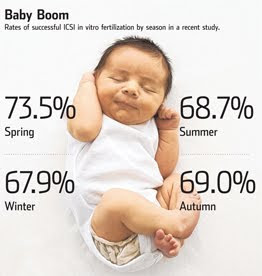
Infertile couples undergoing in vitro fertilization might have more success if the procedure is performed in the spring.
Research published in July's Gynecological Endocrinology found the rate of fertilization was significantly higher in spring than any other season, though time of year had no effect on pregnancy rates. Natural reproduction also varies with the seasons; it is believed the number of hours of sunlight in the day and temperature variations affect fertility.
Researchers compared seasonal fertilization rates in 1,932 women who underwent intracytoplasmic sperm injection, or ICSI, in Brazil from 2005 to 2009. ICSI involves the injection of a single sperm directly into an oocyte, or unfertilized egg, outside of a woman's body.
Subjects were organized into groups according to the timing of oocyte retrieval: 435 were assigned to winter, 444 to spring, 469 to summer and 584 to autumn. Fertilization, the fusion of sperm and egg to form an embryo, was assessed 18 hours after ICSI.
The rate of fertilization was 73.5% in spring, 68.7% in summer, 67.9% in winter and 69% in autumn. Ovarian response to ICSI hormone treatments, a measurement of estrogen concentration per number of retrieved oocytes, was higher in spring compared with other seasons, tests showed. Following fertilization, one to three embryos were transferred into the woman's uterus.
The procedure resulted in an average pregnancy rate of 33% for all seasons.
Study: Seasonal variability in the fertilization rate of women undergoing assisted reproduction treatments
Source
Photo credit: wsj.com
All rights reserved
TODAY'S BOOK SUGGESTION:

 In Vitro Fertilization: The A.R.T. of Making Babies
( Assisted Reproductive Technology )
by Geoffrey Sher, Virginia Marriage Davis, Jean Stoess
-- This clearly written technical handbook guides couples who are trying to conceive in determining whether they are eligible for in vitro fertilization (IVF) and in selecting the program that will help them achieve the best results.
It describes in detail the anatomy and physiology of conception and the steps required for realizing it in the IVF procedure.
In addition to providing accurate information, the practitioner authors address emotional, financial, physical, and moral-religious issues involved in the decision to conceive with medical assistance.
Despite its experimental reputation and persistent high cost, IVF is an appropriate option for many of the estimated 3.3 million infertile couples in the U.S. today, so this specialized manual speaks to a rather large audience of potential users.
Paperback: 312 pagesClick to order/for more info: In Vitro Fertilization
 LONDON — A new study of fertility treatment found that women who get three or more embryos have no better odds of having a baby than those who get just two embryos.
They also have a greater chance of risky multiple births.
"Women who have gone through infertility treatment want the best chance of having a baby, but we need to explain that the data shows transferring more embryos doesn't actually do that," said Dr. Scott Nelson, head of reproductive and maternal medicine at the University of Glasgow, who co-authored the study published in Thursday's issue of Lancet.
For women over 40, the live birth rate was 13 percent whether they had two or three embryos transferred.
Read rest of article
Photo Credit: ba1969
All rights reserved
Life Begins... - Miscarriage stories of loss, hope & help
Pregnancy Stories by Age - Daily blog of hope & inspiration
Stories of Pregnancy and Birth over 44 years old - sharing news stories I find online, for inspiration!
Pregnancy Stories by Age - Daily blog of hope & inspiration
Stories of Pregnancy and Birth over 44 years old - sharing news stories I find online, for inspiration!
 Like babies that can be lulled to sleep with swaying, embryos also prefer to be rocked.
By gently rocking embryos while they grew during in vitro fertilization, scientists increased pregnancy rates in mice by more than 20 percent. The same rock-a-bye procedure could lead to more success for in vitro fertilization in humans, the researchers say.
Read more...
Life Begins... - Miscarriage stories of loss, hope & help
Pregnancy Stories by Age - Daily blog of hope & inspiration!
Stories of Pregnancy over 44 years old - sharing stories I find online, for inspiration!
Pregnancy Stories by Age - Daily blog of hope & inspiration!
Stories of Pregnancy over 44 years old - sharing stories I find online, for inspiration!
Recent Keyword Searches: age women cannot get pregnant, can you get pregnant with low levels of oestrogen, can you get pregnant at 42 with your own eggs, can a woman get pregnant at 48, pregnant diabetic women over 40
 During this free seminar, Dr. Perloe explores issues the diagnosis and treatment of infertility with ovulation induction, insemination and surgery as well as in vitro fertilization. You will learn about age related infertility, fallopian tube obstruction, male infertility, PCOS, endometriosis and use of donor sperm or donor eggs. Mind-Body issues will be discussed by holistic health counselor, nutrition expert and yoga teacher Wendy Brown as well as by Mark Schwartz, L.Ac, who is trained in Traditional Chinese Medicine and acupuncture. Learn how you can take a more active role in the fertility process.
Learn how you can afford fertility treatment. Although infertility treatment is not always covered by insurance, GRS offers many unique financial programs including ”Shared-Risk IVF” with a money-back option and the “No-Hidden-Fees IVF” which includes all frozen embryo transfer cycles and a second IVF cycle if necessary.
You will also have the opportunity to tour our state-of-the-art medical facilities, ask any questions you may have related to infertility and IVF and schedule a free, meet & greet with any of the GRS physicians.
Date: Wednesday, January 13, 2010
Time: 7:00 pm.
Location: 5445 Meridian Mark Road, Suite 270, Atlanta, GA 30342
Register online or tmitchell@ivf.com or 404-843-2229 x 154
For more information about:
Mark Perloe, M.D. - Wendy Brown - Mark Schwartz, L.Ac.
TODAY'S BOOK SUGGESTION:

 INFERTILITY Road to Hell and Back
by Azelene Williams
-- I love being a woman. To me it is a privilege and there is nothing more satisfying.
I appreciate being honoured and cherished for my femininity - for after all, I am the potential mother of the next generation.
I value my fertility, value the gift of being able to carry a child and become a mother. To me this is the very essence of being a women.
The children we bring into the world are small replicas of ourselves and our husbands; the pride and joy of grandfathers and grandmothers. We dream of being mothers and for most of us these dreams are realized naturally. For this is the Miracle of Life.
But - what about when that longed for baby never happens? When you realize that something is wrong and turn to professionals for help. Tests are done; treatments tried without success.
You traipse from one doctor to the next; resulting in more disappointment and fading hope. Your dream is shattered and the heartache is painful; almost unbearable. What is wrong with you? Is it your fault?
How are you lacking? Why? The questions are still desperately being asked.............but there are no answers. Slowly your conviction grows that your entirety as a woman is incomplete.
I am a woman and this is my story..............
Paperback: 228 pagesClick to order/for more info: INFERTILITY Road to Hell and Back
Popular Posts
-
 Menopause is the time in a woman's life when her reproductive system shuts down and her reproducing days are over... or are they? For s...
 -
 Found this post by Ally (Ocelot Cub) on FertilityFriends.co.uk : Ally wrote: I have collected a number of success stories from ladies w...
 -
 Fertility Supplement Bundle Our diet is one of the most important factors when it comes to trying to have a baby. Making sure we watch...
 -
 Following is a case of a 42-year-old man, who was suffering from Oligospermia [low sperm count] . He had previously consulted many specia...
 -
 Modern farming practices, your diet, and your lifestyle, may require that you supplement with certain nutrients to optimize fertility. Am...
 -
 A Zen thought ... A true expert is not the one with the most knowledge, but one who causes the most others to have knowledge. Questions, ...


Recent Comments