Photo by bies
 A growing number of women across America are having their first babies at age 40 or even older. Overall, first births among women over 30 rose to a record 22% of all births in 1995, as opposed to 5% of births in 1975.
Full article: http://ohioline.osu.edu/hyg-Fact/5000/5305.html
Life Begins...
Miscarriage stories of loss, hope & help
http://born2luv.blogspot.com/
Stories of Pregnancy & Birth over 44y
- Daily blog of hope & inspiration!
http://pregnancyover44y.blogspot.com/
4,600 Stories of Pregnancy & Birth over 44y
Daily blog of hope & inspiration!
http://pregnancyover44y.blogspot.com/
Recent Keyword Searches: menopausal women get pregnant, can have sex every other day helps the chance to get pregnant instead of have sex daily?, can i still get pregnant on hormone therapy, average time to get pregnant at 40, pregnancy over 45
 A growing number of women across America are having their first babies at age 40 or even older. Overall, first births among women over 30 rose to a record 22% of all births in 1995, as opposed to 5% of births in 1975.
 Full article: http://ohioline.osu.edu/hyg-Fact/5000/5305.html
Life Begins...
Miscarriage stories of loss, hope & help
http://born2luv.blogspot.com/
Stories of Pregnancy & Birth over 44y
- Daily blog of hope & inspiration!
http://pregnancyover44y.blogspot.com/
4,600 Stories of Pregnancy & Birth over 44y
Daily blog of hope & inspiration!
http://pregnancyover44y.blogspot.com/
Recent Keyword Searches: menopausal women get pregnant, can have sex every other day helps the chance to get pregnant instead of have sex daily?, can i still get pregnant on hormone therapy, average time to get pregnant at 40, pregnancy over 45
Photo by scottsnyde
 Once you've heard the patter of little feet in your home, most couples simply assume that they will have no problems having more children. However, new research shows that the ability to have your first child may not necessarily mean you are capable of producing more. In fact, nearly 25% of couples seeking treatment for infertility already have one child. According to the National Fertility Association, more than 3 million Americans are affected by secondary fertility, the inability to conceive a child or carry a child to term after previously delivering a child.
Full article: http://www.americanchronicle.com/articles/61211
Life Begins...
Miscarriage stories of loss, hope & help
http://born2luv.blogspot.com/
Stories of Pregnancy & Birth over 44y
- Daily blog of hope & inspiration!
http://pregnancyover44y.blogspot.com/
4,600 Stories of Pregnancy & Birth over 44y
Daily blog of hope & inspiration!
http://pregnancyover44y.blogspot.com/
Recent Keyword Searches: is it possible to get pregnant at the age of 42?, getting pregnant in your 40s, oldest person to get pregnant naturally, yuo can get pregnant, which is the late age to get pregnant, ovulation kits to get pregnant during menopause, how to get pregnant when you are over 40 years old, accupuncture ovulation, pregnancy with low ovarian volumes, what age is too late to get pregnant
 Once you've heard the patter of little feet in your home, most couples simply assume that they will have no problems having more children. However, new research shows that the ability to have your first child may not necessarily mean you are capable of producing more. In fact, nearly 25% of couples seeking treatment for infertility already have one child. According to the National Fertility Association, more than 3 million Americans are affected by secondary fertility, the inability to conceive a child or carry a child to term after previously delivering a child.
 Full article: http://www.americanchronicle.com/articles/61211
Life Begins...
Miscarriage stories of loss, hope & help
http://born2luv.blogspot.com/
Stories of Pregnancy & Birth over 44y
- Daily blog of hope & inspiration!
http://pregnancyover44y.blogspot.com/
4,600 Stories of Pregnancy & Birth over 44y
Daily blog of hope & inspiration!
http://pregnancyover44y.blogspot.com/
Recent Keyword Searches: is it possible to get pregnant at the age of 42?, getting pregnant in your 40s, oldest person to get pregnant naturally, yuo can get pregnant, which is the late age to get pregnant, ovulation kits to get pregnant during menopause, how to get pregnant when you are over 40 years old, accupuncture ovulation, pregnancy with low ovarian volumes, what age is too late to get pregnant
Many doctors believe that antibodies alone are NOT reason to treat someone with thyroid hormone. This is despite the fact that the presence of antibodies alone can cause thyroid-related symptoms, and have been shown to affect fertility or the ability to maintain a pregnancy. (An article in the Journal of Clinical Endocrinology and Metabolism, August 1997 states, "the risk of miscarriage is twice as high in women who have antithyroid antibodies than in those who do not..." and Obstetrics and Gynecology 1997 Volume 90:364-369, states "the risk of miscarriage is higher when a woman is positive for antithyroid microsomal antibody...")
Full article: http://thyroid.about.com/aa021698.htm
Life Begins...
Miscarriage stories of loss, hope & help
http://born2luv.blogspot.com/
Stories of Pregnancy & Birth over 44y
- Daily blog of hope & inspiration!
http://pregnancyover44y.blogspot.com/
4,600 Stories of Pregnancy & Birth over 44y
Daily blog of hope & inspiration!
http://pregnancyover44y.blogspot.com/
Recent Keyword Searches: can a 43-year old get pregnant, change to get pregnant at age 44, what are the chances a 38 yr woman can get pregnant, what's the chance a 42 year old will get pregnant for first time, how to create healthy eggs for birth, is it possible for a 49 year old women to get pregnant, chances of getting pregnant at age 47, can you get pregnant, being post-menopausal, how to get pregnant at 45, pregnacy after menopause
Full article: http://thyroid.about.com/aa021698.htm
Life Begins...
Miscarriage stories of loss, hope & help
http://born2luv.blogspot.com/
Stories of Pregnancy & Birth over 44y
- Daily blog of hope & inspiration!
http://pregnancyover44y.blogspot.com/
4,600 Stories of Pregnancy & Birth over 44y
Daily blog of hope & inspiration!
http://pregnancyover44y.blogspot.com/
Recent Keyword Searches: can a 43-year old get pregnant, change to get pregnant at age 44, what are the chances a 38 yr woman can get pregnant, what's the chance a 42 year old will get pregnant for first time, how to create healthy eggs for birth, is it possible for a 49 year old women to get pregnant, chances of getting pregnant at age 47, can you get pregnant, being post-menopausal, how to get pregnant at 45, pregnacy after menopause
Photo by online.wsj.com
 Doctors Say Hormone Gauge Gives an Accurate Egg Count; Still Awaiting FDA Clearance
At 36 and single, Monica Taneja is a New York anesthesiologist who is increasingly anxious about the ticking of her biological clock. So she recently underwent tests to gauge her egg count, one key indicator of fertility. The results brought welcome news: a healthy supply of eggs. "I feel like I have a window," Dr. Taneja says.
When it comes to a woman's biological clock, it's all about the eggs: How many does she have, and are they healthy enough for conception? A hormone test gaining wider use in the U.S. may offer women a more precise way to assess their ovarian inventory, compared with the tests in common use for years.
This test -- one of several used on Dr. Taneja -- measures a chemical produced in the body called anti-mullerian hormone, or AMH, which has been shown to provide an accurate snapshot of a woman's egg count. Over the past few years, the test, which reads AMH levels from a blood sample, has been routinely available in Europe, where much of the research on AMH as an ovarian-reserve marker has been done.
But the lack of uniform measurement standards has slowed its adoption in the U.S., where such tests come under Food and Drug Administration oversight. AMH-detection systems haven't yet satisfied FDA criteria for clinical use. Even though it awaits clearance, there has been no move to restrict use of the test in doctors' offices.
Moreover, doctors aren't quite ready to completely abandon older measures to test fertility, because they think a robust battery of data can be useful. There is also some debate about whether AMH levels correlate to egg quality. Other factors, too, such as the vitality and mechanics of reproductive organs, affect the ability to get pregnant.
Still, as recent scientific literature has bolstered the predictive credentials of AMH detection, and measures have become more consistent, a growing number of physicians are using the test at their discretion. The cost of the test runs from $100 to $400, which is covered by some, but not all, health insurers.
______________________________________________
Life Begins...
Miscarriage stories of loss, hope & help
http://born2luv.blogspot.com/
Stories of Pregnancy & Birth over 44y
- Daily blog of hope & inspiration!
http://pregnancyover44y.blogspot.com/
4,600 Stories of Pregnancy & Birth over 44y
Daily blog of hope & inspiration!
http://pregnancyover44y.blogspot.com/
 Doctors Say Hormone Gauge Gives an Accurate Egg Count; Still Awaiting FDA Clearance
At 36 and single, Monica Taneja is a New York anesthesiologist who is increasingly anxious about the ticking of her biological clock. So she recently underwent tests to gauge her egg count, one key indicator of fertility. The results brought welcome news: a healthy supply of eggs. "I feel like I have a window," Dr. Taneja says.
When it comes to a woman's biological clock, it's all about the eggs: How many does she have, and are they healthy enough for conception? A hormone test gaining wider use in the U.S. may offer women a more precise way to assess their ovarian inventory, compared with the tests in common use for years.
This test -- one of several used on Dr. Taneja -- measures a chemical produced in the body called anti-mullerian hormone, or AMH, which has been shown to provide an accurate snapshot of a woman's egg count. Over the past few years, the test, which reads AMH levels from a blood sample, has been routinely available in Europe, where much of the research on AMH as an ovarian-reserve marker has been done.
But the lack of uniform measurement standards has slowed its adoption in the U.S., where such tests come under Food and Drug Administration oversight. AMH-detection systems haven't yet satisfied FDA criteria for clinical use. Even though it awaits clearance, there has been no move to restrict use of the test in doctors' offices.
Moreover, doctors aren't quite ready to completely abandon older measures to test fertility, because they think a robust battery of data can be useful. There is also some debate about whether AMH levels correlate to egg quality. Other factors, too, such as the vitality and mechanics of reproductive organs, affect the ability to get pregnant.
Still, as recent scientific literature has bolstered the predictive credentials of AMH detection, and measures have become more consistent, a growing number of physicians are using the test at their discretion. The cost of the test runs from $100 to $400, which is covered by some, but not all, health insurers.
______________________________________________
TRACKING EGGS
Four hormones that can be measured to help gauge a woman's ovarian reserve:
• Follicle-Stimulating Hormone: Stimulates production of eggs and the hormone estradiol.
• Anti-Mullerian Hormone: Levels correlate to a woman's egg supply.
• Estradiol: A form of estrogen that contributes to the growth of reproductive organs.
• Inhibin B: Levels correlate to the number of ovarian follicles.
Four hormones that can be measured to help gauge a woman's ovarian reserve:
• Follicle-Stimulating Hormone: Stimulates production of eggs and the hormone estradiol.
• Anti-Mullerian Hormone: Levels correlate to a woman's egg supply.
• Estradiol: A form of estrogen that contributes to the growth of reproductive organs.
• Inhibin B: Levels correlate to the number of ovarian follicles.
Source: WSJ reporting, Resolve: The National Infertility Association
______________________________________________
Repromedix Corp., a Woburn, Mass., company, is aiming to market an ovarian reserve test directly to women. Called PlanAhead, the test measures multiple factors, including ovary-related hormones such as AMH, to gauge a woman's egg supply.
Until it receives FDA clearance, the $350 test is available only through participating physicians in 24 cities. Women in those areas can also order the test online and have a participating physician draw her blood. The test is sent to Repromedix for processing. Benjamin Leader, the company's chief medical officer, says AMH "plays a significant role" in the test.
The emergence of new egg-assessment technologies comes at a time when women are increasingly pushing the limits of their childbearing years.
According to the 2006 National Vital Statistics Report, the biggest increases in birth rates from 1990 to 2004 occurred among females over age 30. For women 35 to 39, the birth rate jumped 43%, from 31.7 births per 1,000 women to 45.4. For women 40 to 44, it climbed 62%, to 8.9 births per 1,000 women from 5.5. And for those 45 to 49, the rate rose 250%.
Fertility Intervention
The delay in childbearing, fueled in part by the strides women have made in the workplace, has led to more fertility interventions as women age. The number of assisted reproductive procedures grew 12% from 2003 to 2006, according to the Society for Assisted Reproductive Technology. More than 99% of these procedures were in vitro fertilization -- whereby embryos formed outside the womb are implanted into a woman's uterus.
Doctors anticipate that more women will get tested throughout their childbearing years because they want a benchmark of their fertility.
"AMH is an excellent predictor," says Michael Alper, chief medical officer of Boston IVF and associate professor of obstetrics and gynecology at Harvard Medical School. Boston IVF, one of the largest U.S. fertility clinics, started offering AMH tests a few months ago. "I would predict that we're going to be ordering it on everybody," Dr. Alper says. "It'll be a standard."
The first studies that looked at AMH as a marker for ovarian reserve appeared in 2002 and showed that the hormone, which is produced by egg follicles, declines with age. A paper published last year in the journal Fertility and Sterility looked at data from a series of AMH studies and concluded that it is the earliest marker of ovarian reserve and has the least variability during and between a woman's menstrual cycles.
An older, commonly used egg-supply marker known as follicle-stimulating hormone, or FSH, also measured through a blood test, can be taken only on days two, three or four of a menstrual cycle, may be affected by birth-control pills, and has greater variability. By contrast, "AMH tends to be very consistent," which means a reading can be taken at any time, says Arlene Morales, chief medical officer of Fertility Specialists Medical Group in San Diego. Her clinic started offering AMH testing a year ago, and she says it now uses it in a majority of patients.
"AMH is an early marker of ovarian aging, whereas FSH becomes elevated at a later reproductive age," says David Seifer, co-author of the Fertility and Sterility paper and a professor of obstetrics, gynecology and reproductive sciences at Mount Sinai School of Medicine in New York. Dr. Seifer practices at Genesis Fertility in Brooklyn, N.Y., which recently started offering AMH testing to patients. "Once a woman's FSH levels are elevated, it's often a signal that she has diminished ovarian reserve and therefore is at a much greater challenge of conceiving."
In other words, by the time her FSH level rises, it may be too late.
Hope at Age 45
Pamela Barbasetti di Prun, 45, a mother of three grown children from her first marriage, wanted to try to have a baby with her second husband. When her FSH levels came back elevated, signaling her fertility was on the wane, her doctor suggested the Staten Island, N.Y., couple consider an egg donor. They balked and, in February, Ms. Barbasetti di Prun's AMH level came back normal. Hopeful that she could have a baby with her own eggs, the couple is moving ahead with in vitro fertilization. Two weeks ago, doctors retrieved 10 eggs -- a better-than-expected number for a woman her age.
"The AMH test was an extremely valuable tool in giving us an accurate number to guide us," Ms. Barbasetti di Prun says. "You're going to do what your heart tells you, but to have some medical substantiation really helps you."
Dr. Seifer, her physician, says that because of her healthy AMH levels, he was "willing to let her try" IVF with her own eggs.
Source: http://online.wsj.com/public/article/SB120882227501033057-zFgsG6xJF8GY1n_5a5_cTNKyDW8_20080522.html?mod=tff_main_tff_top
Until it receives FDA clearance, the $350 test is available only through participating physicians in 24 cities. Women in those areas can also order the test online and have a participating physician draw her blood. The test is sent to Repromedix for processing. Benjamin Leader, the company's chief medical officer, says AMH "plays a significant role" in the test.
The emergence of new egg-assessment technologies comes at a time when women are increasingly pushing the limits of their childbearing years.
According to the 2006 National Vital Statistics Report, the biggest increases in birth rates from 1990 to 2004 occurred among females over age 30. For women 35 to 39, the birth rate jumped 43%, from 31.7 births per 1,000 women to 45.4. For women 40 to 44, it climbed 62%, to 8.9 births per 1,000 women from 5.5. And for those 45 to 49, the rate rose 250%.
Fertility Intervention
The delay in childbearing, fueled in part by the strides women have made in the workplace, has led to more fertility interventions as women age. The number of assisted reproductive procedures grew 12% from 2003 to 2006, according to the Society for Assisted Reproductive Technology. More than 99% of these procedures were in vitro fertilization -- whereby embryos formed outside the womb are implanted into a woman's uterus.
Doctors anticipate that more women will get tested throughout their childbearing years because they want a benchmark of their fertility.
"AMH is an excellent predictor," says Michael Alper, chief medical officer of Boston IVF and associate professor of obstetrics and gynecology at Harvard Medical School. Boston IVF, one of the largest U.S. fertility clinics, started offering AMH tests a few months ago. "I would predict that we're going to be ordering it on everybody," Dr. Alper says. "It'll be a standard."
The first studies that looked at AMH as a marker for ovarian reserve appeared in 2002 and showed that the hormone, which is produced by egg follicles, declines with age. A paper published last year in the journal Fertility and Sterility looked at data from a series of AMH studies and concluded that it is the earliest marker of ovarian reserve and has the least variability during and between a woman's menstrual cycles.
An older, commonly used egg-supply marker known as follicle-stimulating hormone, or FSH, also measured through a blood test, can be taken only on days two, three or four of a menstrual cycle, may be affected by birth-control pills, and has greater variability. By contrast, "AMH tends to be very consistent," which means a reading can be taken at any time, says Arlene Morales, chief medical officer of Fertility Specialists Medical Group in San Diego. Her clinic started offering AMH testing a year ago, and she says it now uses it in a majority of patients.
"AMH is an early marker of ovarian aging, whereas FSH becomes elevated at a later reproductive age," says David Seifer, co-author of the Fertility and Sterility paper and a professor of obstetrics, gynecology and reproductive sciences at Mount Sinai School of Medicine in New York. Dr. Seifer practices at Genesis Fertility in Brooklyn, N.Y., which recently started offering AMH testing to patients. "Once a woman's FSH levels are elevated, it's often a signal that she has diminished ovarian reserve and therefore is at a much greater challenge of conceiving."
In other words, by the time her FSH level rises, it may be too late.
Hope at Age 45
Pamela Barbasetti di Prun, 45, a mother of three grown children from her first marriage, wanted to try to have a baby with her second husband. When her FSH levels came back elevated, signaling her fertility was on the wane, her doctor suggested the Staten Island, N.Y., couple consider an egg donor. They balked and, in February, Ms. Barbasetti di Prun's AMH level came back normal. Hopeful that she could have a baby with her own eggs, the couple is moving ahead with in vitro fertilization. Two weeks ago, doctors retrieved 10 eggs -- a better-than-expected number for a woman her age.
"The AMH test was an extremely valuable tool in giving us an accurate number to guide us," Ms. Barbasetti di Prun says. "You're going to do what your heart tells you, but to have some medical substantiation really helps you."
Dr. Seifer, her physician, says that because of her healthy AMH levels, he was "willing to let her try" IVF with her own eggs.
Source: http://online.wsj.com/public/article/SB120882227501033057-zFgsG6xJF8GY1n_5a5_cTNKyDW8_20080522.html?mod=tff_main_tff_top
Life Begins...
Miscarriage stories of loss, hope & help
http://born2luv.blogspot.com/
Stories of Pregnancy & Birth over 44y
- Daily blog of hope & inspiration!
http://pregnancyover44y.blogspot.com/
4,600 Stories of Pregnancy & Birth over 44y
Daily blog of hope & inspiration!
http://pregnancyover44y.blogspot.com/
Recent Keyword Searches: prgenant over 40, fertility in 40's, poor ovarian reserve stress, having a baby over 40 years old, can istill get pregnant at 47, pregnancy and parenting after age 40, can you get pregnant at age 41, maternal age and egg quality, what are the odds a 40 yo women can get pregnant, can women over 50 get pregnant
Photo by www.theage.com.au
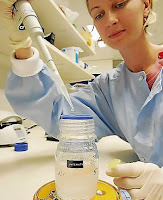 IVF pregnancy rates could double and the incidence of serious complications, such as miscarriage and pre-eclampsia, could be halved after a technological breakthrough in fertility research.
Scientists at the University of Adelaide have created a new type of culture which they say will help embryos better survive their five days out of the womb, and help the foetus and placenta develop more normally.
The head of the research team, Claire Roberts, said yesterday the culture, used successfully to grow mice embryos, was "absolutely fantastic" and could change the face of fertility treatments.
"Until now, the culture most commonly used has not been particularly conducive to the survival of embryos, which is one of the main reasons we don't have a very high success rate in IVF," she said.
Women in their 20's have about a 40 per cent chance of falling pregnant through IVF with that dropping to about 15 per cent for women in their late 30's.
But the new culture contains three molecules which exist in the birth tract fluids of all mammals, making it easier for embryos to grow and implant successfully in the uterus.
"It has long been thought that the culture used in IVF alters the way the embryo develops and affects the interaction between the embryo and the mother, which compromises the development of the placenta," Associate Professor Roberts said.
Poor placental growth results in miscarriage, intrauterine growth restriction, haemorrhage and premature births. Women who have undergone IVF are three times more at risk of these complications than women who have conceived naturally.
Human trials are expected to begin within two years and if successful, could help the 15 per cent of couples who are infertile or suffer from recurrent miscarriages.
The new culture could also help researchers achieve the "holy grail" of IVF - a single embryo transfer, which reduces the incidence of multiple pregnancies and maximises the chance of a successful pregnancy.
A fertility expert with IVF Australia, Michael Chapman, said it was still difficult to artificially mimic the human body when creating embryo cultures.
"Mice are not men - or women, so we have to approach this with a fair degree of caution, but if it is proven safe in humans this is a great step forward," Professor Chapman said.
Source: http://www.theage.com.au/news/national/breakthrough-could-double-ivf-successes/2008/04/15/1208025189639.html
Life Begins...
Miscarriage stories of loss, hope & help
http://born2luv.blogspot.com/
Stories of Pregnancy & Birth over 44y
- Daily blog of hope & inspiration!
http://pregnancyover44y.blogspot.com/
4,600 Stories of Pregnancy & Birth over 44y
Daily blog of hope & inspiration!
http://pregnancyover44y.blogspot.com/
Recent Keyword Searches: can women over 50 get pregnant, hair thin progesterone level low can i get pregnant, can a 45 year old woman get pregnant, get pregnant age 40, until what age can ivf be tried, case study high fsh pregnancy, getting pregnant after miscarriage in forties, fertility when the mother is in her 40's, successful pregnancy with one follicle over 40, if i take aspirin before implantation will it help
IVF pregnancy rates could double and the incidence of serious complications, such as miscarriage and pre-eclampsia, could be halved after a technological breakthrough in fertility research.Scientists at the University of Adelaide have created a new type of culture which they say will help embryos better survive their five days out of the womb, and help the foetus and placenta develop more normally.
The head of the research team, Claire Roberts, said yesterday the culture, used successfully to grow mice embryos, was "absolutely fantastic" and could change the face of fertility treatments.
"Until now, the culture most commonly used has not been particularly conducive to the survival of embryos, which is one of the main reasons we don't have a very high success rate in IVF," she said.
Women in their 20's have about a 40 per cent chance of falling pregnant through IVF with that dropping to about 15 per cent for women in their late 30's.
But the new culture contains three molecules which exist in the birth tract fluids of all mammals, making it easier for embryos to grow and implant successfully in the uterus.
"It has long been thought that the culture used in IVF alters the way the embryo develops and affects the interaction between the embryo and the mother, which compromises the development of the placenta," Associate Professor Roberts said.
Poor placental growth results in miscarriage, intrauterine growth restriction, haemorrhage and premature births. Women who have undergone IVF are three times more at risk of these complications than women who have conceived naturally.
Human trials are expected to begin within two years and if successful, could help the 15 per cent of couples who are infertile or suffer from recurrent miscarriages.
The new culture could also help researchers achieve the "holy grail" of IVF - a single embryo transfer, which reduces the incidence of multiple pregnancies and maximises the chance of a successful pregnancy.
A fertility expert with IVF Australia, Michael Chapman, said it was still difficult to artificially mimic the human body when creating embryo cultures.
"Mice are not men - or women, so we have to approach this with a fair degree of caution, but if it is proven safe in humans this is a great step forward," Professor Chapman said.
Source: http://www.theage.com.au/news/national/breakthrough-could-double-ivf-successes/2008/04/15/1208025189639.html
Life Begins...
Miscarriage stories of loss, hope & help
http://born2luv.blogspot.com/
Stories of Pregnancy & Birth over 44y
- Daily blog of hope & inspiration!
http://pregnancyover44y.blogspot.com/
4,600 Stories of Pregnancy & Birth over 44y
Daily blog of hope & inspiration!
http://pregnancyover44y.blogspot.com/
Recent Keyword Searches: can women over 50 get pregnant, hair thin progesterone level low can i get pregnant, can a 45 year old woman get pregnant, get pregnant age 40, until what age can ivf be tried, case study high fsh pregnancy, getting pregnant after miscarriage in forties, fertility when the mother is in her 40's, successful pregnancy with one follicle over 40, if i take aspirin before implantation will it help

In the last 10 years a plethora of scientific studies have been released on flaxseed and its amazing oil, known as alpha-linolenic acid (LNA) or omega-3. At a recent conference held at the Flax Institute of the United States, scientists focused attention on flaxseed and its role in healing and preventing numerous degenerative diseases.
Research and clinical experience demonstrate the following benefits from regular consumption of flaxseed:
Heart Disease. One of the unique features of flaxseed oil is that it contains a substance that resembles prostaglandins, which may well be part of its potent therapeutic value. The prostaglandins regulate blood pressure and arterial function, and have an important role in calcium and energy metabolism. No other vegetable oil examined so far matches this property of flaxseed oil. Similarly, LNAs blood-regulating capabilities prevent spontaneous blood clots caused by an excess of fatty acids derived from refined polyunsaturated oils. This has implications for preventing strokes if used at an early enough stage in a remedial lifestyle change using both exercise and improved diet.
Diabetes. Late-onset adult diabetes is suspected to originate partially from a deficiency of LNAs and an excess of saturated and trans fats in the diet. Although this syndrome can take as long as 30 years to emerge as a full blown disease, reversal of symptoms can occur with positive changes in the diet and proper supplementation of LNA from flaxseed oil. A concurrent lack of vitamins and minerals makes the disease worse. LNAs also may lower the insulin requirement of diabetics.
Inflammatory Tissue Conditions. LNA fatty acids decrease inflammatory conditions of all types. Inflammatory conditions are the diseases that end in “itis,” including bursitis, tendonitis, tonsillitis, gastritis, ileitis, colitis, meningitis, arthritis, phlebitis, prostatitis, nephritis, splenitis, hepatitis, pancreaitis, otitis, etc., as well as lupus. Many of these inflammatory conditions may be eased by use of LNAs.
Sexual Disorders. Dr. Budwig has found flaxseed oil to be a natural aphrodisiac. The most common physical cause of impotence in men and non-orgasmic response in women is blockage of blood flow in the arteries of the pelvis. Decrease of blood flow prevents full expansion (erection) of the penis and/or the clitoris. Thus ejaculation and/or orgasm cannot occur. The solution is to unblock narrowed arteries in general, and the consumption of flaxseed oil will help. Flaxseed oil is quickly gaining the reputation as one of the best aphrodisiacs of the 90's.
Calmness Under Stress. Many people find increased calmness to be the most profound effect of using fresh flaxseed oil. It brings on a feeling of calmness often within a few hours. This may be partly due to the fact that, under stress, LNA fatty acids appear to slow down the overproduction of stressing biochemicals like arachidonic acid which happens when we are chronically stressed.
Other Conditions. LNAs are necessary for visual function (retina), adrenal function (stress) and sperm formation. They often improve symptoms of multiple sclerosis. In fact, when LNA consumption is high, MS is rare. Flax oil also can be helpful in cystic fibrosis (LNA helps loosen viscous secretions and relieves breathing difficulties); some cases of sterility and miscarriage; some glandular malfunctions; some behavioral problems (schizophrenia, depression, bipolar disorder); allergies; addictions (to drugs or alcohol); and some deviant behaviors.
Full article: http://www.omega3flaxseeds.com/the-proven-benefits-of-flaxseed-and-lna
Life Begins...
Miscarriage stories of loss, hope & help
http://born2luv.blogspot.com/
Stories of Pregnancy & Birth over 44y
- Daily blog of hope & inspiration!
http://pregnancyover44y.blogspot.com/
4,600 Stories of Pregnancy & Birth over 44y
Daily blog of hope & inspiration!
http://pregnancyover44y.blogspot.com/
Recent Keyword Searches: pregnant actress in there 40's, can a 48 year old women conceive, if a woman is menopause, can she still get pregnant?, can you get pregnant with one tube, pregnancy over age 45, pregnancy dangers 40 years old, what age is a woman too old to get pregnant?, can you get pregnant at 50, 54 can i still get pregnant, can premenopausal get preg
Research and clinical experience demonstrate the following benefits from regular consumption of flaxseed:
Heart Disease. One of the unique features of flaxseed oil is that it contains a substance that resembles prostaglandins, which may well be part of its potent therapeutic value. The prostaglandins regulate blood pressure and arterial function, and have an important role in calcium and energy metabolism. No other vegetable oil examined so far matches this property of flaxseed oil. Similarly, LNAs blood-regulating capabilities prevent spontaneous blood clots caused by an excess of fatty acids derived from refined polyunsaturated oils. This has implications for preventing strokes if used at an early enough stage in a remedial lifestyle change using both exercise and improved diet.
Diabetes. Late-onset adult diabetes is suspected to originate partially from a deficiency of LNAs and an excess of saturated and trans fats in the diet. Although this syndrome can take as long as 30 years to emerge as a full blown disease, reversal of symptoms can occur with positive changes in the diet and proper supplementation of LNA from flaxseed oil. A concurrent lack of vitamins and minerals makes the disease worse. LNAs also may lower the insulin requirement of diabetics.
Inflammatory Tissue Conditions. LNA fatty acids decrease inflammatory conditions of all types. Inflammatory conditions are the diseases that end in “itis,” including bursitis, tendonitis, tonsillitis, gastritis, ileitis, colitis, meningitis, arthritis, phlebitis, prostatitis, nephritis, splenitis, hepatitis, pancreaitis, otitis, etc., as well as lupus. Many of these inflammatory conditions may be eased by use of LNAs.
Sexual Disorders. Dr. Budwig has found flaxseed oil to be a natural aphrodisiac. The most common physical cause of impotence in men and non-orgasmic response in women is blockage of blood flow in the arteries of the pelvis. Decrease of blood flow prevents full expansion (erection) of the penis and/or the clitoris. Thus ejaculation and/or orgasm cannot occur. The solution is to unblock narrowed arteries in general, and the consumption of flaxseed oil will help. Flaxseed oil is quickly gaining the reputation as one of the best aphrodisiacs of the 90's.
Calmness Under Stress. Many people find increased calmness to be the most profound effect of using fresh flaxseed oil. It brings on a feeling of calmness often within a few hours. This may be partly due to the fact that, under stress, LNA fatty acids appear to slow down the overproduction of stressing biochemicals like arachidonic acid which happens when we are chronically stressed.
Other Conditions. LNAs are necessary for visual function (retina), adrenal function (stress) and sperm formation. They often improve symptoms of multiple sclerosis. In fact, when LNA consumption is high, MS is rare. Flax oil also can be helpful in cystic fibrosis (LNA helps loosen viscous secretions and relieves breathing difficulties); some cases of sterility and miscarriage; some glandular malfunctions; some behavioral problems (schizophrenia, depression, bipolar disorder); allergies; addictions (to drugs or alcohol); and some deviant behaviors.
Full article: http://www.omega3flaxseeds.com/the-proven-benefits-of-flaxseed-and-lna
Life Begins...
Miscarriage stories of loss, hope & help
http://born2luv.blogspot.com/
Stories of Pregnancy & Birth over 44y
- Daily blog of hope & inspiration!
http://pregnancyover44y.blogspot.com/
4,600 Stories of Pregnancy & Birth over 44y
Daily blog of hope & inspiration!
http://pregnancyover44y.blogspot.com/
Recent Keyword Searches: pregnant actress in there 40's, can a 48 year old women conceive, if a woman is menopause, can she still get pregnant?, can you get pregnant with one tube, pregnancy over age 45, pregnancy dangers 40 years old, what age is a woman too old to get pregnant?, can you get pregnant at 50, 54 can i still get pregnant, can premenopausal get preg
Photo by clix
 A fertility test that can double a woman's chances of pregnancy is being offered to childless couples for the first time.
The test identifies which eggs have the best chance of being successfully implanted in the womb - a major factor in determining the success of IVF treatment.
The test gives results in less than 48 hours, meaning the best eggs or embryos can be used immediately or frozen for future use.
Most existing tests take several days for their results to be processed.
Current tests also check for only a few abnormalities, whereas the latest technique - known as comparative genomic hybridisation - checks the egg has a full complement of normal chromosomes.
Specialists from the CARE Fertility Group of clinics said their pioneering technique could drastically improve the chances of pregnancy for women with long-standing fertility problems.
Results from a trial run with a team from the US found the number of embryos that implanted in the womb rose from 25 per cent to 50 per cent.
Dr Simon Fishel, managing director of the CARE Fertility Group, said the test used technology originally developed to detect cell abnormalities for cancer patients.
"We have been waiting for more than ten years for a technology which allows us to select the most viable embryos," he added.
"Until now it has not been possible to test eggs and embryos to evaluate all their chromosomes in an IVF cycle.
"We now have trial results showing CGH dramatically improves implantation rates because it allows us to choose eggs which are most likely to lead to a pregnancy.
"Since the trial started we have developed the test further and are ready to offer a novel array CGH to patients for the first time."
Doctors have been trying for some time to produce a test for pre-implantation genetic screening that is comprehensive and proven to improve conception rates.
Their efforts intensified after the British Fertility Society criticised earlier versions.
Last year CARE Fertility Group in Nottingham, in collaboration with the Sher Institutes for Reproductive Medicine in New York, tested DNA from a tiny part of the egg known as the polar body.
This contains all the chromosomes and can be safely removed without jeopardising its capacity to become an embryo.
Because the trial was using a prototype technique, the eggs were fertilised and frozen while the results were processed.
When the results came back, the best embryos were selected and implanted.
The results showed that 48 per cent of the selected embryos had successfully implanted - twice the expected rate.
Almost two-thirds of embryos transferred resulted in a delivery, leading to 26 out of 42 women having babies, including six sets of twins.
This rate was higher than the researchers had expected.
CARE's advanced version of the test is the first to be licensed by the IVF watchdog, the Human Fertilisation and Embryology Authority, for use in women over the age of 35 with a history of repeated IVF failures or recurrent miscarriage.
Dr Fishel hopes that eventually all women having IVF will be able to use the test to identify their eggs most likely to produce a baby.
This would mean they would not have to have two or three embryos implanted as an "insurance" policy.
He said: "This would help avoid the risk of multiple pregnancies because we could put back a single embryo with a high chance of success."
He admits the high cost of the technique - £2,900 for testing eight eggs - is likely to initially limit demand.
But he said that as more couples use the technique, which is available to private patients, the cost should come down.
IT'S LIKE WINNING THE LOTTERY
Childhood sweethearts Sam and Gareth Cornforth took part in the trial after years of fruitless IVF treatment.
Thanks to the test, the couple are today the proud parents of five-month-old twins George and Thomas.
Mr and Mrs Cornforth, who are both aged 35 and live near Derby, had been together since the age of 16 and had been trying for a child since they married in 2002.
Seemingly endless tests did not show why Mrs Cornforth could not become pregnant and IVF failed to work.
The couple saw a news item about CARE Fertility's trial and were among 1,700 who applied to take part in 2006.
"When we were chosen we felt this was our lotto ticket for a family of our own," said Mrs Cornforth, a travel agent.
It took eight weeks for the results of the test to be processed before the eggs could be used in treatment, six months after the trial began.
Six weeks later they found Mrs Cornforth was pregnant.
Mr Cornforth said: "On December 18 last year - my birthday - George and Thomas were born and it was the best present we could ever have."
Source: http://www.dailymail.co.uk/pages/live/articles/health/thehealthnews.html?in_article_id=565185&in_page_id=1797
Life Begins...
Miscarriage stories of loss, hope & help
http://born2luv.blogspot.com/
Stories of Pregnancy & Birth over 44y
- Daily blog of hope & inspiration!
http://pregnancyover44y.blogspot.com/
4,600 Stories of Pregnancy & Birth over 44y
Daily blog of hope & inspiration!
http://pregnancyover44y.blogspot.com/
Recent Keyword Searches: can a women get pregnant when during menopause, can you get pregnant after 45., how to get pregnant @48, azithromycin infertility, soft ivf, pregnat at 48, taking aspirin while trying to get pregnant, can a 53 year old woman get pregnant, getting pregnanat at above 40, most realistic number of women over 40 who conceive naturally
 A fertility test that can double a woman's chances of pregnancy is being offered to childless couples for the first time.
The test identifies which eggs have the best chance of being successfully implanted in the womb - a major factor in determining the success of IVF treatment.
The test gives results in less than 48 hours, meaning the best eggs or embryos can be used immediately or frozen for future use.
Most existing tests take several days for their results to be processed.
Current tests also check for only a few abnormalities, whereas the latest technique - known as comparative genomic hybridisation - checks the egg has a full complement of normal chromosomes.
Specialists from the CARE Fertility Group of clinics said their pioneering technique could drastically improve the chances of pregnancy for women with long-standing fertility problems.
Results from a trial run with a team from the US found the number of embryos that implanted in the womb rose from 25 per cent to 50 per cent.
Dr Simon Fishel, managing director of the CARE Fertility Group, said the test used technology originally developed to detect cell abnormalities for cancer patients.
"We have been waiting for more than ten years for a technology which allows us to select the most viable embryos," he added.
"Until now it has not been possible to test eggs and embryos to evaluate all their chromosomes in an IVF cycle.
"We now have trial results showing CGH dramatically improves implantation rates because it allows us to choose eggs which are most likely to lead to a pregnancy.
"Since the trial started we have developed the test further and are ready to offer a novel array CGH to patients for the first time."
Doctors have been trying for some time to produce a test for pre-implantation genetic screening that is comprehensive and proven to improve conception rates.
Their efforts intensified after the British Fertility Society criticised earlier versions.
Last year CARE Fertility Group in Nottingham, in collaboration with the Sher Institutes for Reproductive Medicine in New York, tested DNA from a tiny part of the egg known as the polar body.
This contains all the chromosomes and can be safely removed without jeopardising its capacity to become an embryo.
Because the trial was using a prototype technique, the eggs were fertilised and frozen while the results were processed.
When the results came back, the best embryos were selected and implanted.
The results showed that 48 per cent of the selected embryos had successfully implanted - twice the expected rate.
Almost two-thirds of embryos transferred resulted in a delivery, leading to 26 out of 42 women having babies, including six sets of twins.
This rate was higher than the researchers had expected.
CARE's advanced version of the test is the first to be licensed by the IVF watchdog, the Human Fertilisation and Embryology Authority, for use in women over the age of 35 with a history of repeated IVF failures or recurrent miscarriage.
Dr Fishel hopes that eventually all women having IVF will be able to use the test to identify their eggs most likely to produce a baby.
This would mean they would not have to have two or three embryos implanted as an "insurance" policy.
He said: "This would help avoid the risk of multiple pregnancies because we could put back a single embryo with a high chance of success."
He admits the high cost of the technique - £2,900 for testing eight eggs - is likely to initially limit demand.
But he said that as more couples use the technique, which is available to private patients, the cost should come down.
IT'S LIKE WINNING THE LOTTERY
Childhood sweethearts Sam and Gareth Cornforth took part in the trial after years of fruitless IVF treatment.
Thanks to the test, the couple are today the proud parents of five-month-old twins George and Thomas.
Mr and Mrs Cornforth, who are both aged 35 and live near Derby, had been together since the age of 16 and had been trying for a child since they married in 2002.
Seemingly endless tests did not show why Mrs Cornforth could not become pregnant and IVF failed to work.
The couple saw a news item about CARE Fertility's trial and were among 1,700 who applied to take part in 2006.
"When we were chosen we felt this was our lotto ticket for a family of our own," said Mrs Cornforth, a travel agent.
It took eight weeks for the results of the test to be processed before the eggs could be used in treatment, six months after the trial began.
Six weeks later they found Mrs Cornforth was pregnant.
Mr Cornforth said: "On December 18 last year - my birthday - George and Thomas were born and it was the best present we could ever have."
Source: http://www.dailymail.co.uk/pages/live/articles/health/thehealthnews.html?in_article_id=565185&in_page_id=1797
Life Begins...
Miscarriage stories of loss, hope & help
http://born2luv.blogspot.com/
Stories of Pregnancy & Birth over 44y
- Daily blog of hope & inspiration!
http://pregnancyover44y.blogspot.com/
4,600 Stories of Pregnancy & Birth over 44y
Daily blog of hope & inspiration!
http://pregnancyover44y.blogspot.com/
Recent Keyword Searches: can a women get pregnant when during menopause, can you get pregnant after 45., how to get pregnant @48, azithromycin infertility, soft ivf, pregnat at 48, taking aspirin while trying to get pregnant, can a 53 year old woman get pregnant, getting pregnanat at above 40, most realistic number of women over 40 who conceive naturally
Photo by news.softpedia.com
TUESDAY, May 6 (HealthDay News) -- Couples trying to conceive should choose the lubricant they use wisely because some lubricants can affect sperm motility, a new study finds.
"Most commercial lubricants are toxic to sperm, and couples who want fertility should think about carefully choosing the lubricant they want," said study author Dr. William H. Kutteh, a reproductive endocrinologist at the University of Tennessee, in Memphis.
For the study, Kutteh and his team tested four commercially available lubricants against a new "fertility-friendly" lubricant developed by the researchers.
Their lubricant, called ConceivEase, didn't adversely affect sperm motility, Kutteh said, although the other four lubricants did. The new lubricant, with a patent pending, is made by Reproductive Laboratory Inc. in Memphis. Kutteh is an owner of the company and the product is distributed by Sepal Reproductive Devices in Boston, he said.
Kutteh was to present the findings Monday at the American College of Obstetricians and Gynecologists annual meeting, in New Orleans.
The test results could be good news for couples having difficulty conceiving, he said. "People are afraid of going to a fertility doctor because they think they will have to spend $10,000 on IVF [in vitro fertilization]," he said. "Sometimes all you need is a $14.99 oil change."
If sperm aren't moving properly, fertility is affected, Kutteh said. "The sperm have to move through the vagina, through the cervical mucus and out to the fallopian tube. Anything that decreases the motility of the sperm will make the pregnancy rate decline. Sperm can live for 48 to 72 hours."
For the study, five men who had initial sperm counts above 65 percent motility donated sperm. Kutteh's team then exposed the sperm to four commercially available lubricants -- K-Y Jelly, Replens, Touch and Astroglide, along with ConceivEase.
The effects on sperm motility were evaluated at 1 minute, 15 minutes, 30 minutes and one hour. While the ConceivEase maintained sperm motility at 65 percent, the others did not. At one hour, the motility of the sperm exposed to Touch was down to 10 percent, while sperm exposed to the other three lubricants was down to zero, the study found.
Kutteh said he first began noticing the effect of lubricants on sperm more than a decade ago. While at the University of Texas Southwestern Medical Center at Dallas, he published a report in the International Journal of Fertility showing that commercial lubricants were harmful to sperm motility, he said.
Kutteh said he's been giving the lubricant to his own patients for years. Lubricant use during intercourse is common among couples undergoing fertility treatment, he said, partly because ovulation-inducing agents can cause vaginal dryness.
The new lubricant includes light mineral oil, Vitamin E, and glycerol buffered with a certified growth medium. It protects the sperm from pH changes and other factors that can decrease fertility, according to literature from the company.
Dr. Jennifer Wu, an obstetrician-gynecologist at Lenox Hill Hospital in New York City, called the new study interesting, adding that it "holds promise because it doesn't alter sperm motility at one hour."
But, she added, she'd like to see results beyond the one hour, up to 72 hours.
Wu said she typically advises couples trying to conceive not to use commercial lubricants at all, and she thinks that's common advice from doctors. "We don't want to do anything that narrows the window of opportunity for sperm to meet the egg."
And, while the commercially available lubricants were found to kill off sperm, Kutteh added a caveat for those couples not trying to conceive: Don't trust them as contraceptives.
More information
To learn more about infertility, visit the American Society for Reproductive Medicine.
SOURCES: William H. Kutteh, M.D., Ph.D, professor and director, reproductive endocrinology and infertility, University of Tennessee, Memphis; Jennifer Wu, M.D., obstetrician-gynecologist, Lenox Hill Hospital, New York City; May 5, 2008, presentation, American Society of Obstetricians and Gynecologists annual meeting, New Orleans
Source: http://www.washingtonpost.com/wp-dyn/content/article/2008/05/06/AR2008050601625.html
Life Begins...
Miscarriage stories of loss, hope & help
http://born2luv.blogspot.com/
Stories of Pregnancy & Birth over 44y
- Daily blog of hope & inspiration!
http://pregnancyover44y.blogspot.com/
4,600 Stories of Pregnancy & Birth over 44y
Daily blog of hope & inspiration!
http://pregnancyover44y.blogspot.com/
Recent Keyword Searches: vitamins for cervical mucus, using clomid to get pregnant at age 40, women 40s babies, if you are pregnant in your 40's what kind of tests will be done, can i get pregnant/menopause, can women get pregnant at 50?, is it possible to get pregnant naturally at age 43?, pregnant at 40 with high fsh
"Most commercial lubricants are toxic to sperm, and couples who want fertility should think about carefully choosing the lubricant they want," said study author Dr. William H. Kutteh, a reproductive endocrinologist at the University of Tennessee, in Memphis.
For the study, Kutteh and his team tested four commercially available lubricants against a new "fertility-friendly" lubricant developed by the researchers.
Their lubricant, called ConceivEase, didn't adversely affect sperm motility, Kutteh said, although the other four lubricants did. The new lubricant, with a patent pending, is made by Reproductive Laboratory Inc. in Memphis. Kutteh is an owner of the company and the product is distributed by Sepal Reproductive Devices in Boston, he said.
Kutteh was to present the findings Monday at the American College of Obstetricians and Gynecologists annual meeting, in New Orleans.
The test results could be good news for couples having difficulty conceiving, he said. "People are afraid of going to a fertility doctor because they think they will have to spend $10,000 on IVF [in vitro fertilization]," he said. "Sometimes all you need is a $14.99 oil change."
If sperm aren't moving properly, fertility is affected, Kutteh said. "The sperm have to move through the vagina, through the cervical mucus and out to the fallopian tube. Anything that decreases the motility of the sperm will make the pregnancy rate decline. Sperm can live for 48 to 72 hours."
For the study, five men who had initial sperm counts above 65 percent motility donated sperm. Kutteh's team then exposed the sperm to four commercially available lubricants -- K-Y Jelly, Replens, Touch and Astroglide, along with ConceivEase.
The effects on sperm motility were evaluated at 1 minute, 15 minutes, 30 minutes and one hour. While the ConceivEase maintained sperm motility at 65 percent, the others did not. At one hour, the motility of the sperm exposed to Touch was down to 10 percent, while sperm exposed to the other three lubricants was down to zero, the study found.
Kutteh said he first began noticing the effect of lubricants on sperm more than a decade ago. While at the University of Texas Southwestern Medical Center at Dallas, he published a report in the International Journal of Fertility showing that commercial lubricants were harmful to sperm motility, he said.
Kutteh said he's been giving the lubricant to his own patients for years. Lubricant use during intercourse is common among couples undergoing fertility treatment, he said, partly because ovulation-inducing agents can cause vaginal dryness.
The new lubricant includes light mineral oil, Vitamin E, and glycerol buffered with a certified growth medium. It protects the sperm from pH changes and other factors that can decrease fertility, according to literature from the company.
Dr. Jennifer Wu, an obstetrician-gynecologist at Lenox Hill Hospital in New York City, called the new study interesting, adding that it "holds promise because it doesn't alter sperm motility at one hour."
But, she added, she'd like to see results beyond the one hour, up to 72 hours.
Wu said she typically advises couples trying to conceive not to use commercial lubricants at all, and she thinks that's common advice from doctors. "We don't want to do anything that narrows the window of opportunity for sperm to meet the egg."
And, while the commercially available lubricants were found to kill off sperm, Kutteh added a caveat for those couples not trying to conceive: Don't trust them as contraceptives.
More information
To learn more about infertility, visit the American Society for Reproductive Medicine.
SOURCES: William H. Kutteh, M.D., Ph.D, professor and director, reproductive endocrinology and infertility, University of Tennessee, Memphis; Jennifer Wu, M.D., obstetrician-gynecologist, Lenox Hill Hospital, New York City; May 5, 2008, presentation, American Society of Obstetricians and Gynecologists annual meeting, New Orleans
Source: http://www.washingtonpost.com/wp-dyn/content/article/2008/05/06/AR2008050601625.html
Life Begins...
Miscarriage stories of loss, hope & help
http://born2luv.blogspot.com/
Stories of Pregnancy & Birth over 44y
- Daily blog of hope & inspiration!
http://pregnancyover44y.blogspot.com/
4,600 Stories of Pregnancy & Birth over 44y
Daily blog of hope & inspiration!
http://pregnancyover44y.blogspot.com/
Recent Keyword Searches: vitamins for cervical mucus, using clomid to get pregnant at age 40, women 40s babies, if you are pregnant in your 40's what kind of tests will be done, can i get pregnant/menopause, can women get pregnant at 50?, is it possible to get pregnant naturally at age 43?, pregnant at 40 with high fsh
Photo by www.cbc.ca

Life Begins...
Miscarriage stories of loss, hope & help
http://born2luv.blogspot.com/
Stories of Pregnancy & Birth over 44y
- Daily blog of hope & inspiration!
http://pregnancyover44y.blogspot.com/
4,600 Stories of Pregnancy & Birth over 44y
Daily blog of hope & inspiration!
http://pregnancyover44y.blogspot.com/

A SERIES ON CBC RADIO ONE 99.1 FM - MAY 7-11
The longing to have a child is as old as time. Today, as people delay the age at which they begin their families, one in six couples struggles with infertility. But new and improved reproductive technologies offer people new opportunities and keep hope alive - even when the odds of actually having a baby are stacked against them.
In our series, we explore the cost of that hope, both financial and emotional, with Torontonians who have gone through fertility treatments. We also look at the promise of new and emerging reproductive technologies. We'll examine the growing pressure on Ontario's government to cover a broader range of fertility treatments. And we'll meet young people who were born thanks to the help of fertility specialists - and hear their insights into a technical revolution that often outstrips our ability to understand its emotional and moral implications.
Thanks to all those who added their stories to our discussion.
OUR ONGOING COVERAGE:
Canadian fertility doctors are the first to successfully bring a baby to term from a frozen egg, matured in a lab rather than the mother's womb.
Here is a CBS article about the announcement.
The new technology for freezing eggs holds enormous promise for people struggling with infertility. But it also comes with a lot of controversy and risk.
Toronto fertility doctor Tom Hannam works on the front lines of new reproductive technologies. Dr. Hannam freezes eggs for some of his patients. Here he is, talking about these latest developments from McGill University (runs 7:20).
REAL - WINDOWS - QUICKTIME
The longing to have a child is as old as time. Today, as people delay the age at which they begin their families, one in six couples struggles with infertility. But new and improved reproductive technologies offer people new opportunities and keep hope alive - even when the odds of actually having a baby are stacked against them.
In our series, we explore the cost of that hope, both financial and emotional, with Torontonians who have gone through fertility treatments. We also look at the promise of new and emerging reproductive technologies. We'll examine the growing pressure on Ontario's government to cover a broader range of fertility treatments. And we'll meet young people who were born thanks to the help of fertility specialists - and hear their insights into a technical revolution that often outstrips our ability to understand its emotional and moral implications.
Thanks to all those who added their stories to our discussion.
OUR ONGOING COVERAGE:
Canadian fertility doctors are the first to successfully bring a baby to term from a frozen egg, matured in a lab rather than the mother's womb.
Here is a CBS article about the announcement.
The new technology for freezing eggs holds enormous promise for people struggling with infertility. But it also comes with a lot of controversy and risk.
Toronto fertility doctor Tom Hannam works on the front lines of new reproductive technologies. Dr. Hannam freezes eggs for some of his patients. Here he is, talking about these latest developments from McGill University (runs 7:20).
REAL - WINDOWS - QUICKTIME
Listen to the full series: http://www.cbc.ca/toronto/features/infertility/index.html
The interviews and stories that aired as part of this series will also be available on CD. The CDs are available online through the CBC Shop or by calling 1-800-955-7711
LINKS:
Assisted Human Reproduction Canada
The Infertility Network
The Infertility Awareness Association of Canada
From the New York Times Magazine: Baby Lust by Peggy Orenstein
The Infertility Network
The Infertility Awareness Association of Canada
From the New York Times Magazine: Baby Lust by Peggy Orenstein
Life Begins...
Miscarriage stories of loss, hope & help
http://born2luv.blogspot.com/
Stories of Pregnancy & Birth over 44y
- Daily blog of hope & inspiration!
http://pregnancyover44y.blogspot.com/
4,600 Stories of Pregnancy & Birth over 44y
Daily blog of hope & inspiration!
http://pregnancyover44y.blogspot.com/
Recent Keyword Searches: get pregnant with high estrogen levels, can i be pregnant at 48, can i get pregnant over the age of 45 without help, can a woman get pregnant in her 40's, cannot get pregnant over 50, how easily can i get pregnant at 50, help to get pregnant at age 39, can you get pregnant at 43?, it possible to be pregnant in menopusal time, chance of natural pregnancy aged 45
Popular Posts
-
 Menopause is the time in a woman's life when her reproductive system shuts down and her reproducing days are over... or are they? For s...
 -
 Fertility Supplement Bundle Our diet is one of the most important factors when it comes to trying to have a baby. Making sure we watch...
 -
 A Zen thought ... A true expert is not the one with the most knowledge, but one who causes the most others to have knowledge. Questions, ...
 -
 In her early 40s, Deborah Walker still had hopes of becoming a mom. Like many of her peers, she'd chosen to first focus on her caree...
 -
 Found this post by Ally (Ocelot Cub) on FertilityFriends.co.uk : Ally wrote: I have collected a number of success stories from ladies w...
 -
 Fertility Supplement Bundle Vitamin supplements help fertility in women: Taking multivitamins, particularly folic acid, can improve ch...


Recent Comments