There is no stopping the biological clock, as the birth rate shows.
In 1999, there were 622,000 babies born in England and Wales.
The most productive group, surprisingly, was the women aged 30-34: they had 185,300 babies.
By the time women reached 40-44 years old, they produced 13,600 specimens, and at 45-plus, 635 gave birth.
In fact, nearly 300,000 women over 30 had babies, a cheering thought, until you think of the nappies.
But the figures leave much in the dark. How many 40-plus women are still trying, how many are still using contraceptives, how many are already infertile?
Looking back can cast some light. In 1938, the number of women having babies in the 30-34 age group was actually smaller than today, even though the birth rate was roughly the same.
Madonna and Cherie wouldn't have even made a paragraph then when 25,000 women in the 40-44 age group gave birth - almost double current levels - and 2,200 babies were born to women over 45. That's almost four times as many as now.
Clearly, choice, as well as biology, plays an important part - the really sharp decline in the birth rate for 35-plus women came in the 1970s, when it halved, coinciding with easier access to the Pill and abortion.
So, by when should you have your fertility tested? Unfortunately, exactly at what rate fertility declines is impossible to say. Nobody has measured the number of women trying to get pregnant at 40, say, and studied how successful they are.
To state, as one Sunday broadsheet report of the American campaign did, that the rate of conception drops to a mere 2% at 40 is very bleak and misleading.
No one can deny that you may have to wait longer to get pregnant once you are in your mid- to late-thirties, or that you may fail.
As someone who did have a baby at the drop of a hat at 40, and another, albeit after three miscarriages, at 46 years old, my advice is this: next time you see a shock-horror headline about older mothers, just turn the page.
TODAY'S BOOK SUGGESTION:
| Grade A Baby Eggs |
by Victoria Hopewell
-- Victoria Hopewell was a forty-something divorced clinical psychologist when she met and married a longtime bachelor whose ninety-year-old parents were anxiously waiting for a grandchild.
The problem was, even though Victoria had two young daughters from a previous marriage, her intense desire to create a baby with her new husband was thwarted by her own body.
Her eggs were aging faster than her healthy hormones and youthful appearance would suppose.
Desperate to bear a child, willing to undergo every procedure from Lupron shots through egg harvesting and in vitro fertilization (IVF), she is blocked at every corner of medical protocol from achieving her dream of a successful pregnancy.
Finally, she journeys toward acceptance of using a donor egg, much to the dismay of her growing daughters.
But no eggs are available, and she is placed on a lengthy hospital wait-list. Victoria and her husband then embark on a surrealistic egg hunt to find their own donor.
Follow her insider's account of the hidden world of egg donation-where women's eggs are bought and sold over the internet and a beautiful model with high SATs and a prior successful donation commands the highest prices.
📚 Paperback: 214 pages
Click to order/for more info: Grade A Baby Eggs
📚 Start reading Grade A Baby Eggs on your Kindle in under a minute!
📚 Don't have a Kindle? Get your Kindle here, or download a FREE Kindle Reading App.
 |
| Photo Credit: by Cold Clock, by Marcelo Gerpe |
Measuring AMH alone may be misleading as high levels occur in conditions like polycystic ovarian syndrome, and therefore AMH levels should be considered in conjunction with a transvaginal scan of the ovaries to assess antral follicle count.
In view of its potential use to assess a woman's ovarian reserve and future fertility, measurement of AMH is sometimes called the biological Body Clock Test.
It also has the potential to rationalize the program of ovulation induction and decisions about the number of embryos to transfer in assisted reproduction techniques to maximize pregnancy success rates whilst minimizing the risk of ovarian hyperstimulation syndrome (OHSS)
Read More: Anti-Müllerian hormone
TODAY'S BOOK SUGGESTION:
 Taking Charge of Your Fertility, 10th Anniversary Edition:
The Definitive Guide to Natural Birth Control, Pregnancy Achievement, and Reproductive Health
by Toni Weschler
-- For any woman unhappy with her current method of birth control; demoralized by her quest to have a baby, or experiencing confusing symptoms in her cycle, this book provides answers to all these questions, plus amazing insights into a woman's body.
Weschler thoroughly explains the empowering Fertility Awareness Method, which in only a couple minutes a day allows a woman to:
• Enjoy highly effective, scientifically proven birth control without chemicals or devices
• Maximize her chances of conception or expedite fertility treatment by identifying impediments to conception
• Increase the likelihood of choosing the gender of her baby
• Gain control of her sexual and gynecological health
 Paperback: 512 pages
Click to order/for more info: Taking Charge of Your Fertility
 |
| Photo credit: Wall Jerusalem, by Karen Desuyo |
Dr. Neri Laufer, from the Hadassah University Hospital, Jerusalem, Israel, told the conference that his team's work to identify a specific gene expression profile linked to later fertility would help to understand of the aging process, as well as enabling the development of better treatments for infertility in older patients.
Dr. Laufer and colleagues studied a large group of 250 women over 45 who conceived spontaneously. Women are generally not fertile after this age due to the aging of the ovaries, so the scientists thought that there might be some special factor that was allowing these women to conceive.
Mostly they had had a large number of children and also a low miscarriage rate, he said
and these two factors indicated to us that they had a natural ability to escape the aging process of the ovaries.
We decided to see if we could find any differences in gene expression between 8 such women and another 6 women of the same age group who had finished their families at the age of 30.
Using gene chip technology, the scientists found that blood samples from the 8 women had a unique pattern of gene expression that did not exist in the control group.
The two main groups of genes expressed in these women were involved in apoptosis (cell death) and in DNA repair mechanisms.
These women appear to differ from the normal population due to a unique genetic predisposition that protects them from the DNA damage and cellular aging that helps age the ovary, said Dr. Laufer.
What we do not yet know is whether this reproductive success is linked with potential longevity.
The women were all Ashkenazi Jews but Dr. Laufer's team does not believe that the gene profile is unique to this group.
We already have preliminary results demonstrating similar results from another group, he said. The team intends to study women from different ethnic, and hence genetic, groups and study their genetic fingerprints against those of the first group.
Identifying women with these genetic fingerprints will enable doctors to know which women are still fertile at an advanced age and may determine the counseling they require, said Dr.Laufer.
However, the question of motherhood over the age of 45 is a delicate and complex one. It is very dependent on the religious and cultural background of the women in question.
Our first study group came from an ultra-religious sector which encourages natural conception and discourages contraceptive use. These women would, in any event, continue to challenge their reproductive system until menopause.
But for other groups, the ethical implications may be different and counseling on all the aspects of late motherhood will play an important part in determining what is best for the individual woman.
Source: Unique genetic profile helps over-45s conceive naturally
TODAY'S BOOK SUGGESTION:
 Making Babies: A Proven 3-Month Program for Maximum Fertility
 by Sami S. David and Jill Blakeway
-- MAKING BABIES offers a proven 3-month program designed to help any woman get pregnant. Fertility medicine today is all about aggressive surgical, chemical, and technological intervention, but Dr. David and Blakeway know a better way.
Starting by identifying fertility types, they cover everything from recognizing the causes of fertility problems to making lifestyle choices that enhance fertility to trying surprising strategies such as taking cough medicine, decreasing doses of fertility drugs, or getting acupuncture along with IVF.
MAKING BABIES is a must-have for every woman trying to conceive, whether naturally or through medical intervention. Dr. David and Blakeway are revolutionizing the fertility field, one baby, at a time.
Paperback: 384 pagesClick to order/for more info: Making Babies
Start reading Making Babies on your Kindle in under a minute!Don't have a Kindle? Get your Kindle here, or download a FREE Kindle Reading App.
 |
| Photo credit: © Barbara Helgason / Fotolia - All rights reserved |
oocytes, from the embryonic period throughout adulthood adds new information to a growing controversy.
The notion of a
biological clockin women arises from the fact that oocytes progressively decline in number as females get older, along with a decades-old dogmatic view that oocytes cannot be renewed in mammals after birth.
After careful assessment of data from a recent study published in PLoS Genetics, scientists from Massachusetts General Hospital and the University of Edinburgh argue that the findings support formation of new eggs during adult life; a topic that has been historically controversial and has sparked considerable debate in recent years.
After careful assessment of data from a recent study published in PLoS Genetics, scientists from Massachusetts General Hospital and the University of Edinburgh argue that the findings support formation of new eggs during adult life; a topic that has been historically controversial and has sparked considerable debate in recent years.
Eggs are formed from progenitor germ cells that exit the mitotic cycle, thereby ending their ability to proliferate through cell division, and subsequently enter meiosis, a process unique to the formation of eggs and sperm which removes one half of the genetic material from each type of cell prior to fertilization.
While traditional thinking has held that female mammals are born with all of the eggs they will ever have, newer research has demonstrated that adult mouse and human ovaries contain a rare population of progenitor germ cells called oogonial stem cells capable of dividing and generating new oocytes.
Using a powerful new genetic tool that traces the number of divisions a cell has undergone with age (its
depth) Shapiro and colleagues counted the number of times progenitor germ cells divided before becoming oocytes; their study was published in PLoS Genetics in February this year.
If traditional thinking held true, all divisions would have occurred prior to birth, and thus all oocytes would exhibit the same depth regardless of age. However, the opposite was found -- eggs showed a progressive increase in depth as the female mice grew older.
In their assessment of the work by Shapiro and colleagues -- published recently in a PLoS Genetics Perspective article -- reproductive biologists Dori Woods, Evelyn Telfer and Jonathan Tilly conclude that the most plausible explanation for these findings is that progenitor germ cells in ovaries continue to divide throughout reproductive life, resulting in production of new oocytes with greater depth as animals age.
Although these investigations were performed in mice, there is emerging evidence that oogonial stem cells are also present in the ovaries of reproductive-age women, and these cells possess the capacity, like their mouse counterparts, to generate new oocytes under certain experimental conditions.
While more work is needed to settle the debate over the significance of oocyte renewal in adult mammals, Woods and colleagues emphasize that "the recent work of Shapiro and colleagues is one of the first reports to offer experimental data consistent with a role for postnatal oocyte renewal in contributing to the reserve of ovarian follicles available for use in adult females as they age."
Journal Reference:
- Woods DC, Telfer EE, Tilly JL. Oocyte Family Trees: Old Branches or New Stems? PLOS Genet, 2012 DOI: 10.1371/journal.pgen.1002848
Source: "Do Ovaries Continue to Produce Eggs During Adulthood?
TODAY'S BOOK SUGGESTION:
 40 and Pregnant!: What to expect when you are having your first child and are at (or near) the age of 40
by Dena Kennedy
-- This is a book for women who are at or near the age of 40 and pregnant for the first time.
This book explains many things that happen to a woman, her body, and her mind when having children later in life.
It is also helpful to anyone who is pregnant or just recently had a baby.
About the Author: I am a mother of two and a full-time legal secretary for a high profile law firm. Trying to juggle family life and a career at the same time can be difficult.
I would like to share with you what to expect when you are ... 40 and Pregnant!
Paperback: 138 pagesClick to order/for more info: 40 and Pregnant!
Start reading 40 and Pregnant! on your Kindle in under a minute!
Don't have a Kindle? Get your Kindle here, or download a FREE Kindle Reading App.
 |
| Photo credit: Tiny grasp, by Tracy Wade |
Lead research Professor Allen Wilcox from the National Institute of Environmental Health Sciences in Durham, North Carolina, said:
There apparently are biological factors promoting intercourse during a woman’s six fertile days, whether she wants a baby or not.
It suggests that couples who
take a chancewith unprotected intercourse have the deck stacked against them. Intercourse apparently does not happen randomly.
It's more likely to occur on the fertile days, even though the average woman won't know when these days are.
For whatever reasons (and we don't yet understand the biological reasons behind this) a woman who engages in a single act of unprotected intercourse is more likely to get pregnant than was previously believed.
He said:
It's not uncommon for a doctor to hear from an unhappily pregnant patient that she and her partner had taken a chance 'just this once'. It may be easy to dismiss such claims, but our data suggest these women are probably telling the truth.
TODAY'S BOOK SUGGESTION:
 The Infertility Cleanse: Detox, Diet and Dharma for Fertility
by Tami Quinn and Beth Heller
-- Women who are trying to conceive will find a holistic approach in this hands-on manual.
Step-by-step guidelines help implement a three-part program — of yoga, hypoallergenic and anti-inflammatory nutrition, and stress-reduction techniques — to cleanse the body, mind, and spirit in preparation for pregnancy.
In addition, this program draws on cleansing methods from traditional Chinese medicine and Ayurveda and has been specifically designed for women who are trying naturally or with assisted-reproduction plans.
Also based on new clinical research that suggests that gut health, chronic inflammation, and environmental toxins may be root causes of infertility, this important book offers all women a natural, holistic approach to readying the womb for a child.
Paperback: 192 pagesClick to order/for more info: The Infertility Cleanse
Start reading The Infertility Cleanse on your Kindle in under a minute! Don't have a Kindle? Get your Kindle here, or download a FREE Kindle Reading App.
 If a baby is on your list of goals this year, Heidi Murkoff, author of the popular series of
 What to Expectbooks, gives these top 10 pieces of advice:
1) Start planning NOW.
2) Weigh your weight.
3) Cut back on caffeine.
4) Eat your oysters.
5) Keep cool, boy.
6) Put a cork in the cocktails.
7) Say yes to yams.
8) Watch a sexy movie.
9) Listen to your biological clock.
10) If at first you don’t succeed...
Read more: Top baby-making tips from 'What to Expect' pregnancy author Heidi Murkoff
TODAY'S BOOK SUGGESTION:
 Midlife Motherhood: A Woman-to-Woman Guide to Pregnancy and Parenting
by Jann Blackstone-Ford
-- What's a woman to do when she's facing menopause, toddlers, and elder care all at the same time?
Women who have
been there and done thatprovide some insight in Midlife Motherhood.
Offering humor, warmth, and frankness, this is a hand-holding guide for the uninitiated.
What's on their minds:
• Common fears and concerns: from Down's syndrome to being too old
• Fertility challenges and what to physically expect from pregnancy
• How to juggle postpartum demands-parenting, working, caring for aging parents . . . and all at once!
• Hot flashes and warm bottles: coping with hormonal changes while caring for a new baby
Paperback: 288 pagesClick to order/for more info: Midlife Motherhood
 |
| Photo Credit: wigginsray |
While a part of them are trying to conceive using alternative methods like IVF, others prefer to optimize the chances of getting pregnant naturally. Trying to get pregnant naturally may be very important, since many couples and individuals who are diagnosed with infertility may be able to get pregnant without treatment (and hence should be defined as "subfertile" rather than "infertile").
When trying to get pregnant naturally, the most important factor is to understand the menstrual cycle and the timing of ovulation, which leads to the optimum chances of getting impregnated. Usually, ovulation occurs around the fourteenth day, and hence, to get pregnant naturally, a couple should have as much sexual intercourse as possible between the twelfth and the fifteenth day. Different women have slightly varying menstrual cycles.Hence, to improve the chances of becoming pregnant, it is imperative to study one's periods, and calculate exactly when one ovulates.
Determining the signs of ovulation.
To check for the right timings of ovulation, a woman can do one, or many, of the following things:
• Keep a calendar. Keeping a calendar to chart the days is an easy and effective method to determine the right time to have sexual intercourse.
• Keep a check on vaginal fluids. Mucus discharge from the vagina usually becomes heavier, thinner, clearer and stretchy during ovulation when compared to the usual times.
• Feel the inside of the vagina. During ovulation, the cervix is softer and slightly more open than usual.
• Keep tabs on any sharp pain in the abdomen. Sharp pains in the abdomen, or some slight spotting, may be indicative of ovulation.
• Other physical conditions. Headaches, bloating, breast tenderness and pain may be signs of ovulation.
Having checked for ovulation, there are some other things that an individual can do to increase the chances of getting pregnant naturally. These include lying still for a while after having sexual intercourse, avoiding the bathroom for about thirty minutes after having sexual intercourse, and most importantly, figuring out how many times one should have sexual intercourse.
Men often neglect their own part to play in this whole scenario. The sperms need to be of the correct constitution, correct shape and correct motility too, or else, however fertile the women may be, impregnation does not occur naturally. A way of ensuring that the sperms are undamaged is by wearing boxers instead of briefs. Boxers help in keeping the testicles from overheating and damaging sperms.
For both women and men, the anatomical and hormonal factors are not the only ones to be monitored and corrected. In most cases, failure to conceive may result from an improper diet, undue stress, the use of drugs like alcohol and nicotine, and even environmental factors such as proximity to harmful doses of pesticides. Abstinence from such factors goes a long way in ensuring a pregnancy.
One should always keep in mind that the holistic approach to solving a problem is the optimal way to tackle infertility. Getting regular health checkups, taking supplements to combat existing problem, exercising and stress reduction techniques are only part of the holistic solution to infertility which considers the problem as part of a whole unlike the conventional approach which tackles a specific body organ in its attempt to heal. The holistic approach is not only a surefire way to increase your chances of conception it also guarantees a safe and healthy pregnancy.
###
This article is based on the book, "Pregnancy Miracle" by Lisa Olson. Lisa is an author, researcher, nutritionist and health consultant who dedicated her life to creating the ultimate pregnancy solution guaranteed to permanently reverse the root of infertility, help you get pregnant quickly and naturally and dramatically improve the overall quality of your life, without the use prescription medication and without any surgical procedures.
TODAY'S BOOK SUGGESTION:
 Pregnancy Miracle
by Lisa Olsen
-- A 279-page, instantly downloadable e-book presenting a 5-step, sure-fire, 100% guaranteed, clinically proven holistic and ancient Chinese system for permanently reversing your infertility and your partner's infertility disorders and getting pregnant quickly, naturally and safely within 2-4 months without drugs, dangerous surgeries, side effects, or expensive infertility treatments.
It's probably the most powerful infertility reversal system ever developed, and currently the best-selling e-book of its kind on the entire Web!
Here's what the author Lisa Olson had to say about her incredible program:
After 14 years of trial, error, and experimentation, I finally discovered the answer to infertility and developed a fool-proof system to getting pregnant the natural way - no drugs, or surgery necessary.
It took a lot of research to get to where I am today, to know exactly what works and what doesn't. Yes, after desperate trial and error, countless of useless treatments, disappointments, and agony, a simple holistic system opened the door to my new and much brighter life of motherhood.
I was also excited to see that my other infertility related symptoms had diminished. After years of waiting, I was finally free from Infertility! I have become a proud mother of two.
And now I'm finally revealing my secrets in this new 'encyclopedia' of pregnancy called, Pregnancy Miracle.
I will be your own personal coach, take you by the hand, and lead you through the lousy advice, hype and gimmicks... and directly to the sort of inner balance perfection that will end your battle with infertility forever and help you become a proud mother of your healthy children.

Click to order/for more info on this helpful program:
Pregnancy Miracle
 Can these everyday household items really be blamed for an alarming rise in infertility? More and more scientists would say yes. Anna Moore looks at the facts:
THE WORST OFFENDERS
Bisphenol A
-- Originally created as a
synthetic oestrogen- a man-made hormone - it was adopted by the chemical industry when it was discovered that it could make plastic light, clear and shatterproof
Found in Tin cans, plastic lunch boxes, plastic water bottles, baby bottles, mobile phones, DVDs and thousands of other products
Linked to Breast cancer, prostate cancer, male infertility, polycystic ovary syndrome, miscarriage, insulin resistance and obesity
Phthalates
-- Produced in high volumes to make plastic more flexible and cosmetics smoother
Found in Children's toys, shower curtains, plastic food wrap, car interiors and beauty products
Linked to Male reproductive disorders starting in utero, and the early onset of puberty and premature breast development in girls
PBDEs
-- Polybrominated diphenyl ethers are used as flame retardants. In some countries, concentrations in human breast milk have been doubling every five years. Though most PBDEs have been banned from new products, Deca-BDE is still allowed and is very controversial
Found in Sofas, carpets, computers, televisions, mobile phones, bedding, some school uniforms and children's nightwear
Linked to Neurological impairment and liver damage in animals
PFCs
-- Chemicals with strong water- and oil-repelling qualities, which make products non-stick, waterproof and stain-proof. They do not degrade
Found in Saucepans, sofas, outdoor clothing, fast-food containers and carpets
Linked to Birth defects, immune system disorders and thyroid dysfunction
Read more: Infertility: handle with care
Photo Credit: Telegraph.co.uk
All rights reserved
TODAY'S BOOK SUGGESTION:

 The Way of the Fertile Soul:
Ten Ancient Chinese Secrets to Tap into a Woman's Creative Potential
by Randine Lewis
Being fertile and fruitful can mean giving birth to a child -- but to have a fertile soul means to give birth to the true self a woman wants to be: to live a life filled with passion, strength, joy, and adventure.
In The Way of the Fertile Soul, Dr. Randine Lewis outlines ten ancient Chinese medical and Taoist
secretsthat hold the little-known key to successfully conceiving babies, new dreams, and a fulfilling life for women at any phase in their lives.
The Way of the Fertile Soul encourages women to strive toward health, abundance, and a fruitful, joyous approach to life.
By using diagnostic questionnaires, qi gong exercises, and guided meditations to help the reader understand how the elements of nature express themselves in her body, mind, and spirit, The Way of the Fertile Soul provides the tools to greatly increase a woman's chance of conceiving, identify imbalances, reduce stress, increase energy, and uncover her intrinsic creativity and express it fully.
Paperback: 240 pagesClick to order/for more info: The Way of the Fertile Soul
Start reading The Way of the Fertile Soul on your Kindle in under a minute! Don't have a Kindle? Get your Kindle here, or download a FREE Kindle Reading App.
 In Murphy Lives Here, Dr. Merryl J. Polak discusses the difficulties of wanting to have a family when motherhood seems out of reach.
Emma Porter expresses her overall satisfaction with being a happy wife and successful teacher. She felt that when the time was right, her feelings would tell her when she wanted to add the responsibilities of
loving motherto her life's resume.
But her biological clock gave her a rude awakening, and before she knew it, the desire to become a mother overpowered every other aspect of her life.
Porter was stunned when she discovered she was unable to get pregnant. She and her husband strategically planned for a year before turning to professional assistance. After a series of tests failed to reveal conclusive evidence, Porter and her husband were left with a diagnosis of unexplained infertility.
After using every possible alternative, the Porters decided to pursue adoption. Even through this time-consuming process, the Porters continued to try to conceive a biological baby. After numerous in vitro attempts, a series of miscarriages and a withering bank account, the couple learned they had been selected as the adoptive parents of a newborn baby girl.
Unfortunately, even this event was short lived when the birth parents changed their mind about the adoption. After months of communication with the birth parents and equal parenthood planning, the Porters had to return the infant to her birth parents after five days.
Murphy Lives Here showcases the hard reality of adults who face these issues. But Polak says she believes readers will be left with a series of emotions after they finish her book.
Readers will undoubtedly be left questioning the merits, laws and rights of those who dream of parenthood, but have been denied that privilege by biology or the letter of the law, Polak says.
While other books discuss the topic of infertility or the agonizing anticipation of adoption, Polak believes hers is unique as it identifies with a woman's story about infertility treatments, miscarriages and adoption loss simultaneously. Polak's honest view of infertility and adoption highlights the triumphs and disappointments from the view point of a woman who is desperate to become a mother.
Photo credit: MurphyLivesHere
All rights reserved
TODAY'S BOOK SUGGESTION:

 Murphy Lives Here
by Dr. Merryl J. Polak
-- Initially apprehensive about becoming a mother, Emma mapped out her life plans steered by fulfillment of a happy marriage and career.
She thought she might one day feel ready and willing to add the role of mother to her life's responsibilities, but she had not quite figured out when that would occur.
When Emma's biological clock smacked her upside the head and she suddenly craved motherhood over every other aspect of life, she was stunned to discover that she could not get pregnant.
After a year of ovulation test kits and timed baby making under her belt, it was inevitable that other avenues needed exploration.
After pursuing every option, including adoption, Emma learned that becoming a parent was not as simple a process as she had always envisioned.
Paperback: 226 pagesClick to order/for more info: Murphy Lives Here
Start reading Murphy Lives Here on your Kindle in under a minute!Don't have a Kindle? Get your Kindle here, or download a FREE Kindle Reading App.
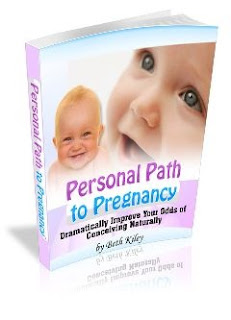 If you want to become pregnant quickly, easily and naturally, then Personal Path To Pregnancy will likely be the best investment you've ever made.
For some women, getting pregnant can happen without even trying, but for many others, it may require hard work and perseverance.
The truth is, most women are taught more about how to avoid pregnancy, than about how to actually get pregnant.
If you've been struggling for a while, or even just starting out...wouldn't you want to know what you can do naturally to dramatically increase your odds of getting pregnant faster?
There are several options on the market that claim to have the
secretto getting pregnant, but speaking from experience, the information provided is often very disappointing.
This is NOT the case for Beth Kiley's Personal Path to Pregnancy system. This program is quite different from all of the others because Beth does not claim that there is one single method that will work for everyone.
Rather, in her ebook she offers comprehensive information which details countless ways both men and women can make changes to greatly improve their own fertility without resorting to drugs, surgery or invasive procedures.
The very important point that Beth makes early on is that most couples looking for help getting pregnant think that there is a big “Secret” that you need to uncover.
Unfortunately this is fueled by the advertising for many other ebooks that lead women to believe that this big SECRET really does exist. But the truth is, usually couples are making several small mistakes which are stopping you from getting pregnant.
The
Bigthings are generally those things you already know about because you’ve heard about it and/or read about it before from friends, in magazines, books, on websites, etc. so you are probably getting that stuff right.
But here's the big secret--it is all of the SMALL mistakes combined that can do the damage and make it more difficult to get pregnant. These are the things that aren't widely talked about. And the reason it doesn't get talked about much is because for most couples, the small things don't matter!!
If your fertility potential is already high, making a few small mistakes won't really matter. But if you are someone who has been struggling to conceive, then these small mistakes can add up to a HUGE problem getting pregnant.
So a majority of the tips and strategies in Personal Path to Pregnancy focus on these small changes you can make which can literally skyrocket your fertility. Of course she includes all of the other
Bigstuff as well, just as a refresher or for those that haven't done any reading on this topic at all.
Personal Path to Pregnancy covers a variety of topics which include nutritional and lifestyle changes. There is information on detecting ovulation, timing of intercourse, vitamins, herbs, alternative remedies, and improving male fertility, to name just a few.
You will get pregnant easier because Beth also sorts through all of the myths and old wives tales that may have you confused, not knowing what is really true.
If you're thinking about now,
I don't think I'll find anything new in this eBook, you will be wrong. I thought the same thing. Even after researching on my own for ways to help me get pregnant, it seems there was still quite a bit I didn't know.
Of course I already knew some of the material in the eBook--that's to be expected if you've done any reading on this topic at all. But more importantly, I did learn lots of new tips and strategies and you will too!
If you are looking for inspiration, she also has a
Success Storiespage on her website where she has posted emails from some of the many women who have found success after using her program. It really does give you hope to read how these methods worked for so many others, many of whom had been struggling for years before following Beth's plan.
At first, her website gives you access to a FREE report which is just a small sample from her ebook. It's called the
7 Most Common Mistakes to Avoidand it is definitely worth getting.
Once you purchase Personal Path to pregnancy, you'll find there are also a bunch of free gifts for you with a ton of added value on a variety of pregnancy/fertility topics.
All in all, if you are truly serious about implementing a program that will help you to get pregnant faster, you can't go wrong with Personal Path to Pregnancy. As they say, knowledge is power and you will feel much more empowered and in control of your fertility with the guidance in this ebook from Beth Kiley.
And if for any reason you are unsatisfied, she offers a
no questions asked100% satisfaction guarantee so you have nothing to lose (and everything to gain!!) by giving it a try.
I highly recommend it.
TODAY'S BOOK SUGGESTION:
Personal Path to Pregnancy
by Beth Kiley
-- Unfortunately, the average woman knows more about how to prevent pregnancy than how to actually get pregnant.
If having a baby of your own has been eluding you, then don't waste any more time trying month after month without the information you need at your disposal.
You no longer have to keep trying aimlessly month after month, trying to remain hopeful, then only to have your dream shattered each time your period arrives.
You deserve to know all that you can do to help you realize your dream of having a beautiful baby in your arms.
Discover how Beth Kiley has taught thousands of women worldwide to conceive faster than they ever thought possible. Get your hands on the most comprehensive resource available to maximize your fertility.
Click to order / read more: Personal Path to Pregnancy

Turns out that women aren’t the only ones who should be hearing the tick tock of their fertility winding down.
According to a number of recent studies, men have a biological clock too.
Unlike women, who experience a sudden drop in estrogen production, as men age their testosterone levels steadily decrease, contributing to rising incidents of everything from diabetes to infertility.
The rate of decline is about one percent per year beginning in the thirties.
Low levels of testosterone affect as many as 4 million American men, which can lead to emotional irritability, depression, loss of muscle mass and bone mineral density, and decreased energy and libido.
Stock Photo credit: LotusHead
All rights reserved
TODAY'S BOOK SUGGESTION:
 Bringing in Finn: An Extraordinary Surrogacy Story
by Sara Connell
-- In February 2011, 61-year-old Kristine Casey delivered the greatest gift of all to her daughter, Sara Connell: Sara’s son, Finnean.
At that moment, Kristine—the gestational carrier of Sara and her husband Bill’s child—became the oldest woman ever to give birth in Chicago.
Bringing in Finn is the incredible story of one woman’s hard-fought and often painful journey to motherhood.
In this achingly honest memoir, Connell recounts the tragedy and heartbreak of losing pregnancies; the process of opening her heart and mind to the idea of her 61-year-old mother carrying her child for her; and the profound bond that blossomed between mother and daughter as a result of their unique experience together.
Moving, inspiring, and ultimately triumphant, Bringing in Finn is an extraordinary tale of despair, hope, forgiveness, and redemption—and the discovery that when it comes to unconditional love, there are no limits to what can be achieved.
Hardcover: 336 pages - Click to order/for more info: Bringing in Finn: An Extraordinary Surrogacy Story - US | Canada | UK
-- Start reading Bringing in Finn: An Extraordinary Surrogacy Story on your Kindle in under a minute! US | Canada | UK
Don't have a Kindle? Get your Kindle here: US | Canada | UK , or download a FREE Kindle Reading App.
• Follow us on Twitter, join the conversation on our Facebook page, circle us on Google+, follow our pins on Pinterest.
More Frugal Blogs and Websites:
• Born to Love: All your cloth diapering needs, and much more - naturally! We are strong advocates of the personal, social and environmental benefits of natural parenting.
• Frugal Freebies: Keep up with the latest free stuff, deals, coupons, and other ways to save money!
• My Frugal Baby Tips: Taking care of baby and mom needs naturally, does not have to cost a whole lot of money!
More "Pregnancy Over 40" blogs to visit:
• Life Begins... - Pregnancy stories of loss, hope and help
• Pregnancy Stories by Age - Daily blog of hope and inspiration!
• You Can Get Pregnant in Your 40's - Sharing articles, discussing options and suggestions
• Stories of Pregnancy and Birth over 44 - sharing news stories I find online, for inspiration!
• Life Begins... - Pregnancy stories of loss, hope and help
• Pregnancy Stories by Age - Daily blog of hope and inspiration!
• You Can Get Pregnant in Your 40's - Sharing articles, discussing options and suggestions
• Stories of Pregnancy and Birth over 44 - sharing news stories I find online, for inspiration!

There is no stopping the biological clock, as the birth rate shows. In 1999, there were 622,000 babies born in England and Wales. The most productive group, surprisingly, was the women aged 30-34: they had 185,300 babies. By the time women reached 40-44, they produced 13,600 specimens, and at 45-plus, 635 gave birth. In fact, nearly 300,000 women over 30 had babies, a cheering thought, until you think of the nappies.
But the figures leave much in the dark. How many 40-plus women are still trying, how many are still using contraceptives, how many are already infertile? Looking back can cast some light. In 1938, the number of women having babies in the 30-34 age group was actually smaller than today, even though the birth rate was roughly the same. Madonna and Cherie wouldn't have even made a paragraph then, when 25,000 women in the 40-44 age group gave birth - almost double current levels - and 2,200 babies were born to women over 45. That's almost four times as many as now. Clearly, choice, as well as biology, plays an important part - the really sharp decline in the birth rate for 35-plus women came in the 1970s, when it halved, coinciding with easier access to the Pill and abortion.
So, by when should you have your fertility tested? Unfortunately, exactly at what rate fertility declines is impossible to say. Nobody has measured the number of women trying to get pregnant at 40, say, and studied how successful they are. To state, as one Sunday broadsheet report of the American campaign did, that the rate of conception drops to a mere 2 per cent at 40 is very bleak and misleading.
No one can deny that you may have to wait longer to get pregnant once you are in you mid- to late-thirties, or that you may fail. As someone who did have a baby at the drop of a hat at 40, and another, albeit after three miscarriages, at 46, my advice is this: next time you see a shock-horror headline about older mothers, just turn the page.
Photo credit: hortongrou
Some rights reserved
TODAY'S BOOK SUGGESTION:

 Enhancing Fertility Naturally: Holistic Therapies for a Successful Pregnancy
by Nicky Wesson
-- outlines ways in which you can improve your fertility through alternative therapies, diet, exercise, and relaxation techniques and avoid some of the hazards associated with conventional treatments.
It discusses the most common causes of infertility and explains how to determine which therapy is most appropriate for you.
In vitro fertilization, conventional medicine's most prescribed remedy for infertility problems, is expensive, dangerous, and has a success rate of only 14 percent, yet few of the one in six couples that experience infertility are aware of the effectiveness and safety provided by the wide range of alternative treatments.
Thoroughly researched and packed full of invaluable advice and tips, the book explores such therapies as acupuncture, reflexology, homeopathy, cranial osteopathy, aromatherapy, and herbal-ism.
The author includes case histories for each of the therapies discussed, showing how the therapies helped couples overcome both primary and secondary infertility in order to have the baby they longed for.
Paperback: 192 pagesClick to order/for more info: Enhancing Fertility Naturally
Popular Posts
-
 Menopause is the time in a woman's life when her reproductive system shuts down and her reproducing days are over... or are they? For s...
 -
 In her early 40s, Deborah Walker still had hopes of becoming a mom. Like many of her peers, she'd chosen to first focus on her caree...
 -
 Fertility Supplement Bundle Our diet is one of the most important factors when it comes to trying to have a baby. Making sure we watch...
 -
 Found this post by Ally (Ocelot Cub) on FertilityFriends.co.uk : Ally wrote: I have collected a number of success stories from ladies w...
 -
 Can you lower your FSH? Can you improve your egg quality? Doctors will say you can't. Tour eggs are as old as you are, and nothing ...
 -
 A Zen thought ... A true expert is not the one with the most knowledge, but one who causes the most others to have knowledge. Questions, ...


Recent Comments