
In a groundbreaking study, Yale School of Medicine researchers and colleagues at the University of Oxford have identified the chromosomal make-up of a human egg.
This discovery may soon allow them to avoid using abnormal -- or aneuploid -- eggs during infertility treatments, and instead to pick eggs healthy enough for a successful in vitro fertilization (IVF) cycle.
The results are published in the May issue of the journal Human Reproduction.
Only a few oocytes (eggs) per IVF treatment cycle are able to produce a pregnancy because many eggs have the wrong number of chromosomes.
If the egg is missing a chromosome or has an extra chromosome, this is referred to as aneuploidy. This problem increases as women age.
Oocytes are surrounded by cells, called cumulus cells, which regulate and assist the process of egg maturation.
In this study, Yale Fertility Center director Dr. Pasquale Patrizio, and Dagan Wells of the University of Oxford studied genes expressed in the cumulus cells.
They were able to identify a set of genes less active in cells, which is associated with abnormal eggs.
They characterized two genes -- SPSB2 and TP5313 -- and found the expression of these genes was consistently underrepresented in cumulus cells surrounding abnormal eggs, while these same genes were normally expressed in eggs with the correct number of chromosomes.
The identification of these genes in cumulus cells can serve as a novel, non-invasive marker to identify abnormal oocytes and thus ultimately improve IVF success rates,said Patrizio, professor in the Department of Obstetrics, Gynecology and Reproductive Sciences at Yale.
We can use cumulus cells surrounding the eggs to gain insight into the health of an egg. These cells are now able to inform us about the chromosomal makeup of an egg. This can help us know if it is the 'right egg' to be fertilized and produce a baby.
This finding opens up the possibility of a safe, effective, and inexpensive way of identifying healthy eggs, potentially lowering the risks of miscarriage and Down syndrome,said Wells.
By conducting these tests before eggs are fertilized, ethical concerns about an analysis of human embryos are avoided.
Other authors on the study include Elpida Fragouli, Amy E. Lager, and Umit A. Kayisli.
Wells is supported by the National Institute for Health Research Biomedical Research Centre, Oxford; the work was also supported by a grant from Gema Diagnostics, Inc.
Story Source: The above story is reprinted from materials provided by Yale University. The original article was written by Karen N. Peart.
Journal Reference: Alteration of gene expression in human cumulus cells as a potential indicator of oocyte aneuploidy
TODAY'S BOOK SUGGESTION:
 The Insider's Guide to Egg Donation: A Compassionate and Comprehensive Guide for All Parents-to-Be
by Wendie Wilson-Miller and Erika Napoletano
-- In their search for alternative means for building a family, those who face infertility turn to the nearly 500 reproductive specialty clinics across the United States.
While egg donors enter into the picture for a variety of reasons, every reason has the same desired result: a family to call one’s own.
Same-sex and single-by-choice parents are more prevalent than ever in the fertility industry, and there is no definitive, up-to-date guide to help families of all types approach egg donation, especially these niche groups. Resources are fragmented, true regardless of the family structure.
The Insider's Guide to Egg Donation is the first how-to-handbook helping families of all types navigate the less talked about but widely practiced egg donor landscape with a warm and friendly tone, giving those in search of a different kind of stork the answers and information they need as they begin to research family-building options.
 Paperback: 280 pages
Click to order/for more info: The Insider's Guide to Egg Donation
Start reading The Insider's Guide to Egg Donation on your Kindle in under a minute!Don't have a Kindle? Get your Kindle here, or download a FREE Kindle Reading App.
 |
Photo credit: Life size model of baby at 8 weeks after conception by Bill Davenport |
Fertility clinics usually study newly fertilized embryos under a microscope to determine if they are developing in a normal way, and to see which seem the most likely to successfully implant.
Emre Seli and his team have developed a more advanced method of analyzing which embryos are healthy, by studying cell metabolism
Read more: New techniques improve IVF success rates
TODAY'S BOOK SUGGESTION:
 A Matter of Trust: The Guide to Gestational Surrogacy
by Gail Dutton
-- Published in 1997, this book is a step-by-step guide to surrogate parenting.
It discusses finding and working with a surrogate, what a surrogate program provides, what to include in the contracts, recommended testing for potential surrogates, detailed costs for each item related to surrogacy, the medical procedure, medications and their side effects, embryo cryo-preservation, demographics of surrogates and surrogate couples and the effects of surrogacy upon children.
One chapter outlines the laws in U.S. states and in Israel, South Africa, Canada, the United Kingdom, Denmark, Germany, France, Switzerland, New Zealand, Australia, Hong Kong, Japan, and Russia.
Jewish law also is discussed, along with the views of several Christian denominations, and other religions regarding surrogacy.
Paperback: 239 pagesClick to order/for more info: A Matter of Trust
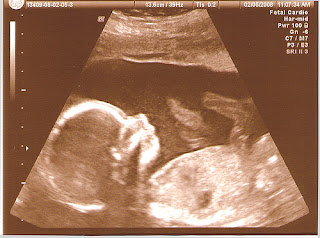 |
| Photo credit: hello in there!, by Adrienne Bassett |
While over 82 percent of the 168 survey respondents are generally aware that there are a number of procedures performed on their eggs after retrieval, only 8 percent are aware that many IVF clinics use slaughterhouse-derived animal extract products (from bovine and ovine sources) to treat eggs prior to the ICSI procedure.
More than 89 percent of respondents do not know that the use of animal extract products may have a potential impact on the outcome of an IVF cycle, such as fertilization rates and quality of embryos, for example. Fifty-seven percent of IVF procedures performed in the U.S. are ICSI or include ICSI.
Source: ARLINGTON, Va., and SAN DIEGO, Oct. 27, 2006 /PRNewswire-FirstCall/
Full article: Inciid.org
TODAY'S BOOK SUGGESTION:
 Pregnancy Miracle
by Lisa Olsen
-- A 279-page, instantly downloadable e-book presenting a 5-step, sure-fire, 100% guaranteed, clinically proven holistic and ancient Chinese system for permanently reversing your infertility and your partner's infertility disorders and getting pregnant quickly, naturally and safely within 2-4 months without drugs, dangerous surgeries, side effects, or expensive infertility treatments.
It's probably the most powerful infertility reversal system ever developed, and currently the best-selling e-book of its kind on the entire Web!
Here's what the author Lisa Olson had to say about her incredible program:
After 14 years of trial, error, and experimentation, I finally discovered the answer to infertility and developed a fool-proof system to getting pregnant the natural way - no drugs, or surgery necessary.
It took a lot of research to get to where I am today, to know exactly what works and what doesn't. Yes, after desperate trial and error, countless of useless treatments, disappointments, and agony, a simple holistic system opened the door to my new and much brighter life of motherhood.
I was also excited to see that my other infertility related symptoms had diminished. After years of waiting, I was finally free from Infertility! I have become a proud mother of two.
And now I'm finally revealing my secrets in this new 'encyclopedia' of pregnancy called, Pregnancy Miracle.
I will be your own personal coach, take you by the hand, and lead you through the lousy advice, hype and gimmicks... and directly to the sort of inner balance perfection that will end your battle with infertility forever and help you become a proud mother of your healthy children.

Click to order/for more info on this helpful program:
Pregnancy Miracle
 |
| Photo credit: The O Face!, by Anissa Thompson |
This focus reflects a common approach to reproduction. Reproductive rights are often framed as a matter of individual autonomy and freedom from government interference in personal procreative decision making.
For most Americans, reproductive freedom means the right to choose. Discussion about the ethics of reproduction tends to center on the morality of the choices people make.
If we focus too intently on whether or not the McCaugheys made the right decision when they chose to have seven more children, we miss far more critical issues raised by reproduction-assisting technologies.
We should not be asking whether the McCaugheys contravened a moral consensus but what a moral social policy regarding fertility enhancement would be.
At present, there are disturbing race and class disparities in policies concerning childbearing. The current consensus on the use of reproductive technologies appears to treat white middle-class couples and poor minority families in stark contrast.
The fertility business serves primarily white people even though blacks have a higher infertility rate.
White women seeking treatment for fertility problems are twice as likely as black women to use high-tech treatments, such as in vitro fertilization (IVF).
Many black Americans were troubled by the celebration accompanying the birth of the McCaughey children, who are white, when compared with the media's disregard of a black couple in Washington, D.C., who conceived six babies (without medical intervention) at about the same time.
TODAY'S BOOK SUGGESTION:
 Hannah's Hope: Seeking God's Heart in the Midst of Infertility, Miscarriage, and Adoption Loss
by Jennifer Saake
-- Hannah's heart beat with a mother's love long before she was blessed with a child.
Through the years of waiting and longing, her gentle heart was nearly crushed under the weight of grief.
You can meet Hannah in the pages of 1 Samuel, chapters 1 and 2.
The Bible says she was
barren,and we know she suffered heartache, anguish, and grief because of her empty arms. Perhaps you do too.
Hannah's Hope is for all who long for a child yet to be conceived, grieve for a baby too soon passed from the womb, or have lived through the no-man's-land of failed adoption.
It is intended as a guide to assist you in making wise decisions as you struggle through your grief.
And by the end of the journey, God may surprise you by the ways He uses to answer your heart's cry.
Compassionately written by a woman who knows well these painful struggles, Hannah's Hope will direct you to the Source of strength, whose name is
the God of all comfort.
Paperback: 160 pagesClick to order/for more info: Hannah's Hope
Start reading Hannah's Hope on your Kindle in under a minute!Don't have a Kindle? Get your Kindle here, or download a FREE Kindle Reading App.
 |
| Photo credit: Sami and Mamita, by Dee |
A 66-year-old woman had a baby in Romania after undergoing fertility treatments.
A woman in California, who was 63, lied about her age to undergo IVF [in vitro fertilization].
That makes many people wonder:
How old is too old?
Should we stop an older woman from having a baby because the health risks are too high? Or should we allow anyone who can afford to do so to undergo IVF, regardless of her advanced age?
What do you think? Should there be an age cutoff for fertility treatments or should we allow anyone who wants to conceive a chance to do so?
Rights: People are concerned about an
epidemicof older women having babies, but in actuality there were only 323 babies born to women over 50 in 2003, a 23-percent increase over the 263 births reported for 2002.
Since 1997, when donor egg became available, the number of births for women aged 50–54 years has increased with an average annual gain of 14 percent.
Source: Births: Final Data for 2003
Of the 323 babies born to women over 50, only a small percentage would be Donor Egg. The rest would be a surprise to the woman, who probably thought she was in menopause. Oops!
We must be careful when we consider taking away a woman's reproductive rights. Currently they are talking about age 27 being the cut-off age for getting pregnant without medical help.
Who will be considered too old by the time your children have children?
TAXES: In 2003, there were only 323 babies born to women over 50 in the US. A large number of them were
oops!babies, not thru donor egg.
There have been only about six babies born to women over 60 since donor egg first became available. All were born to women wealthy enough to afford to pay for it - at $30,000 a cycle, and it took them several cycles to accomplish.
They have the resources to pay for nannies, night nurses, daycare, private school. They have made plans, have investments, created a will, chosen guardians in the event of their death. These were planned, very much wanted and anticipated babies.
How many children are born unplanned to teen moms, addicts, abuse? How many born into poverty, how many that end up in the
system?
QUOTE: Poverty affects all ages, but an astonishing 48% percent of its victims are children:
* About 15 million children -- one out of every four -- live below the official poverty line.
* 22% of Americans under the age of 18 -- and 25% under age 12 -- are hungry or at the risk of being hungry.
* Everyday 2,660 children are born into poverty; 27 die because of it.
* Children and families are the fastest growing group in the homeless population, representing 40%.
Source: Children in Poverty: America's Ongoing War
Honestly, where do you really think your tax dollars are going? To raise the 6 babies that
mightbe orphaned by older moms, who planned for their future? Or to take care of the thousands of babies born to young moms who abandon, die from AIDS, or have their children removed?
Face it, only the very wealthy can afford this option, and very few women in their 60s would have ANY interest in giving birth to a child at that point in their lives.
TODAY'S BOOK SUGGESTION:
 Motherhood After 35: Choices, Decisions, Options
by Maggie Jones
-- How is having a baby different for women in their late thirties and early forties?
If you're between 35 and 45 and trying to have a baby, or have already conceived, here's the reassurance you need ... and the facts you've been waiting for.
Maggie Jones evaluates the advantages as well as the risks of later motherhood.
Whether you are considering your first pregnancy after 35 or are starting a
secondfamily later in life, Motherhood After 35 is written with you in mind.
The author describes simply and clearly how to have the healthiest pregnancy possible and the options available.
Paperback: 192 pagesClick to order/for more info: Motherhood After 35
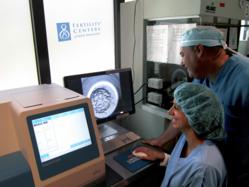 The first baby has been born from donor eggs in an in vitro cycle using a specialized incubator called an Embryoscope®, the Fertility Centers of New England have reported. The incubator uses time-lapse photography to give embryologists revolutionary insight into an embryo's development. Doctors can actually watch embryos develop and monitor healthy cell divisions in a way previously impossible.
The Fertility Centers of New England previously announced the first successful births following embryo culture using the Embryoscope® (Unisense/Fertilitech, Aarhus, Denmark), a new advancement for the IVF laboratory. This new development marks the first live birth in a Donor IVF cycle.
We are proud to once again be at the forefront of using this new technology and the first IVF center in the United States to report this live birth in a Donor IVF cycle, said Fertility Centers of New England President and CEO, Joseph A. Hill, MD.
We are also proud to be the only IVF center in New England using this technology clinically on a daily basis.
The Embryoscope® incubator is a state-of-the-art system, with a built-in camera providing automated and continuous time-lapse photography of fertilized oocytes from conception until the time of embryo transfer without disturbing the culture environment.
This innovative device allows embryologists to assess an embryo's development by closely observing cell division at key time periods.
As we continue to culture more embryos in this innovative system, we will also be able to design specific selection or de-selection parameters to assist with embryo selection,said Fertility Centers of New England Laboratory Director Dr. Michael Tucker.
This type of technology may prove to be very useful in reducing the number of twins and triplets by selecting a single embryo for transfer that is the most likely to result in the birth of a healthy baby.
Not only are we pleased to offer patients the latest laboratory technology,said R. Ian Hardy, MD, PhD, Medical Director for the Fertility Centers of New England. We currently have the highest reported live birth rates for donor cycles on the East Coast.
We also recognize that the cost of Donor IVF can be a barrier to access for many patients and are proud to offer our Egg Assist™ program to help our patients build healthy families. An exciting benefit of the Embryoscope® is that we can also offer new parents a video record of their baby from conception to the point of embryo transfer.
Example of videos can be found here.
-- The Fertility Centers of New England is proud to be at the forefront of advanced infertility treatment and for increasing access to care by providing the most affordable treatment options without compromising quality and results.
Press Release found at PRWeb.com
Photo credit: Fertility Centers of New England
All rights reserved
TODAY'S BOOK SUGGESTION:

 You Make Me Feel Like an Unnatural Woman: Diary of an Older Mother
by Judith Newman
-- Today the number of women having their first child over thirty-five has increased by a bazillion fold, or some equally scary large number.
Newman is the first to write a book that tells what it's really like when a trip to the drugstore entails the purchase of both diaper cream and wrinkle cream; when "
getting your shotsmeans both immunization and Botox.
You Make Me Feel Like an Unnatural Woman is not only about having children later in life: it's about what happens to a marriage—and to the spirit, when even the most sought-after baby comes.
Wry, warm, and brutally honest, this is the book for any woman—whatever her age—who has awakened at 3AM to the insistent shrieks of her darling and thought: Oh man, I'm too old for this.
Paperback: 320 pagesClick to order/for more info: You Make Me Feel Like an Unnatural Woman

As a passionate advocate of making family wishes come true, IVF New Jersey Fertility Center is helping active U.S. military personnel and veterans by offering significant discounts on fertility treatments and subsidized medications.
Due to the risks of being on active duty in Iraq or Afghanistan, more than 1,800 U.S. military members have incurred injuries affecting the reproductive tract. While the U.S. Department of Veterans Affairs does the best they can, they are unable to cover the costs of in-vitro fertilization for veterans, which averages between $12,000 and $15,000.
This is an ongoing discount because the affects of their injuries are also ongoing,says Jane Tervooren, IVFNJ Markeing Director.
When many of these young men and women were deployed, they didn’t leave their dreams of having a family behind. We’re just thrilled that we are able to contribute in some way to help them grow their families when they return.
The topic of providing fertility services to U.S. military has been covered by several major media sources, including the Associated Press. It’s a real need that IVFNJ was well-aware of before the headlines. Their fertility experts have a history of working with these men and women, with positive testimonials going back several years. The program will continue to service these personnel at their five convenient locations throughout the Northeast.
IVF New Jersey Fertility Center has helped patients from across the globe and boasts one of the highest success rates in the United States. They have successfully matched more than 2,000 recipients through their egg donation program. Their physicians have received international industry recognition for their work as well as publicity on the Today Show and New York Magazine. But their main sources of inspiration come from many heart-warming success stories, several of which can be read on their website.
We understand that it’s humbling enough to have to come to a physician’s office and discuss infertility, much less having to add a need for financial assistance on top of that,says Tervooren.
What we want these service men and women to know when they arrive at our office, is that we are honored to have a chance to serve them. For all they’ve done for our country, this is really a program for our benefit because it gives us a chance to give back.
For active U.S. military personnel and veterans to participate in this offer, they need only make an appointment with one of IVF New Jersey’s five locations.
About IVF New Jersey Fertility Center:
IVF New Jersey Fertility Center was founded in 1990 with the goal of creating a fertility practice that combines the best of big-city medicine with the personalized care of a private setting. For the past 22 years, IVFNJ has helped bring thousands of babies to couples in the metropolitan region and throughout the world. IVFNJ’s unique cutting-edge facilities allow the physicians to perform all standard infertility diagnostic and treatment procedures under one roof, all in a comfortable, private, non-hospital setting. IVFNJ is one of the largest fertility centers in the nation with some of the highest success rates in the U.S. according to the Center for Disease Control (CDC). For more information visit IVFnj.com.
TODAY'S BOOK SUGGESTION:
Pregnancy Miracleby Lisa Olsen
-- A 279-page, instantly downloadable e-book presenting a 5-step, sure-fire, 100% guaranteed, clinically proven holistic and ancient Chinese system for permanently reversing your infertility and your partner's infertility disorders and getting pregnant quickly, naturally and safely within 2-4 months without drugs, dangerous surgeries, side effects, or expensive infertility treatments.
It's probably the most powerful infertility reversal system ever developed, and currently the best-selling e-book of its kind on the entire Web!
Here's what the author Lisa Olson had to say about her incredible program:
After 14 years of trial, error, and experimentation, I finally discovered the answer to infertility and developed a fool-proof system to getting pregnant the natural way - no drugs, or surgery necessary.
It took a lot of research to get to where I am today, to know exactly what works and what doesn't. Yes, after desperate trial and error, countless of useless treatments, disappointments, and agony, a simple holistic system opened the door to my new and much brighter life of motherhood.
I was also excited to see that my other infertility related symptoms had diminished. After years of waiting, I was finally free from Infertility! I have become a proud mother of two.
And now I'm finally revealing my secrets in this new 'encyclopedia' of pregnancy called, Pregnancy Miracle.
I will be your own personal coach, take you by the hand, and lead you through the lousy advice, hype and gimmicks... and directly to the sort of inner balance perfection that will end your battle with infertility forever and help you become a proud mother of your healthy children.
Click to order/for more info on this helpful program:
Pregnancy Miracle

1. Does the couple really need IVF? We look at whether they really do and offer holistic alternatives if needed.
2. Preparation - The lead up to the cycle is vital and couples need to look at five areas: medical tests and investigations, nutritional and lifestyle assessment, mental and emotional well-being, relationships, and stress management techniques. We offer all of these under one roof.
3. An individual approach - Attention to detail on every level. Ours is not ‘one blanket fits all’ policy.
4. Mind set – This is really key getting women to feel positive and prepared mentally. This is addressed at the clinic through hypnotherapy and counseling sessions.
5. Nutrition and lifestyle assessment - We offer this to all our clients as part of our package, ensuring that they are in optimum health prior to embarking. We look at micro-nutrient status, vitamin D and essential fatty acids.
6. Male factor fertility - This is often overlooked at clinics, but we know it can be crucial.
7. Relationship - The dynamic of a relationship has an important factor in fertility. Helping the couple to cope through what is often a stressful time,
8. Relaxation - We offer relaxation therapies and stress reduction techniques, as well as acupuncture, hypnotherapy and counseling.
9. Supplementation - We know that eggs and sperm are damaged by lifestyle factors creating free radical damage. We offer supplementation with antioxidants, and Omega three can improve this to produce healthier sperm and eggs.
10. Implantation failure and Immune factors - In the first year many of our couples have had up to 10 failures due to immune issues. Three or more miscarriages, three failed IVF attempts with good embryos, or a family history of immune issues; thyroid or endometriosis can all be reasons for implantation failure. We combine this with a holistic immune program.
New Integrated IVF at Zita West assisted fertility (ZWAF) is the winning formula for successful pregnancy.
Our first year results:
New figures released by the Zita West Assisted Fertility Clinic reveal that a different approach to IVF greatly improves the chance of pregnancy. The first 13 clients have now delivered their babies despite having had 60 failed IVF cycles between them at other clinics.
Our statistics:
During October 2011 to August 2012 we carried out 155 embryo transfers. We achieved a positive pregnancy rate of 61% for women under 38 years of age, 46.4% for women aged 38 to 39 and 28.8% for women aged 40 to 44. All of the results are per fresh embryo transfer.
How we achieved them:
The ZWAF Team attributes the success to fostering a caring environment which considers clients individually.
Women want a calm, relaxing, non-medical environment - not a conveyor belt system,says Zita.
Our clinic takes an individual tailored approach looking at the whole picture. We look at five key areas – medical, nutrition, lifestyle, emotional well-being and the relationship with their partner. Preparation is the key and we use therapies such as hypnotherapy and acupuncture alongside other mind-body therapies.
The Clinic also has top medical director George Ndukwe, who has pioneered approaches for implantation failure and reproductive immunology.
I have always believed in holistic approach to IVF and have been a huge advocate of the Zita West approach,explains George.
Having the opportunity to join forces is very exciting. We have perfected the art and science of IVF and it is more than just getting the sperm and eggs together. Preparation is the key to successful IVF. Looking and testing for nutritional status, (we are the only clinic in the UK, to offer a Nutritional and lifestyle assessment as part of our ivf package)as well as addressing mind-set and stress reduction are key factors.
Source
TODAY'S BOOK SUGGESTION:

 Zita West's Guide to Getting Pregnant
by Zita West
-- A pioneer in the field of fertility, Zita West's programme is invaluable for couples trying to conceive.
Harley Street's most popular fertility expert, and favourite consultant to celebrity clients, guides the reader through a process of vital physical and mental preparation.
The book is for every couple trying to conceive and has fascinating advice taken from Zita's 20 years of experience as midwife and 7 years as an acupuncturist.
It provides a structured, easy-to-follow step-by-step programme, complete with case studies and and enormously detailed questionnaire.
The guide includes details on:
• when and how often to have sex
• what can prevent fertilization and conception
• everything you need to know about sperm and ovulation
• nutrition, supplements and herbs
• complementary therapies such as acupressure, lymphatic massage and hypnotherapy
• how to overcome stress and other emotional blocks to pregnancy
• PCOS, endometriosis and other health issues
• tests and procedures if there is a problem
• and much much more.
Paperback: 400 pagesClick to order/for more info: Zita West's Guide to Getting Pregnant
Start reading Zita West's Guide to Getting Pregnant on your Kindle in under a minute! Don't have a Kindle? Get your Kindle here, or download a FREE Kindle Reading App.
 |
| Photo credit: Raw Justification, by makelessnoise / Brian |
The reports come in advance of the first annual meeting of the International Society of Natural Cycle Assisted Reproduction (ISNAR).
The world's first test-tube baby, Louise Brown, born in 1978, used an IVF procedure which collected the woman's eggs during ovulation making the most of her natural cycle.
The use of high dose drugs has increased as older women, with less chance of success, are seeking treatment for infertility.
It is believed that one in twenty IVF patients suffer some side effect from the drugs used, this can range from pain and bloating to kidney damage.
Full article: BioNews.org.uk
TODAY'S BOOK SUGGESTION:
Motherhood After 35: Choices, Decisions, Optionsby Maggie Jones
-- How is having a baby different for women in their late thirties and early forties?
If you're between 35 and 45 and trying to have a baby, or have already conceived, here's the reassurance you need ... and the facts you've been waiting for.
Maggie Jones evaluates the advantages as well as the risks of later motherhood.
Whether you are considering your first pregnancy after 35 or are starting a
secondfamily later in life, Motherhood After 35 is written with you in mind.
The author describes simply and clearly how to have the healthiest pregnancy possible and the options available.
Paperback: 192 pagesClick to order/for more info: Motherhood After 35
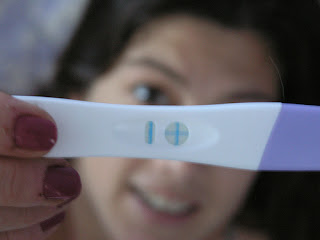
Thousands of women who take high doses of fertility drugs as part of IVF treatment may actually be harming their chances of ever having a baby, doctors are warning.
Increasing reliance on such powerful drugs could be preventing women from getting pregnant and damaging their eggs, new studies suggest.
A conference of fertility experts this month will call on the IVF industry to rethink its approach. They say hormones used to "kickstart" the ovaries could cause chromosomal damage to more than half of eggs, rendering them useless.
The treatments may also affect the womb lining, preventing embryos from implanting.
Read the article: telegraph.co.uk
Photo credit: Positive,
by Editor B / Bart Everson, on Flickr
Some rights reserved
TODAY'S BOOK SUGGESTION:


The Couple's Guide To In Vitro Fertilization: Everything You Need To Know To Maximize Your Chances Of Success
by Liza Charlesworth
-- Despite the fact that it is an expensive, complex, emotionally draining, and often last-ditch fertility treatment, there are now over 250,000 couples who consider in vitro fertilization (IVF) every year; more than 125,000 couples decide to undergo it.
While dry, clinical information is available, there is a gaping need for sisterly advice from someone who's been through the process herself.
From evaluating care and preparing for the complicated process to understanding egg retrieval and embryo transfer; from tips on taking medications and coping with hormonal surges to dealing with the emotional aspects of the grueling IVF process, Liza Charlesworth's The Couple's Guide to In Vitro Fertilization offers knowing, sensitive counsel.
Full of hard-won personal wisdom and the most up-to-date medical information explained in layman's terms, this invaluable guide is sure to become recommended reading for couples trying to conceive and their families alike.
Paperback: 312 pagesClick to order/for more info: The Couple's Guide To In Vitro Fertilization

A new way of processing embryos during IVF treatment can improve the chances of pregnancy by more than a quarter, The Daily Telegraph today reported.
The story is based on research evaluating a new system for incubating newly fertilized embryos during IVF treatment. The new system is designed to protect the growing bundles of cells from environmental stresses that might affect their development.
In conventional systems, the embryos had to be transferred between different devices to perform all the various stages of IVF treatment, but the new system allows a range of functions to be performed in a single sealed unit that regulates the temperature and quality of the air around them.
This research found that in the conventional system 30% of embryos successfully developed to the ‘blastocyst stage’, which is seen five or six days after fertilization, compared with 40% in the new system. The new system was also associated with an increase in clinical pregnancy rates during the period that it was introduced.
The findings are interesting, but they do not add up to an IVF “ breakthrough”, as is suggested by The Daily Telegraph. The new method of incubating embryos sounds promising, but no randomised trial has yet been undertaken into its effectiveness. Further good research is needed to investigate whether it can improve pregnancy and live birth rates.
This method of culturing embryos in a laboratory for five to six days after fertilization before implantation in the womb is called blastocyst transfer. Transferring the fertilized embryo to the womb two to three days after fertilization is called embryo transfer.
Read more
Photo credit: cesarastudillo, on Flickr
Some rights reserved
TODAY'S BOOK SUGGESTION:


Budgeting for Infertility: How to Bring Home a Baby Without Breaking the Bank
by Evelina W Sterling, Angie Best-Boss
-- Having a baby can be one of the most wonderful times of your life -- but if you need help to conceive, it can swiftly become a staggeringly expensive undertaking.
With the average cost of infertility treatments ranging from $35,000 to $85,000 in the United States (most of which is not covered by insurance companies), many women and couples find themselves having to make difficult choices about building their families.
Getting a grip on your finances is one of the few things you can do to regain control of this process. Infertility experts Evelina Weidman Sterling and Angie Best-Boss have created the ultimate guide to ensuring the most cost-effective care with the highest chances for success.
With anecdotes, interviews, and advice from both doctors and patients, you can easily apply these specific money-saving strategies to your own unique situation.
Paperback: 304 pagesClick to order/for more info: Budgeting for Infertility
Start reading Budgeting for Infertility on your Kindle in under a minute!Don't have a Kindle? Get your Kindle here, or download a FREE Kindle Reading App.
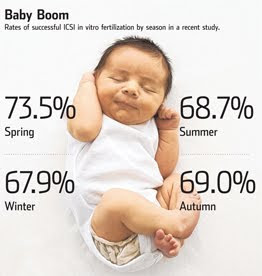
Infertile couples undergoing in vitro fertilization might have more success if the procedure is performed in the spring.
Research published in July's Gynecological Endocrinology found the rate of fertilization was significantly higher in spring than any other season, though time of year had no effect on pregnancy rates. Natural reproduction also varies with the seasons; it is believed the number of hours of sunlight in the day and temperature variations affect fertility.
Researchers compared seasonal fertilization rates in 1,932 women who underwent intracytoplasmic sperm injection, or ICSI, in Brazil from 2005 to 2009. ICSI involves the injection of a single sperm directly into an oocyte, or unfertilized egg, outside of a woman's body.
Subjects were organized into groups according to the timing of oocyte retrieval: 435 were assigned to winter, 444 to spring, 469 to summer and 584 to autumn. Fertilization, the fusion of sperm and egg to form an embryo, was assessed 18 hours after ICSI.
The rate of fertilization was 73.5% in spring, 68.7% in summer, 67.9% in winter and 69% in autumn. Ovarian response to ICSI hormone treatments, a measurement of estrogen concentration per number of retrieved oocytes, was higher in spring compared with other seasons, tests showed. Following fertilization, one to three embryos were transferred into the woman's uterus.
The procedure resulted in an average pregnancy rate of 33% for all seasons.
Study: Seasonal variability in the fertilization rate of women undergoing assisted reproduction treatments
Source
Photo credit: wsj.com
All rights reserved
TODAY'S BOOK SUGGESTION:

 In Vitro Fertilization: The A.R.T. of Making Babies
( Assisted Reproductive Technology )
by Geoffrey Sher, Virginia Marriage Davis, Jean Stoess
-- This clearly written technical handbook guides couples who are trying to conceive in determining whether they are eligible for in vitro fertilization (IVF) and in selecting the program that will help them achieve the best results.
It describes in detail the anatomy and physiology of conception and the steps required for realizing it in the IVF procedure.
In addition to providing accurate information, the practitioner authors address emotional, financial, physical, and moral-religious issues involved in the decision to conceive with medical assistance.
Despite its experimental reputation and persistent high cost, IVF is an appropriate option for many of the estimated 3.3 million infertile couples in the U.S. today, so this specialized manual speaks to a rather large audience of potential users.
Paperback: 312 pagesClick to order/for more info: In Vitro Fertilization

A bill introduced last week into Congress by Sen. Patty Murray would give veterans and their spouses access to in vitro fertilization services through the Department of Veterans Affairs for the first time.
In vitro fertilization is excluded from fertility services offered through the VA, but with a number of veterans facing injuries that can affect their ability to conceive, Murray, D-Wash., said in a statement for the Congressional Record that this service is part and parcel of caring for veterans when they come home.
"The nature of the current conflict and increasing use of improvised explosive devices leaves service members, both male and female, at increased risk for blast injuries including spinal cord injury and trauma to the reproductive and urinary tracts," Murray said. "Army data shows that between 2003 and 2011, more than 600 women and men experienced these life-changing battle injuries while serving in Iraq or Afghanistan. As they return from the battlefield ... the VA system must be equipped to help injured veterans step back into their lives as parents, spouses and citizens."
Read more
Photo credit: stripes.com
All rights reserved
TODAY'S BOOK SUGGESTION:
You Make Me Feel Like an Unnatural Woman: Diary of an Older Motherby Judith Newman
-- Today the number of women having their first child over thirty-five has increased by a bazillion fold, or some equally scary large number.
Newman is the first to write a book that tells what it's really like when a trip to the drugstore entails the purchase of both diaper cream and wrinkle cream; when "
getting your shotsmeans both immunization and Botox.
You Make Me Feel Like an Unnatural Woman is not only about having children later in life: it's about what happens to a marriage—and to the spirit, when even the most sought-after baby comes.
Wry, warm, and brutally honest, this is the book for any woman—whatever her age—who has awakened at 3AM to the insistent shrieks of her darling and thought: Oh man, I'm too old for this.
Paperback: 320 pagesClick to order/for more info: You Make Me Feel Like an Unnatural Woman
Popular Posts
-
 Menopause is the time in a woman's life when her reproductive system shuts down and her reproducing days are over... or are they? For s...
 -
 Photo credit: FertileCM.com - All Rights Reserved Cervical Mucus as a Natural Fertility Sign One of the purposes of cervical mucus is t...
 -
 Modern farming practices, your diet, and your lifestyle, may require that you supplement with certain nutrients to optimize fertility. Am...
 -
 A Zen thought ... A true expert is not the one with the most knowledge, but one who causes the most others to have knowledge. Questions, ...
 -
 In her early 40s, Deborah Walker still had hopes of becoming a mom. Like many of her peers, she'd chosen to first focus on her caree...
 -
 Photo credit: Day 183/365 Doing nothing , by Daniel Oines Many women live through painful periods and discomfort, totally oblivious of t...


Recent Comments