 |
| Photo credit: Photo courtesy Of Jennalee Ryan - All rights reserved |
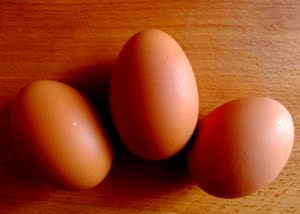
A Texas company has started producing batches of ready-made embryos that single women and infertile couples can order after reviewing detailed information about the race, education, appearance, personality and other characteristics of the egg and sperm donors.
We're just trying to help people have babies,said Jennalee Ryan, who arranged for an egg donor to start medical treatments to produce a second batch of embryos this week.
For me, that's what this is all about: helping make babies.
But the embryo brokerage, which calls itself
the world's first human embryo bank,raises alarm among some fertility experts and bioethicists, who say the service marks another disturbing step toward commercialization of human reproduction and
designer babies.
By Rob Stein / Washington Post Staff Writer
Read the full article
TODAY'S BOOK SUGGESTION:
 In Vitro Fertilization: The A.R.T. of Making Babies
( Assisted Reproductive Technology )
by Geoffrey Sher, Virginia Marriage Davis, Jean Stoess
-- This clearly written technical handbook guides couples who are trying to conceive in determining whether they are eligible for in vitro fertilization (IVF), and in selecting the program that will help them achieve the best results.
It describes in detail the anatomy and physiology of conception and the steps required for realizing it in the IVF procedure.
In addition to providing accurate information, the practitioner authors address emotional, financial, physical, and moral-religious issues involved in the decision to conceive with medical assistance.
Despite its experimental reputation and persistent high cost, IVF is an appropriate option for many of the estimated 3.3 million infertile couples in the U.S. today, so this specialized manual speaks to a rather large audience of potential users.
 Paperback: 312 pages
Click to order/for more info: In Vitro Fertilization
Here's how I figured it out:
In 2011, there were approximately 3.95 million births in the United States.
Source
In the United States during 2008-2010 (average), the highest birth rates per 1,000 women were to women ages 20-29 (103.8), followed by women ages 30-39 (71.5), ages 15-19 (38.2) and ages 40 and older (10.8).
• Of all live births in the United States during 2008-2010 (average), 2.8% were to women ages 40 and older.
Source
So if in 2011 there were 3,950,000 live births,
then 2.8% makes 110,600 babies born to women over 40.
And most of them were not conceived by donor egg.
Donor Egg 2010 national statistics
• Donor eggs or embryos were used in approximately 12% of all ART cycles performed in 2010 (18,011 cycles).
• The likelihood of a fertilized egg implanting is related to the age of the woman who produced the egg.
• The percentage of transfers resulting in live births for cycles using embryos from women's own eggs declines as women get older.
Source
Total number of reporting clinics: 443
Donor Eggs: Fresh Embryos: All Ages Combined
Number of transfers: 9,866
Percentage of transfers resulting in live births: 55.8
(5,505 live births)
Donor Eggs: Frozen Embryos: All Ages Combined
Number of transfers: 6,665
Percentage of transfers resulting in live births: 34.9
(2,326 live births)
Source
That's a total of 7,831 Donor Egg babies born in the US in 2010 to ANY AGE mother - compared to 110,600 babies born to women over 40.
That leaves 102,769 babies born to women over 40 - without using donor eggs!
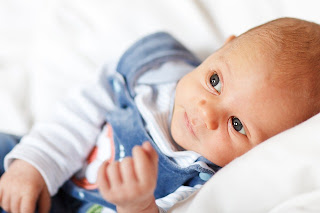
Photo credit: Baby Portrait, by Vera Kratochvil
TODAY'S BOOK SUGGESTION:

 How to Make Love to a Plastic Cup: A Guy's Guide to the World of Infertility
by Greg Wolfe
-- The man's guide to anything and everything in the infertility universe.
Greg Wolfe went through four cycles of IVF on his rocky journey to fatherhood—and now, with profound sympathy and side-splitting humor, he lays it all out for guys on similar baby-making quests.
How to Make Love to a Plastic Cup is not your typical nuts and bolts (no pun intended) medical guide but a helpful handbook designed specifically with the male partner in mind, with answers to his most pressing questions about the infertility process...
Paperback: 256 pagesClick to order/for more info: How to Make Love to a Plastic Cup
Start reading How to Make Love to a Plastic Cup on your Kindle in under a minute! Don't have a Kindle? Get your Kindle here, or download a FREE Kindle Reading App.
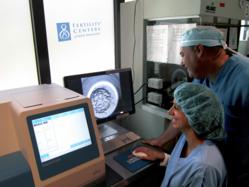 The first baby has been born from donor eggs in an in vitro cycle using a specialized incubator called an Embryoscope®, the Fertility Centers of New England have reported. The incubator uses time-lapse photography to give embryologists revolutionary insight into an embryo's development. Doctors can actually watch embryos develop and monitor healthy cell divisions in a way previously impossible.
The Fertility Centers of New England previously announced the first successful births following embryo culture using the Embryoscope® (Unisense/Fertilitech, Aarhus, Denmark), a new advancement for the IVF laboratory. This new development marks the first live birth in a Donor IVF cycle.
We are proud to once again be at the forefront of using this new technology and the first IVF center in the United States to report this live birth in a Donor IVF cycle, said Fertility Centers of New England President and CEO, Joseph A. Hill, MD.
We are also proud to be the only IVF center in New England using this technology clinically on a daily basis.
The Embryoscope® incubator is a state-of-the-art system, with a built-in camera providing automated and continuous time-lapse photography of fertilized oocytes from conception until the time of embryo transfer without disturbing the culture environment.
This innovative device allows embryologists to assess an embryo's development by closely observing cell division at key time periods.
As we continue to culture more embryos in this innovative system, we will also be able to design specific selection or de-selection parameters to assist with embryo selection,said Fertility Centers of New England Laboratory Director Dr. Michael Tucker.
This type of technology may prove to be very useful in reducing the number of twins and triplets by selecting a single embryo for transfer that is the most likely to result in the birth of a healthy baby.
Not only are we pleased to offer patients the latest laboratory technology,said R. Ian Hardy, MD, PhD, Medical Director for the Fertility Centers of New England. We currently have the highest reported live birth rates for donor cycles on the East Coast.
We also recognize that the cost of Donor IVF can be a barrier to access for many patients and are proud to offer our Egg Assist™ program to help our patients build healthy families. An exciting benefit of the Embryoscope® is that we can also offer new parents a video record of their baby from conception to the point of embryo transfer.
Example of videos can be found here.
-- The Fertility Centers of New England is proud to be at the forefront of advanced infertility treatment and for increasing access to care by providing the most affordable treatment options without compromising quality and results.
Press Release found at PRWeb.com
Photo credit: Fertility Centers of New England
All rights reserved
TODAY'S BOOK SUGGESTION:

 You Make Me Feel Like an Unnatural Woman: Diary of an Older Mother
by Judith Newman
-- Today the number of women having their first child over thirty-five has increased by a bazillion fold, or some equally scary large number.
Newman is the first to write a book that tells what it's really like when a trip to the drugstore entails the purchase of both diaper cream and wrinkle cream; when "
getting your shotsmeans both immunization and Botox.
You Make Me Feel Like an Unnatural Woman is not only about having children later in life: it's about what happens to a marriage—and to the spirit, when even the most sought-after baby comes.
Wry, warm, and brutally honest, this is the book for any woman—whatever her age—who has awakened at 3AM to the insistent shrieks of her darling and thought: Oh man, I'm too old for this.
Paperback: 320 pagesClick to order/for more info: You Make Me Feel Like an Unnatural Woman

Reproductive technologies allow some people who previously couldn't have babies to do that.
In almost every human society, perhaps 15 percent of the population is infertile, so there's always been a big demand for babies.
Right now, the estimated average cost of producing a baby through these new treatments in the U.S. can be well over $50,000.
As I looked into it, I became convinced that reproductive technology was a market — with supply, demand and price coming together in a transaction.
Question: At Columbia University, there are ads in the student newspaper offering to pay tall blondes with high SAT's $8,000 to $20,000 for eggs to be used by infertile couples. Is this a good price?
Answer: Hmm. I think the price for Harvard eggs is higher, around $25,000. There have been ads offering even $50,000 and $100,000 for "exceptional eggs" though no one's ever come forward to say they've gotten that much.
The donor typically is young — 20 to 21 years old. She's run up the credit card bills, and she doesn't want Mom and Dad to know. She sees these very pretty ads in the school newspaper and this seems like a good way to solve a problem. The concern is that we don't know the long-term effects of doing this.
For egg extractions in general, there have been a couple of instances of horrific side effects. There are lots of cases of smaller ones. When you take large doses of hormones to produce eggs — either as a donor or an infertile woman — you're going to have bloating, mood swings, discomfort. All this is manageable.
But if you do that three or four times, are there longer-term effects we don't yet know about?
Full article: An Economist Examines the Business of Fertility
Photo credit: Jodi Hilton for The New York Times
All rights reserved
TODAY'S BOOK SUGGESTION:

 The Baby Business: How Money, Science, and Politics Drive the Commerce of Conception
by Debora L. Spar
-- Despite legislation that claims to prohibit it, there is a thriving market for babies spreading across the globe.
Fueled by rapid advances in reproductive medicine and the desperate desires of millions of would-be parents, the acquisition of children—whether through donated eggs, rented wombs, or cross-border adoption — has become a multi-billion dollar industry that has left science, law, ethics, and commerce deeply at odds.
In The Baby Business, Debora Spar argues that it is time to acknowledge the commercial truth about reproduction and to establish a standard that governs its transactions.
In this fascinating behind-the-scenes account, she combines pioneering research and interviews with the industry's top reproductive scientists and trailblazers to provide a first glimpse at how the industry works: who the baby-makers are, who makes money, how prices are set, and what defines the clientele.
Fascinating stories illustrate the inner workings of market segments--including stem cell research, surrogacy, egg swapping,
designer babies,adoption, and human cloning -- as Spar explores the moral and legal challenges that industry players must address.
The first purely commercial look at an industry that deals in humanity's most intimate issues, this book challenges us to consider the financial promise and ethical perils we'll face as the baby business moves inevitably forward.
Hardcover: 302 pagesClick to order/for more info: The Baby Business

The article was headlined 'Assisted reproduction kids do well psychologically'.
This in itself was not necessarily 'news' since previously published studies had shown that samples of families created by IVF and by donor insemination were functioning well when the children reached adolescence.
The new element in the current study was the inclusion of a group of families with 12-year-old children conceived through egg donation, where it was hypothesized that the lack of a genetic relationship between mother and child could potentially have negative effects on mother-child bonding, and consequently, on child adjustment.
Our findings suggest that this is not the case, since egg donation mothers had warm relationships with their children and the development of the children themselves was normal.
This fits in with previous research, which has shown consistently that it is the quality of parenting and the desire to be parents that matters and not whether couples are the genetic parents of their child.
Assisted reproduction parents have repeatedly been found to be very involved with their children and very committed to parenting, a fact which is likely to be due to the effort they have put in to becoming parents in the first place.
Full article: BioNews.org.uk
Photo credit:Mother and daughter share a kiss,
by Chris Darling, on Flickr
Some rights reserved
TODAY'S BOOK SUGGESTION:

 The Insider's Guide to Egg Donation: A Compassionate and Comprehensive Guide for All Parents-to-Be
by Wendie Wilson-Miller and Erika Napoletano
-- In their search for alternative means for building a family, those who face infertility turn to the nearly 500 reproductive specialty clinics across the United States.
While egg donors enter into the picture for a variety of reasons, every reason has the same desired result: a family to call one’s own.
Same-sex and single-by-choice parents are more prevalent than ever in the fertility industry, and there is no definitive, up-to-date guide to help families of all types approach egg donation, especially these niche groups. Resources are fragmented, true regardless of the family structure.
The Insider's Guide to Egg Donation is the first how-to-handbook that helps families of all types navigate the less talked about but widely practiced egg donor landscape with a warm and friendly tone, giving those in search of a different kind of stork the answers and information they need as they begin to research family-building options.
Paperback: 280 pagesClick to order/for more info: The Insider's Guide to Egg Donation
Start reading The Insider's Guide to Egg Donation on your Kindle in under a minute!Don't have a Kindle? Get your Kindle here, or download a FREE Kindle Reading App.

The price is going up for women to donate their own eggs to help other women have children, and demands for so-called "designer babies" may be on the increase as well.
Egg donation is an often painful procedure requiring a series of hormone shots, many doctor's visits, and dozens of tests.
Ads are tucked in campus newspapers across the country that say "help create a family," and "egg donors wanted -- earn up to 20,000."
Source
Photo credit: Nota
TODAY'S BOOK SUGGESTION:
 Making a Baby: Everything You Need to Know to Get Pregnant
by Debra Fulghum Bruce, Samuel Thatcher, Britt Berg
-- You may have waited a long time. You may have tried and tried. Now your chances of having a baby are better than ever!
For ten years, Making a Baby has been the definitive source for couples who want to get pregnant, offering vital information on fertility technology, advances in baby-boosting medications, and cutting-edge medical techniques.
Written with compassion and clarity, and now with even more tips on the best ways to prepare the body to get pregnant, this invaluable book, in a newly revised and updated edition, reveals how to protect, increase, and extend your fertility.
This detailed, insightful, and meticulously researched book will help guide you to a wonderful new beginning as a parent!
Paperback: 416 pages - Click to order/for more info: Making a Baby - US | Canada | UK
Hardcover - Click to order/for more info: Making a Baby - US | UK
-- Start reading Making a Baby on your Kindle in under a minute! US/Canada | Canada
Don't have a Kindle? Get your Kindle here: US | Canada | UK , or download a FREE Kindle Reading App.
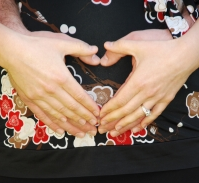 New research indicates that women who become pregnant with donated eggs are more likely to suffer miscarriages and dangerous high blood pressure than those who undergo fertility treatments with their own eggs.
In a study presented Tuesday at the annual meeting of the European Society of Human Reproduction and Embryology, South Korean scientists reported that the risk was even higher if the donated egg came from a woman who was not related to the patient.
Experts believe the greater risks are due to the fact that donated eggs, like transplanted organs or tissue, are not genetically identical to the recipient and probably awaken the immune system.
The placenta formed after egg donation may have more foreign elements and trigger abnormal responses from the mother, which could results in complications, such as miscarriages or high blood pressure.
Full article: Donated eggs may increase miscarriage risk
Stock Photo credit: naneki
All rights reserved
TODAY'S BOOK SUGGESTION:
Making a Baby: Everything You Need to Know to Get Pregnantby Debra Fulghum Bruce, Samuel Thatcher, Britt Berg
-- You may have waited a long time. You may have tried and tried. Now your chances of having a baby are better than ever!
For ten years, Making a Baby has been the definitive source for couples who want to get pregnant, offering vital information on fertility technology, advances in baby-boosting medications, and cutting-edge medical techniques.
Written with compassion and clarity, and now with even more tips on the best ways to prepare the body to get pregnant, this invaluable book, in a newly revised and updated edition, reveals how to protect, increase, and extend your fertility.
This detailed, insightful, and meticulously researched book will help guide you to a wonderful new beginning as a parent!
Paperback: 416 pages - Click to order/for more info: Making a Baby - US | Canada | UK
Hardcover - Click to order/for more info: Making a Baby - US | UK
-- Start reading Making a Baby on your Kindle in under a minute! US/Canada | Canada
Don't have a Kindle? Get your Kindle here, or download a FREE Kindle Reading App.
• Follow us on Twitter, join the conversation on our Facebook page, circle us on Google+, follow our pins on Pinterest.
More Frugal Blogs and Websites:
• Born to Love: All your cloth diapering needs, and much more - naturally! We are strong advocates of the personal, social and environmental benefits of natural parenting.
• Frugal Freebies: Keep up with the latest free stuff, deals, coupons, and other ways to save money!
• My Frugal Baby Tips: Taking care of baby and mom needs naturally, does not have to cost a whole lot of money!
More "Pregnancy Over 40" blogs to visit:
• Life Begins... - Pregnancy stories of loss, hope and help
• Pregnancy Stories by Age - Daily blog of hope and inspiration!
• You Can Get Pregnant in Your 40's - Sharing articles, discussing options and suggestions
• Stories of Pregnancy and Birth over 44 - sharing news stories I find online, for inspiration!
• Life Begins... - Pregnancy stories of loss, hope and help
• Pregnancy Stories by Age - Daily blog of hope and inspiration!
• You Can Get Pregnant in Your 40's - Sharing articles, discussing options and suggestions
• Stories of Pregnancy and Birth over 44 - sharing news stories I find online, for inspiration!
 Insider's Guide to Egg Donation, is the first how-to-guide helping families of all types navigate the less talked about but widely practiced landscape of reproductive medicine, infertility, egg donor landscape with a warm and friendly tone.
 Each year, over 7.3 million Americans face reproductive issues and infertility. Many turn to the nearly 500 reproductive specialty clinics across the United States. Insider’s Guide to Egg Donation is the first book to give a comprehensive overview of the egg donation process for all types of families, from an insider’s perspective.
Authors Wilson-Miller and Napoletano, egg donors themselves who work in the industry, discuss the ins and outs of what happens when you want to begin a family through egg donation. Chapters cover emotional, legal, and medical aspects of the process, how to choose a facility and donor, as well as advice for gay, lesbian, transgendered, single, and international recipients.
“When I went through this process as an intended parent back in 2000 there was no guide, no book, no support groups…If I were doing this all over again this would be a book I’d buy and read from cover to cover.”—Marna Gatlin, Founder, Parents Via Egg Donation
###
Launched in 2007, Demos Health is committed to bridging the gap between consumers and the healthcare community.
TODAY'S BOOK SUGGESTION:
The Insider's Guide to Egg Donation: A Compassionate and Comprehensive Guide for All Parents-to-Beby Wendie Wilson-Miller and Erika Napoletano
-- In their search for alternative means for building a family, those who face infertility turn to the nearly 500 reproductive specialty clinics across the United States.
While egg donors enter into the picture for a variety of reasons, every reason has the same desired result: a family to call one’s own.
Same-sex and single-by-choice parents are more prevalent than ever in the fertility industry, and there is no definitive, up-to-date guide to help families of all types approach egg donation, especially these niche groups. Resources are fragmented, true regardless of the family structure.
The Insider's Guide to Egg Donation is the first how-to-handbook that helps families of all types navigate the less talked about but widely practiced egg donor landscape with a warm and friendly tone, giving those in search of a different kind of stork the answers and information they need as they begin to research family-building options.
Paperback: 280 pagesClick to order/for more info: The Insider's Guide to Egg Donation
Start reading The Insider's Guide to Egg Donation on your Kindle in under a minute!Don't have a Kindle? Get your Kindle here, or download a FREE Kindle Reading App.

Caderina is 22 year-old Biological Science major at Arizona State University, who lives an active lifestyle and loves to hike. Caderina is one of the many thousands of young women on a growing list of egg donors choosing to help women and couples struggling with in-fertility. She shares excerpts from her journal for other women considering being an egg donor.
“The thought of helping someone who is struggling with in-fertility gives me a feeling of joy, but on the other hand, I know I am going to have to inject myself with shots and that terrifies me. I just have to remind myself why I am doing this. I know I would be so thankful if someone went through this for me,” Caderina adds.
It’s estimated one in seven couples experience in-fertility and that 100,000 children have been born from donor eggs in the U.S. since 1984, according to the Centers for Disease Control and Prevention. According to Phoenix-based The World Egg Bank, the largest combined fresh and frozen donor egg agency in the nation, it’s unknown how many egg donors exist in the U.S. at any given time. However, at The World Egg Bank an average of 100 women a week applies to donate their eggs. But only about five are chosen, according to Rebecca Shippe, donor coordinator at The World Egg Bank. The World Egg Bank has a rigorous screening program that begins with an application process on the company’s website, theworldeggbank.com.
“Caderina was chosen by The World Egg Bank because she met all genetic, physical and psychological screenings,” says Shippe. “It is important women do their research before deciding on whether they want to be an egg donor.”
While it is extremely rare, some donors drop out well into the process. “It’s unfortunate when donors apply and they think it’s going to be a quick buck. If they choose to withdraw from the process it can cause so much pain for the recipient. It is a huge emotional burden and strain on the recipient’s relationship,” adds Shippe.
The World Egg Bank typically pays a donor $3,000 -3,500 for her time and labor, not for her eggs. As to how many times a woman can donate her eggs, The World Egg Bank adheres to the guidelines presented by The American Society of Reproductive Medicine of six cycles per donor. Typically, most donors complete one or two donations, according to The World Egg Bank.
“I can’t stress how important it is for donors to be committed to the process. They must be dependable and committed to following through with the protocol. The egg donation process involves planning, expense for the recipient, effort, and emotional investment,” says Diana Thomas, CEO and Founder of The World Egg Bank.
“If you think about what all is involved, the financial compensation is really not the incentive. I had to take time off work, get up early to go to appointments, give myself shots or have my mother help me, and then plan for the day of retrieval, which I then had a day or two of recovery. I am normally very active. I work out everyday. I hike. I run trails. I had to change my lifestyle for a few weeks,” says Caderina.
For Caderina, while there were some inconveniences, it was the most rewarding experience and she says she would consider doing it again. “It’s a great opportunity for one woman to help another woman,” she says.
Caderina advises women considering being an egg donor to do their research and be weary of ads that offer large amounts of money for donating eggs.
“If you feel like it’s right in your heart, then go for it. Your body produces eggs all the time that are just thrown away each month. If you can empower another woman’s life through the gift of motherhood, than that is the ultimate gift of life. When people ask me if I’m emotionally attached? I say, I don’t think about it being my child. The child grows in the other person’s stomach. That is the child’s mother. I have nothing to do with the nurturing. The whole labor process goes through another woman,” Caderina says.
In the U.S., it is reported approximately 7.3 million women between the ages of 15 and 44 will experience some form of in-fertility, according to The Centers for Disease Control and Prevention. Signs of in-fertility can be difficult to detect. Many of these women are not aware they may have a problem until they try to start a family. A growing number of these women are waiting until later in life to plan for a family. But as a woman ages, the quality of her eggs are compromised. Therefore, more and more women are choosing to use another woman’s eggs to achieve pregnancy.
Caderina’s final journal thoughts: "Never in a million years did I think I would inject myself with medication and I did. I faced my fear of needles while trying to end the fear of another woman who fears the opportunity of having children. I did what I would want someone to do for myself. Family is the most important thing in my life. Giving a person the gift of a child and creating a family is the greatest feeling in the world. Although some don’t agree with the egg donation process, I believe it is a process of giving a gift to another. Growing up I was always taught to treat others how you would want to be treated. When I was considering doing a cycle that is what came to mind. I would hope if I faced the issue of in-fertility, someone would want my dream of children to come true and help me just the way I helped.”
Photo credit: Caderina Carrizosa
All rights reserved
TODAY'S BOOK SUGGESTION:

 Having Your Baby Through Egg Donation
by Ellen Sarasohn, Evelina Weidman Sterling
-- A comprehensive book for people considering parenthood through donated ova, and those supporting them.
It takes readers through the decision-making process, focusing on questions they are likely to be asking themselves, including: Are we candidates for egg donation? Will it work?
How much does it cost? How do we find a donor?
How do we talk about our decision with others? How will we tell our children? Ethical questions related to egg donation are also examined:
Can a donor truly have informed consent Is it ethically correct for donors to receive payment, and, if so, is the payment for 'time and effort' or for their eggs?
Hardcover: 384 pagesClick to order/for more info: Having Your Baby Through Egg Donation
Start reading Having Your Baby Through Egg Donation on your Kindle in under a minute!
Don't have a Kindle? Get your Kindle here, or download a FREE Kindle Reading App.

One of the busiest fertility clinics in all of Canada, the Calgary Regional Fertility Program sees about 3,000 new couples each year and performs more than 1,000 cycles of IVF annually.
The only clinic that's busier is in Quebec, where the government provides partial coverage for the treatment.
Alberta couples must pay out of pocket for fertility treatments, which range from $350 for artificial insemination to upwards of $13,000 for IVF.
Although egg donation is permitted in Canada, it can only be done for altruistic purposes and donors can only be reimbursed for their expenses.
For many couples, securing an egg donor under these conditions isn't possible and the Calgary fertility clinic sent about 75 couples to the U.S. for treatment last year.
Read more
 At least 130 children were born in Japan through in vitro fertilization using eggs donated abroad by third parties in the five years from 2007, according to a survey conducted by The Yomiuri Shimbun.
In such cases, women visited foreign countries such as the United States to receive donated ova.
The average age of the women was 45, and the oldest woman was 58. About 90 percent of the cases were considered high-risk pregnancies or deliveries calling for special medical supervision.
Read more
TODAY'S BOOK SUGGESTION
 Making Babies the Hard Way: Living with Infertility and Treatment
by Caroline Gallup
-- A frank account of one couple's discovery that they cannot have children of their own, and their ensuing struggle through four years of fertility treatment.
One in six couples worldwide seek assistance to conceive and 80 per cent of couples undergoing fertility treatment are currently unsuccessful.
Writing with humour and honesty, Caroline Gallup describes the social, emotional, spiritual and physical impact of infertility on her and her husband, Bruce, including feelings of bereavement for the absent child, the unavoidable sense of inadequacy and the day-to-day difficulties of financial pressure.
As well as telling her own moving story, she also offers information and guidance for others who are infertile, or who are considering or undergoing treatment.
Paperback: 240 pagesClick to order/for more info: Making Babies the Hard Way
Find it on Amazon: US | CDN | UK
Start reading Making Babies the Hard Way on your Kindle in under a minute!Don't have a Kindle? Get your Kindle here, or download a FREE Kindle Reading App.
 The Human Fertilisation and Embryology Authority (HFEA) says people should feel the same about it as they do about altruistic, or living, organ donation.
It is launching a new drive to encourage more donors to come forward to help infertile couples have a child.
Because of a shortage in donors in the UK, a number go abroad for treatment, sometimes to unregulated clinics.
The HFEA is trying to increase the number of national donors because of concerns about the safety of treatment abroad.
Last year it agreed to increase the levels of compensation given to egg and sperm donors.
Now it is bringing together a group of experts to help develop ways of increasing awareness of gamete donation in the UK, and to encourage people to regard it as a positive contribution to society.
Read more
TODAY'S BOOK SUGGESTION:


Grade A Baby Eggs: An Infertility Memoir
by Victoria Hopewell
-- Victoria Hopewell was a forty-something divorced clinical psychologist when she met and married a longtime bachelor whose ninety-year-old parents were anxiously waiting for a grandchild.
Problem was, even though Victoria had two young daughters from a previous marriage, her intense desire to create a baby with her new husband was thwarted by her own body.
Her eggs were aging faster than her healthy hormones and youthful appearance would suppose.
Desperate to bear a child, willing to undergo every procedure from Lupron shots through egg harvesting and in vitro fertilization (IVF), she is blocked at every corner of medical protocol from achieving her dream of a successful pregnancy.
Finally she journeys toward acceptance of using a donor egg, much to the dismay of her growing daughters.
But no eggs are available, and she is placed on a lengthy hospital wait-list. Victoria and her husband then embark on a surrealistic egg hunt to find their own donor.
Follow her insider's account of the hidden world of egg donation-where women's eggs are bought and sold over the internet and a beautiful model with high SATs and a prior successful donation commands the highest prices.
Paperback: 214 pagesClick to order/for more info: Grade A Baby Eggs
Start reading Grade A Baby Eggs on your Kindle in under a minute!Don't have a Kindle? Get your Kindle here, or download a FREE Kindle Reading App.
 Shady Grove Fertility Center, home to the largest egg donor program in the United States and leader in the field of reproductive medicine, IVF and in-fertility, will be conducting a free donor egg patient seminar in Philadelphia on Saturday, April 14 at the Radnor Hotel from 11 a.m.— noon.
Shady Grove Fertility invites individuals/couples facing in-fertility to learn about the Center’s donor egg program from a Shady Grove Fertility physician and hear first-hand from a patient who used donor eggs to build her family. In addition, one attendee will receive a donor egg cycle just for attending (Value $13,300).*
Join Shady Grove Fertility for its Philadelphia Donor Egg Seminar at the Radnor Hotel, 591 East Lancaster Avenue, St. Davids, PA 19087 on Saturday, April 14 from 11 a.m. – noon. For more information, please call 877-264-3311.
Read more
Photo credit: bartozzi
Some rights reserved
TODAY'S BOOK SUGGESTION:
Grade A Baby Eggs: An Infertility Memoir
by Victoria Hopewell
-- Victoria Hopewell was a forty-something divorced clinical psychologist when she met and married a longtime bachelor whose ninety-year-old parents were anxiously waiting for a grandchild.
Problem was, even though Victoria had two young daughters from a previous marriage, her intense desire to create a baby with her new husband was thwarted by her own body.
Her eggs were aging faster than her healthy hormones and youthful appearance would suppose.
Desperate to bear a child, willing to undergo every procedure from Lupron shots through egg harvesting and in vitro fertilization (IVF), she is blocked at every corner of medical protocol from achieving her dream of a successful pregnancy.
Finally she journeys toward acceptance of using a donor egg, much to the dismay of her growing daughters.
But no eggs are available, and she is placed on a lengthy hospital wait-list. Victoria and her husband then embark on a surrealistic egg hunt to find their own donor.
Follow her insider's account of the hidden world of egg donation-where women's eggs are bought and sold over the internet and a beautiful model with high SATs and a prior successful donation commands the highest prices.
Paperback: 214 pagesClick to order/for more info: Grade A Baby Eggs
Start reading Grade A Baby Eggs on your Kindle in under a minute!Don't have a Kindle? Get your Kindle here, or download a FREE Kindle Reading App.
Popular Posts
-
 Sunlight boosts fertility, according to new research claims vitamin D can balance sex hormones in women and improve sperm count in men. Th...
 -
JAYNE knows first-hand the joys and trials of being an older mother. She conceived her only child, Cara, now nearly eight, naturally at the ...
-
 Menopause is the time in a woman's life when her reproductive system shuts down and her reproducing days are over... or are they? For s...
 -
 Fertility Supplement Bundle Vitamin supplements help fertility in women: Taking multivitamins, particularly folic acid, can improve ch...
 -
In a few weeks, Yonatan and Omer Gar are scheduled to go to Mumbai, India, in order to take part in the first fertilization attempt of a sur...
-
 In her early 40s, Deborah Walker still had hopes of becoming a mom. Like many of her peers, she'd chosen to first focus on her caree...


Recent Comments