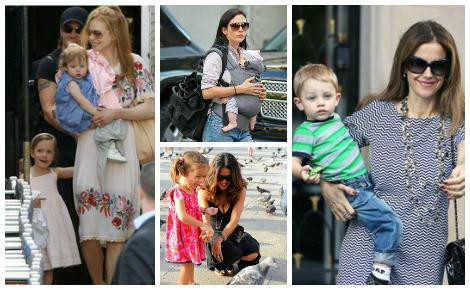
 January 2008 -- Geena Davis did it. So did Emma Thompson and Susan Sarandon.
Now, Nicole Kidman is joining the swelling ranks of women who have their first baby after the age of 40.
Only a century ago the average life expectancy for women was about 50, so a 35-year-old would have been an ageing matriarch with grandchildren in tow.
But now one in seven babies in Australia is born to a woman older than that as thousands hit the snooze button on parenting.
Maturity can bring a satisfying career, a healthy bank balance and a well-rounded sense of self, but women who become pregnant later in life also have a much greater risk of miscarriages, ectopic pregnancies, and stillbirths.
Older women are also more likely to have induced labour, epidural anaesthesia, forceps or vacuum deliveries, and caesarean sections. They have a one in 100 chance of having a child with chromosomal abnormalities such as Down syndrome.
A fertility specialist with IVF Australia, Michael Chapman, said yesterday that women aged 40 to 45 had a one in four chance of miscarrying.
Age and the miscarriage rate are linked because the older a woman gets, the older her eggs get. They become more fragile with age and have abnormalities, which can lead to miscarriage or disorders such as Down syndrome.
He said pregnant women in their 30s and 40s had a greater risk of hypertension and gestational diabetes, which often required intervention during labour.
One study showed first-time mothers older than 40 were 14 times more likely to have a caesarean than those under 30.
Most obstetricians encourage older women to have a caesarean section because their muscles are weaker and their tissues are less elastic,Dr Chapman said.
But the secretary of the NSW Midwives Association, Hannah Dahlen, said yesterday, women should not be deterred.
Older mothers are more likely to be educated and financially secure, more settled in themselves and more prepared to make the sacrifices required to be a mother,she said.
They are better able to negotiate care for their child, their children often do better in school, and it has also been shown in some studies women who have babies in their 40s live longer.
Read more: The risks - and rewards - when motherhood begins at 40
TODAY'S BOOK SUGGESTION:
 It Starts with the Egg:
How the Science of Egg Quality Can Help You Get Pregnant Naturally, Prevent Miscarriage, and Improve Your Odds in IVF
by Rebecca Fett
-- Whether you are trying to conceive naturally or through IVF, the quality of your eggs will have a powerful impact on how long it takes you to get pregnant and whether you face an increased risk of miscarriage.
Poor egg quality is emerging as the single most important cause of age-related infertility, recurrent miscarriage, and failed IVF cycles. It is also a major contributor to infertility in PCOS.
Based on a comprehensive investigation of a vast array of scientific research, It Starts with the Egg reveals a groundbreaking new approach for improving egg quality and fertility.
With a concrete strategy including minimizing exposure to toxins such as BPA and phthalates, choosing the right vitamins and supplements to safeguard developing eggs, and harnessing nutritional advice shown to boost IVF success rates, this book offers practical solutions to will help you get pregnant faster and deliver a healthy baby.
 Paperback: 304 pages
Click to order/for more info: It Starts with the Egg
Start reading It Starts with the Egg on your Kindle in under a minute!Don't have a Kindle? Get your Kindle here, or download a FREE Kindle Reading App.
 |
| Photo Credit: Mom and Daughter Shopping, by Dia German |
Some would tell you that it does, but how much is simply the doctor's attitude against older women in general?
How much is caused by the doctor's interference during labor?
Yes, there CAN be increased risks due to your age and health status.
But plenty of older moms have complication-free births, even with first babies.
It is not up to anybody else to decide if she should be
allowedto have a a child at her
advancedage.
From Home Birth Reference Site:
Our fears concerning increasing maternal age in pregnancy arose from unsophisticated surveys conducted many years ago which showed an apparent increase in risk; these surveys did not have the capacity to adjust adequately for confounding variables. Yet the teaching is handed down, that older women are at a higher risk in pregnancy and childbirth.Where there are no tangible medical complications of pregnancy, the risks of childbirth in older women are no greater than in younger women
- Editorial, British Journal of Obstetrics and Gynaecology,
Volume 108, Issue 9, September 2001
- Editor's Choice, by John M Grant
British Journal of Obstetrics and Gynaecology
Volume 108, Issue 9, September 2001
Read more: Home Birth Reference Site
TODAY'S BOOK SUGGESTION:
 Hannah's Hope: Seeking God's Heart in the Midst of Infertility, Miscarriage, and Adoption Loss
by Jennifer Saake
-- Hannah's heart beat with a mother's love long before she was blessed with a child.
Through the years of waiting and longing, her gentle heart was nearly crushed under the weight of grief.
You can meet Hannah in the pages of 1 Samuel, chapters 1 and 2.
The Bible says she was
barren,and we know she suffered heartache, anguish, and grief because of her empty arms. Perhaps you do too.
Hannah's Hope is for all who long for a child yet to be conceived, grieve for a baby too soon passed from the womb, or have lived through the no-mans-land of a failed adoption.
It is intended as a guide to assist you in making wise decisions as you struggle through your grief. And by the end of the journey, God may surprise you by the ways He uses to answer your heart's cry.
Compassionately written by a woman who knows well these painful struggles, Hannah's Hope will direct you to the Source of strength, whose name is
the God of all comfort.
Paperback: 160 pagesClick to order/for more info: Hannah's Hope
Start reading Hannah's Hope on your Kindle in under a minute!Don't have a Kindle? Get your Kindle here, or download a FREE Kindle Reading App.
 One of the reasons for the current preoccupation with Nicole Kidman's growing baby bump, so obvious at the Oscars, could be that it's tangible proof of the fastest-growing trend in the western world: being pregnant in one's forties.
More middle-aged women than ever before are swapping motherhood for the menopause, which can occur any time between 40 and 55.
And while the 41-year-old Ms Kidman is certainly not the first celebrity to look forward to motherhood in her final decade of fertility - Madonna had Rocco just before her 42nd birthday, Jane Seymour had twins at 44 and Scots actress Sharon Small is currently pregnant at 41 - the state of late expectancy is not restricted to the rich and famous.
It appears that the hoi polloi is also having it all.
According to the Office for National Statistics this week, a staggering 25,400 over-40s in England and Wales became pregnant in 2006, 6.4% more than in 2005 and 109% more than 1991.
In Scotland, figures from the General Register Office for 2006 show the number to be slightly lower at 1833, but this is nonetheless significant because it represents a three-fold increase from the 593 deliveries to fortysomething mothers 30 years previously.
Read more: What's the story with . . . Older mums?
TODAY'S BOOK SUGGESTION:

 You Can Get Pregnant Over 40, Naturally II: Overcoming infertility and recurrent loss in your late 30s and 40s naturally
by Sandy Robertson
-- After years of infertility and failed fertility treatments, Sandy Robertson developed an all-natural pregnancy protocol leading to the birth of her daughter at the age of 44.
In this new expanded edition, she shares her research including over 100 references.
She explains how she:
- Overcame recurrent miscarriage
- Conceived multiple times of the age of 40 with one Fallopian tube
- Balanced hormones
- Increased pelvic circulation
Paperback: 248 pagesClick to order/for more info: You Can Get Pregnant Over 40, Naturally
Photo by michellesanta
 Toxic traffic fumes can increase the risk that women will miscarry, researchers have warned.
They said that women should avoid getting pregnant when there were high levels of pollution in the air.
Testing diesel fumes on fertilised eggs in the laboratory, the scientists found that the pollution could cause a reduction in the number of cells in one part of the embryo.
Read more...
Recent Keyword Searches: can you get pregnant at the age of 45, having a baby in your 40's, can a woman get pregnant at 49, you can get pregnant over 40 naturally, wild yam for fertility,
 Toxic traffic fumes can increase the risk that women will miscarry, researchers have warned.
They said that women should avoid getting pregnant when there were high levels of pollution in the air.
Testing diesel fumes on fertilised eggs in the laboratory, the scientists found that the pollution could cause a reduction in the number of cells in one part of the embryo.
Read more...
Life Begins... - Miscarriage stories of loss, hope & help
Pregnancy Stories by Age - Daily blog of hope & inspiration!
Stories of Pregnancy over 44 years old - sharing stories I find online, for inspiration!
Pregnancy Stories by Age - Daily blog of hope & inspiration!
Stories of Pregnancy over 44 years old - sharing stories I find online, for inspiration!
Recent Keyword Searches: can you get pregnant at the age of 45, having a baby in your 40's, can a woman get pregnant at 49, you can get pregnant over 40 naturally, wild yam for fertility,
Picture by jesparado
 Because of Cleveland's aging housing stock and history of industry, researchers at MetroHealth Medical Center decided to focus on the city's residents for an early-phase study to see whether prolonged lead exposure leads to premature menopause.
People are typically at risk of lead exposure when paint or other materials containing lead cracks and chips over time or during home renovations, getting into the air or dirt. But lead also can get into a person's bloodstream through some imported foods and constant exposure to other products containing lead.
For children who are especially at risk from living in older homes with lead paint, research already has shown a strong correlation between elevated levels of lead in the bloodstream and IQ loss, learning disabilities and neurobehavioral impairments.
Menopause at an earlier age can increase a woman's risk of cardiovascular disease, osteoporosis and certain cancers. Additionally, lead that is accumulated in bone is released into the blood when a woman experiences increased bone loss - usually occurring during menopause.
Full article: http://www.cleveland.com/living/plaindealer/index.ssf?/base/living-0/1223973192273860.xml&coll=2
Life Begins...
Miscarriage stories of loss, hope & help
http://born2luv.blogspot.com/
Stories of Pregnancy & Birth over 44y
- Daily blog of hope & inspiration!
http://pregnancyover44y.blogspot.com/
4,800 Stories of Pregnancy & Birth over 44y
Daily blog of hope & inspiration!
http://pregnancyover44y.blogspot.com/
Recent Keyword Searches: pregnant at 40, in 40s can exercise affect fertility, can taking vitamin e get you pregnant, fecundity at age 49, women having children in their 40's
 Because of Cleveland's aging housing stock and history of industry, researchers at MetroHealth Medical Center decided to focus on the city's residents for an early-phase study to see whether prolonged lead exposure leads to premature menopause.
People are typically at risk of lead exposure when paint or other materials containing lead cracks and chips over time or during home renovations, getting into the air or dirt. But lead also can get into a person's bloodstream through some imported foods and constant exposure to other products containing lead.
For children who are especially at risk from living in older homes with lead paint, research already has shown a strong correlation between elevated levels of lead in the bloodstream and IQ loss, learning disabilities and neurobehavioral impairments.
Menopause at an earlier age can increase a woman's risk of cardiovascular disease, osteoporosis and certain cancers. Additionally, lead that is accumulated in bone is released into the blood when a woman experiences increased bone loss - usually occurring during menopause.
Full article: http://www.cleveland.com/living/plaindealer/index.ssf?/base/living-0/1223973192273860.xml&coll=2
Life Begins...
Miscarriage stories of loss, hope & help
http://born2luv.blogspot.com/
Stories of Pregnancy & Birth over 44y
- Daily blog of hope & inspiration!
http://pregnancyover44y.blogspot.com/
4,800 Stories of Pregnancy & Birth over 44y
Daily blog of hope & inspiration!
http://pregnancyover44y.blogspot.com/
Recent Keyword Searches: pregnant at 40, in 40s can exercise affect fertility, can taking vitamin e get you pregnant, fecundity at age 49, women having children in their 40's
Photo by www.themedguru.com
 Doctors often advise women to quit smoking during pregnancy as it may increase their risk of miscarriage, but it is really hard for some to kick the smoking habit. Now, scientists have presented a simple method for pregnant women that they claim would significantly help them in quitting smoking habit.
A pregnant woman who is a heavy smoker and unable to quit should try exercising, suggest a new study by the British researchers who found a link between physical exertion and smoking cessation.
Full story: http://www.themedguru.com/articles/exercise_may_help_pregnant_women_quit_smoking-86112015.html
Life Begins...
Miscarriage stories of loss, hope & help
http://born2luv.blogspot.com/
Stories of Pregnancy & Birth over 44y
- Daily blog of hope & inspiration!
http://pregnancyover44y.blogspot.com/
4,800 Stories of Pregnancy & Birth over 44y
Daily blog of hope & inspiration!
http://pregnancyover44y.blogspot.com/
Recent Keyword Searches: what physical exercise that can cause miscarriage, dr scher miscarriage, in vitro fert/ pregnancy miscarriage, share walk of rememberence and hope, miscarry emotional pain
 Doctors often advise women to quit smoking during pregnancy as it may increase their risk of miscarriage, but it is really hard for some to kick the smoking habit. Now, scientists have presented a simple method for pregnant women that they claim would significantly help them in quitting smoking habit.
A pregnant woman who is a heavy smoker and unable to quit should try exercising, suggest a new study by the British researchers who found a link between physical exertion and smoking cessation.
Full story: http://www.themedguru.com/articles/exercise_may_help_pregnant_women_quit_smoking-86112015.html
Life Begins...
Miscarriage stories of loss, hope & help
http://born2luv.blogspot.com/
Stories of Pregnancy & Birth over 44y
- Daily blog of hope & inspiration!
http://pregnancyover44y.blogspot.com/
4,800 Stories of Pregnancy & Birth over 44y
Daily blog of hope & inspiration!
http://pregnancyover44y.blogspot.com/
Recent Keyword Searches: what physical exercise that can cause miscarriage, dr scher miscarriage, in vitro fert/ pregnancy miscarriage, share walk of rememberence and hope, miscarry emotional pain
 At http://www.thefertilityadvocate.com/ , Ms. Madsen weighs in every day about rapidly unfolding scientific, medical, physical, political, social, environmental and economic aspects that affect every single person’s reproductive health and procreative capabilities. She tackles everything from the hidden effects of sexually transmitted diseases on fertility and the latest developments in reproductive medicine, to the fight for health care access and age-appropriate, scientifically accurate and culturally sensitive sex education.
Full story: http://enewschannels.com/2008/10/10/enc4383_125441.php
Life Begins...
Miscarriage stories of loss, hope & help
http://born2luv.blogspot.com/
Stories of Pregnancy & Birth over 44y
- Daily blog of hope & inspiration!
http://pregnancyover44y.blogspot.com/
4,800 Stories of Pregnancy & Birth over 44y
Daily blog of hope & inspiration!
http://pregnancyover44y.blogspot.com/
Recent Keyword Searches: i am forty and want to get pregnant, having children when your older, can a women in menopause get pregnant, can you get pregnant after 50, what is the chance to get pregnant at 45
 SPERM HAS YET another enemy – this time it’s none other than your trusty device, the mobile phone.
That’s right, the Cleveland Clinic is now saying that keeping your mobile phone in talk-mode and in your pocket can decrease sperm quality – if you’re a man of course.
Ashok Agarwal, the Director of the Center for Reproductive Medicine says that, “We believe that these devices are used because we consider them very safe, but it could cause harmful effects due to the proximity of the phones and the exposure that they are causing to the gonads."
Full story: http://www.theinquirer.net/gb/inquirer/news/2008/09/22/mobile-phones-spermicides
Life Begins...
Miscarriage stories of loss, hope & help
http://born2luv.blogspot.com/
Stories of Pregnancy & Birth over 44y
- Daily blog of hope & inspiration!
http://pregnancyover44y.blogspot.com/
4,750 Stories of Pregnancy & Birth over 44y
Daily blog of hope & inspiration!
http://pregnancyover44y.blogspot.com/
Recent Keyword Searches: can you get pregnant in premenapause, when is too late for a woman to get pregnant, can i get pregnant during premenapuse, when can a women not get pregnant after menopause, how old is too old to become pregnant

Teresa Watts expects to have her second child on May 28. The baby's room has been painted. The crib her older daughter once slept in has been pulled out of storage. In March, Ms. Watts's sister threw her a baby shower.
Sounds like any other mother-to-be -- except for the fact that Ms. Watts turns 45 in June, an age when many women are planning a life beyond babies.
Ms. Watts, who has a 16-year-old daughter due to graduate from high school next year, thought her days of diaper changes and 2 a.m. feedings were done. "I was shocked," the former waitress from Clarksville, Tenn., says of the home pregnancy test that came out positive. "Women my age just don't get pregnant."
Change in Plans
Well, they do. Doctors say women can get pregnant until they have completed menopause -- an event that happens sometime between the ages of 41 and 61. In the U.S., the average age of menopause is 51.
"It's very common that women don't realize they still need to worry about birth control even after they hit their 40's and move into their 50's," says Vanessa Cullins, vice president of medical affairs for the Planned Parenthood Federation of America. "Until they complete menopause, which means going 12 months without menstruating, women should consider themselves to still be fertile."
Sometimes called a "change-of-life baby," an unplanned pregnancy later in life can do just that. Couples who were looking forward to retirement, travel or an empty house can, instead, end up fixing up the nursery, buying a slew of baby gear and starting a college fund.
Having a baby later in life also comes with some increased health risks -- for both the mother and child. Older women can have healthy pregnancies and healthy babies. But compared with younger women, they are more likely to suffer miscarriages, develop gestational diabetes and experience problems during delivery. And the odds of giving birth to children with genetic birth defects are much greater in older women.
Almost 40% of pregnancies among women over 40 are unplanned, according to a 2001 survey by the National Center for Health Statistics in Atlanta, the most recent data available. And according to the survey, of 7,643 women and 4,928 men between ages 15 and 44, about 56% of all unplanned pregnancies among women over 40 are terminated.
Little Data
It's not clear just how many women over the age of 44 actually get pregnant. Doctors, government agencies and medical organizations all define the reproductive age for women in the U.S. as 15 to 44. So, there's little data collected on a national level regarding pregnancy, abortion, miscarriages or birth-control use among older women.
The Centers for Disease Control and Prevention does say that from 2000 to 2005, live births among women between the ages of 45 and 54 jumped 45% to 6,536. That number was less than 1% of all live births in the U.S. in 2005, the latest data available.
A woman's fertility starts declining in her 20's. It drops rapidly after 35, and at 45, she has a 1% chance of conceiving using her own eggs, according to Johns Hopkins Medicine, which includes the Johns Hopkins School of Medicine and the Johns Hopkins Health Systems. Many women who do choose to have children in their 40s and beyond use artificial reproductive technology, including eggs provided by a donor.
Given such odds, it's no wonder many sexually active women over age 40 don't practice birth control. The survey by National Center for Health Statistics found that 7% of women between the ages of 40 and 44 had recently had sex, weren't looking to get pregnant, but didn't use any form of birth control.
The news of Ms. Watts's pregnancy came after her 49-year-old husband decided to retire this spring as a supervisor at a truck-parts manufacturer. The couple had planned to cash in an individual retirement account, move to Florida and buy a boat. He still left the job, but is currently looking for a new one.
"This baby really is a blessing, and we've had time to adjust," Ms. Watts says. "But we're sending our oldest daughter to college next year, and now we have to start all over again."
Increased Risk
When it comes to preventing a pregnancy later in life, women with health problems may have fewer choices.
For instance, women over 35 who smoke heavily -- more than 15 cigarettes a day -- or have a history of uncontrolled high blood pressure shouldn't use birth-control pills or contraceptive devices that release estrogen. An already-elevated risk of blood clots and stroke gets pushed even higher by the estrogen.
A woman's risk of getting certain cancers also increases as she gets older, and some hormones can exacerbate that risk. One form of breast cancer, for instance, feeds off estrogen, so some birth-control pills, vaginal rings and patches should be avoided.
Women with liver disease and liver cancer should avoid contraceptives that release either estrogen or progestin, a synthetic form of the hormone progesterone. That includes pills, implants, vaginal rings, patches and some types of intrauterine devices, or IUDs, that release progestin. Sick livers can't break down the hormones, so women get exposed to higher doses than necessary.
And in some cases, women with cervical cancer and ovarian cancers shouldn't use IUDs.
To avoid these issues, some women opt for sterilization -- for their husbands. According to the National Center for Health Statistics survey, 13% of women between the ages of 40 and 44 have husbands who have had vasectomies.
Source: http://online.wsj.com/article/SB120951312541254527.html?mod=googlenews_wsj
TODAY'S BOOK SUGGESTION:
It Starts with the Egg:How the Science of Egg Quality Can Help You Get Pregnant Naturally, Prevent Miscarriage, and Improve Your Odds in IVF
by Rebecca Fett
-- Whether you are trying to conceive naturally or through IVF, the quality of your eggs will have a powerful impact on how long it takes you to get pregnant and whether you face an increased risk of miscarriage.
Poor egg quality is emerging as the single most important cause of age-related infertility, recurrent miscarriage, and failed IVF cycles. It is also a major contributor to infertility in PCOS.
Based on a comprehensive investigation of a vast array of scientific research, It Starts with the Egg reveals a groundbreaking new approach for improving egg quality and fertility.
With a concrete strategy including minimizing exposure to toxins such as BPA and phthalates, choosing the right vitamins and supplements to safeguard developing eggs, and harnessing nutritional advice shown to boost IVF success rates, this book offers practical solutions to will help you get pregnant faster and deliver a healthy baby.
Paperback: 304 pagesClick to order/for more info: It Starts with the Egg
Start reading It Starts with the Egg on your Kindle in under a minute!Don't have a Kindle? Get your Kindle here, or download a FREE Kindle Reading App.
Photo by bies
bies
Here are some of the methods that can help older women conceive - and the chances of success...
Natural conception
It's harder to conceive naturally after 35, but it's by no means impossible. You can improve your chances by having sex mid-cycle to coincide with your most fertile time. (Chemists stock testing kits that reveal when you ovulate.) You should also be a healthy weight, exercise and take a folic acid supplement.
See http://www.mothers35plus.co.uk/
Pros: No medical intervention.
Cons: You may waste time better spent trying fertility treatments.
Your Chances: "Over 40, your chances of conceiving naturally are only 20 per cent" says Dr Lockwood.
"This is even lower if you've had cancer treatment. Chemo adds 10 years to your reproductive age."
Fertility drugs
Drugs such as Clomid are used to increase egg production, but aren't usually offered to women in their late 30s or 40s as they don't improve egg quality.
Pros: It's safe, cheap and easy to administer.
Cons: The drug can make cervical mucus hostile to sperm and impair egg implantation.
Your Chances: "If you are not producing enough eggs - say, due to polycystic ovary syndrome - your chances are reasonable," says Dr Lockwood. "But Clomid isn't very good for age-related infertility as the real issue is egg quality."
IVF
Fertility drugs increase your egg production. The eggs are then removed and sperm is added in a test tube. Fertilised embryos are then put back into the womb.
Pros: It can work where other treatments fail.
Cons: It's timeconsuming and expensive (between £2,000-£4,000).
The egg extraction process can be painful and fertility drugs can cause PMS-like symptoms.
Your Chances: Dr Lockwood says: "IVF for women over 40 is disappointing if it uses the woman's own eggs. Pregnancy rates are lower and miscarriage rates are higher.
"A woman over 40 has only half the chance of a live birth after IVF compared to a woman under 38. And if you've had chemo your chances are less than 10 per cent."
Donor eggs
If your eggs aren't viable, you could use a donor's.
Pros: You carry the baby.
Cons: The baby isn't related to you biologically, and you still have to go through costly, stressful IVF.
Your Chances: "Excellent," says Dr Lockwood. "The age of the donor determines the success rate.
However, patients receiving donor eggs are required to take hormone replacement therapy (HRT), so cancer survivors will have to wait up to five years following their all-clear."
This is because HRT may increase the risk of hormone-related cancers.
Ovarian tissue Cryo-preservation
Kylie is rumoured to have undergone this procedure, which aims to preserve the fertility of women needing cancer treatment.
A sliver of ovary is removed and frozen then it's later put back inside the patient in the hope that some of her eggs will have been preserved.
Pros: It gives fertility hope to women battling cancer.
Cons: It's a very new and experimental procedure.
Your Chances: "So far only two babies have been born worldwide from slices of ovary that were retransplanted back after chemo," says Dr Lockwood. "But there are hopes for it in the future."
Egg freezing
Your eggs can be frozen - preferably before you are 35 - to be used at a later date. This is offered on the NHS to patients having cancer treatment, and women can pay to do it as a lifestyle choice.
When you want to conceive, the eggs are mixed with your partner's sperm then planted in your womb.
Pros: This procedure is a more realistic chance for older women to conceive, and gives you greater control over your fertility.
Cons: It's invasive, expensive (prices start at £2,000) and doesn't guarantee a pregnancy.
Your Chances: "Egg freezing before cancer treatment does offer a realistic chance of pregnancy, especially if the woman is young," says Dr Lockwood. "But after 38 it's less successful simply because the quality of eggs deteriorates."
Full article: http://www.mirror.co.uk/showbiz/yourlife/2008/02/06/kylie-s-baby-race-and-how-you-can-conceive-at-40-89520-20310940/
Life Begins...
Miscarriage stories of loss, hope & help
http://born2luv.blogspot.com/
Stories of Pregnancy & Birth over 44y
- Daily blog of hope & inspiration!
http://pregnancyover44y.blogspot.com/
4,450 Stories of Pregnancy & Birth over 44y
Daily blog of hope & inspiration!
http://pregnancyover44y.blogspot.com/
Recent Keyword Searches: surprise pregnancy in over 40's, pregnant in your forties, pregnant in mid-forties, can i conceive during menopause, can women really get pregnant at 44, can you get pregnant after 40 without fertility drugs?, has an smoker be able to get pregnant at the age of 40, can you still get pregnant at age 39,
 bies
biesHere are some of the methods that can help older women conceive - and the chances of success...
Natural conception
It's harder to conceive naturally after 35, but it's by no means impossible. You can improve your chances by having sex mid-cycle to coincide with your most fertile time. (Chemists stock testing kits that reveal when you ovulate.) You should also be a healthy weight, exercise and take a folic acid supplement.
See http://www.mothers35plus.co.uk/
Pros: No medical intervention.
Cons: You may waste time better spent trying fertility treatments.
Your Chances: "Over 40, your chances of conceiving naturally are only 20 per cent" says Dr Lockwood.
"This is even lower if you've had cancer treatment. Chemo adds 10 years to your reproductive age."
Fertility drugs
Drugs such as Clomid are used to increase egg production, but aren't usually offered to women in their late 30s or 40s as they don't improve egg quality.
Pros: It's safe, cheap and easy to administer.
Cons: The drug can make cervical mucus hostile to sperm and impair egg implantation.
Your Chances: "If you are not producing enough eggs - say, due to polycystic ovary syndrome - your chances are reasonable," says Dr Lockwood. "But Clomid isn't very good for age-related infertility as the real issue is egg quality."
IVF
Fertility drugs increase your egg production. The eggs are then removed and sperm is added in a test tube. Fertilised embryos are then put back into the womb.
Pros: It can work where other treatments fail.
Cons: It's timeconsuming and expensive (between £2,000-£4,000).
The egg extraction process can be painful and fertility drugs can cause PMS-like symptoms.
Your Chances: Dr Lockwood says: "IVF for women over 40 is disappointing if it uses the woman's own eggs. Pregnancy rates are lower and miscarriage rates are higher.
"A woman over 40 has only half the chance of a live birth after IVF compared to a woman under 38. And if you've had chemo your chances are less than 10 per cent."
Donor eggs
If your eggs aren't viable, you could use a donor's.
Pros: You carry the baby.
Cons: The baby isn't related to you biologically, and you still have to go through costly, stressful IVF.
Your Chances: "Excellent," says Dr Lockwood. "The age of the donor determines the success rate.
However, patients receiving donor eggs are required to take hormone replacement therapy (HRT), so cancer survivors will have to wait up to five years following their all-clear."
This is because HRT may increase the risk of hormone-related cancers.
Ovarian tissue Cryo-preservation
Kylie is rumoured to have undergone this procedure, which aims to preserve the fertility of women needing cancer treatment.
A sliver of ovary is removed and frozen then it's later put back inside the patient in the hope that some of her eggs will have been preserved.
Pros: It gives fertility hope to women battling cancer.
Cons: It's a very new and experimental procedure.
Your Chances: "So far only two babies have been born worldwide from slices of ovary that were retransplanted back after chemo," says Dr Lockwood. "But there are hopes for it in the future."
Egg freezing
Your eggs can be frozen - preferably before you are 35 - to be used at a later date. This is offered on the NHS to patients having cancer treatment, and women can pay to do it as a lifestyle choice.
When you want to conceive, the eggs are mixed with your partner's sperm then planted in your womb.
Pros: This procedure is a more realistic chance for older women to conceive, and gives you greater control over your fertility.
Cons: It's invasive, expensive (prices start at £2,000) and doesn't guarantee a pregnancy.
Your Chances: "Egg freezing before cancer treatment does offer a realistic chance of pregnancy, especially if the woman is young," says Dr Lockwood. "But after 38 it's less successful simply because the quality of eggs deteriorates."
Full article: http://www.mirror.co.uk/showbiz/yourlife/2008/02/06/kylie-s-baby-race-and-how-you-can-conceive-at-40-89520-20310940/
Life Begins...
Miscarriage stories of loss, hope & help
http://born2luv.blogspot.com/
Stories of Pregnancy & Birth over 44y
- Daily blog of hope & inspiration!
http://pregnancyover44y.blogspot.com/
4,450 Stories of Pregnancy & Birth over 44y
Daily blog of hope & inspiration!
http://pregnancyover44y.blogspot.com/
Recent Keyword Searches: surprise pregnancy in over 40's, pregnant in your forties, pregnant in mid-forties, can i conceive during menopause, can women really get pregnant at 44, can you get pregnant after 40 without fertility drugs?, has an smoker be able to get pregnant at the age of 40, can you still get pregnant at age 39,
People are applying a toxic stew of chemicals to their bodies daily, author declares
Carcinogens in cosmetics? Petrochemicals in perfume? If only this were an urban legend. Unfortunately, it's a toxic reality, and it's showing up in our bodies.
In 2004, scientists found pesticides in the blood of newborn babies. A year later, researchers discovered perchlorate, a component of rocket fuel, in human breast milk. Today, people are testing positive for a litany of hazardous substances from flame retardants to phthalates to lead.
In her new book, Not Just a Pretty Face: The Ugly Side of the Beauty Industry, Stacy Malkan exposes the toxic chemicals that lurk, often unlabelled, in the personal care products millions of women, men and children use every day.
AlterNet spoke with Malkan about these toxins and her five-year Campaign for Safe Cosmetics to get the beauty industry to remove them from its products.
Question: There are so many environmental issues you could have written a book about. Why cosmetics?
Stacy Malkan: I think cosmetics are something that we're all intimately connected to. They're products that we use every day, and so I think it's a good first place to start asking questions. What kinds of products are we bringing into our homes? What kinds of companies are we giving our money to?
Q: It has something pretty interesting in common with global warming, too.
SM: It does. I think of it as global poisoning. I think that the ubiquitous contamination of the human species with toxic chemicals is a symptom of the same problem (as global warming), which is an economy that's based on outdated technologies of petrochemicals – petroleum. So many of the products we're applying to our faces and putting in our hair come from oil. They're by-products of oil.
Q: Many cosmetic products on the market right now claim they are pure, gentle, clean and healthy. But, as you reveal in this book, they're far from it. Toxic chemicals in these products are showing up in people. What were some of the most surprising toxins you discovered in cosmetics?
SM: Lead in lipstick was pretty surprising. We (the Campaign for Safe Cosmetics) just released that report. Many personal care products have phthalates, which is a plasticizer and hormone disrupter. That's why we started the cosmetics campaign – because we know that women have higher levels of phthalates in their bodies, and we thought that cosmetics might be a reason. There's so much that we don't know about these products. Many, many chemicals are hiding in fragrance. Companies aren't required to list the components of fragrance. Products also are contaminated with carcinogens like 1,4 dioxane and neurotoxins like lead that aren't listed on the label.
Q: I just want to know what ingredients to avoid, but you say protecting myself is not as simple as that. Why not?
SM: There are no standards or regulations like there are in, for example, the food industry, where if you buy organic food or food labelled "natural," there's a set of standards and legal definitions that go behind those words. That's not the case in the personal care product industry, where companies often use words like "organic" and "natural" to market products that are anything but.
Q: Generally speaking, risk assessment involves two factors: a hazard and people's exposure to that hazard. Could you explain some of the unique challenges to assessing risks with cosmetics?
SM: Risk assessment is an extremely oversimplified way of pretending we have enough information to know how much chemicals we can tolerate in our bodies. A risk assessment equation will say, "How hazardous is a chemical, how much are we exposed to it from this one product, and is that harmful?" There's a lot of information left out of that picture: studies that haven't been done to determine impacts on fetuses, the fact that we're exposed to so many of these chemicals in so many places every day, and the fact there have been no, or very few, studies about chemical mixtures.
Q: Do you think part of the problem with creating awareness around this issue is that the effects from toxins are often not that immediate? People don't say, "Oh, I've been to this toxic site and now I have a rash all over my body."
SM: Right, and that's what we hear from the cosmetics companies when they say, "Well, my product is safe if used as directed, and you can't prove otherwise." Which is true.
Q: Can you give me an idea of how many chemicals one product can contain?
SM: The average woman in the U.S. according to our survey uses 12 products a day with about 180 chemicals. And men use about six products with 80 chemicals combined. But it depends on the product.
Q: What practical advice can you give to people wanting to clean up their cosmetics bags?
SM: My best advice is that simpler is better. Really, fewer ingredients, fewer products. For instance, hair colour and bubble bath are two things that I've given up. But there are a lot of good (non-toxic) products out there on the market. and I would say start by switching out the ones that you use the most frequently like shampoo and deodorant that we're putting by our breast tissue, experiment with different kinds of natural products and just make changes as you can. The onus at this point is on consumers to do our own research.
Q: Anything else you'd like to add?
SM: It's really important to recognize that the beauty industry is all about profit and bottom-line thinking. It's not concerned about our health issues.
To learn more and take action, visit safecosmetics.org. Go to cosmeticdatabase.org to find out what toxins are in your personal care products.
Source: http://www.thestar.com/living/article/288476
Carcinogens in cosmetics? Petrochemicals in perfume? If only this were an urban legend. Unfortunately, it's a toxic reality, and it's showing up in our bodies.
In 2004, scientists found pesticides in the blood of newborn babies. A year later, researchers discovered perchlorate, a component of rocket fuel, in human breast milk. Today, people are testing positive for a litany of hazardous substances from flame retardants to phthalates to lead.
In her new book, Not Just a Pretty Face: The Ugly Side of the Beauty Industry, Stacy Malkan exposes the toxic chemicals that lurk, often unlabelled, in the personal care products millions of women, men and children use every day.
AlterNet spoke with Malkan about these toxins and her five-year Campaign for Safe Cosmetics to get the beauty industry to remove them from its products.
Question: There are so many environmental issues you could have written a book about. Why cosmetics?
Stacy Malkan: I think cosmetics are something that we're all intimately connected to. They're products that we use every day, and so I think it's a good first place to start asking questions. What kinds of products are we bringing into our homes? What kinds of companies are we giving our money to?
Q: It has something pretty interesting in common with global warming, too.
SM: It does. I think of it as global poisoning. I think that the ubiquitous contamination of the human species with toxic chemicals is a symptom of the same problem (as global warming), which is an economy that's based on outdated technologies of petrochemicals – petroleum. So many of the products we're applying to our faces and putting in our hair come from oil. They're by-products of oil.
Q: Many cosmetic products on the market right now claim they are pure, gentle, clean and healthy. But, as you reveal in this book, they're far from it. Toxic chemicals in these products are showing up in people. What were some of the most surprising toxins you discovered in cosmetics?
SM: Lead in lipstick was pretty surprising. We (the Campaign for Safe Cosmetics) just released that report. Many personal care products have phthalates, which is a plasticizer and hormone disrupter. That's why we started the cosmetics campaign – because we know that women have higher levels of phthalates in their bodies, and we thought that cosmetics might be a reason. There's so much that we don't know about these products. Many, many chemicals are hiding in fragrance. Companies aren't required to list the components of fragrance. Products also are contaminated with carcinogens like 1,4 dioxane and neurotoxins like lead that aren't listed on the label.
Q: I just want to know what ingredients to avoid, but you say protecting myself is not as simple as that. Why not?
SM: There are no standards or regulations like there are in, for example, the food industry, where if you buy organic food or food labelled "natural," there's a set of standards and legal definitions that go behind those words. That's not the case in the personal care product industry, where companies often use words like "organic" and "natural" to market products that are anything but.
Q: Generally speaking, risk assessment involves two factors: a hazard and people's exposure to that hazard. Could you explain some of the unique challenges to assessing risks with cosmetics?
SM: Risk assessment is an extremely oversimplified way of pretending we have enough information to know how much chemicals we can tolerate in our bodies. A risk assessment equation will say, "How hazardous is a chemical, how much are we exposed to it from this one product, and is that harmful?" There's a lot of information left out of that picture: studies that haven't been done to determine impacts on fetuses, the fact that we're exposed to so many of these chemicals in so many places every day, and the fact there have been no, or very few, studies about chemical mixtures.
Q: Do you think part of the problem with creating awareness around this issue is that the effects from toxins are often not that immediate? People don't say, "Oh, I've been to this toxic site and now I have a rash all over my body."
SM: Right, and that's what we hear from the cosmetics companies when they say, "Well, my product is safe if used as directed, and you can't prove otherwise." Which is true.
Q: Can you give me an idea of how many chemicals one product can contain?
SM: The average woman in the U.S. according to our survey uses 12 products a day with about 180 chemicals. And men use about six products with 80 chemicals combined. But it depends on the product.
Q: What practical advice can you give to people wanting to clean up their cosmetics bags?
SM: My best advice is that simpler is better. Really, fewer ingredients, fewer products. For instance, hair colour and bubble bath are two things that I've given up. But there are a lot of good (non-toxic) products out there on the market. and I would say start by switching out the ones that you use the most frequently like shampoo and deodorant that we're putting by our breast tissue, experiment with different kinds of natural products and just make changes as you can. The onus at this point is on consumers to do our own research.
Q: Anything else you'd like to add?
SM: It's really important to recognize that the beauty industry is all about profit and bottom-line thinking. It's not concerned about our health issues.
To learn more and take action, visit safecosmetics.org. Go to cosmeticdatabase.org to find out what toxins are in your personal care products.
Source: http://www.thestar.com/living/article/288476
Stories of Pregnancy & Birth over 44y
- Daily blog of hope & inspiration!
http://pregnancyover44y.blogspot.com/
4,250 Stories of Pregnancy & Birth over 44y
All the stories, divided by age, 1st pregnancy & high FSH!
http://pregnancystories.blogspot.com/
Last 10 Keyword Searches: can i get pregnant with a fsh of 14?, will i get pregnant using a donor, pregnancy over 40, why don't some fertile couples just adopt, can i still get pregnant at 40, fertility pregnant 3mg melatonin, menopause possible to get pregnant on progesterone, blogs 45 year old women wanting to get pregnant, can you still get pregnant if your fsh is 24, can a women still get pregnant at forty seven
Define "A Later Age"
Women who become pregnant when they are 45 or older are considered to be above the "normal" age range of pregnant women. However, the "normal" age range is in the process of changing now, as more and more women are opting to get their careers going before they try to start a family.
The Risks
If one looks at the raw statistics, the rates of many of the complications of pregnancy go up in older women. Preeclampsia (a common pregnancy syndrome, characterized by high blood pressure), premature delivery, maternal, fetal, and newborn death, and placenta previa (the incorrect placement of the placenta inside the uterus) are more common, to name a few.
From a practical perspective, there is more than overall statistics to look at. First, the rates of most complications are rather low. Therefore, an increase may not be much to get all worked up about. Even an increase double or triple the rate of the 25 year old population still means the absolute risk is low. For example, if the rate of something is one in a million at 25, and the risk is (gasp) ten times that at 45, then the risk is one out of 100,000. Not something to loose sleep over. Secondly, the reason more older women have complications during pregnancy is not all due to age. It is closely related to the increased rates of complications and diseases and problems as we age. Older women are simply more likely to have a medical problem to begin with. Pregnancy is a major strain on the heart and blood vessels, and in turn, on all the organs in the body. Nearly any pre-existing condition will be worsened during pregnancy and make a more difficult pregnancy.
Like many age-related correlations in medicine, the risk depends on things that happen to us over time, not just age itself. Older mothers are more likely to have had other children. Some of the complications, like the placement of the placenta over the cervix, are more likely in women who have had many prior pregnancies. An older mom is one who has had more time to have had gynecological procedures, problems, and diseases that may change her organs in ways that make complications more likely. Older women tend to release more than one egg a month, leading to higher rates of twins. Twin pregnancies increase the risk of complications, in younger and older moms. In short, it is more important to look at the woman's medical history, and the pregnancy itself, rather than at the woman's age.
Most importantly, is the practical significance even if one has a complication. With good pre-natal care and appropriate medical intervention, most complications can be corrected. Most pregnancies will end with a healthy baby.
Some critics discourage older women from having kids, because they may die before the children are grown. With increased life expectancies today, you are more likely to live until this child reaches adulthood, than a 25 year old mom was, a century ago.
Talk to Your Doctor
You should plan ahead when starting a family. Talk to your doctor about your specific health status to determine if your high-risk status would be merely due to your age or if there would be other complicating factors.
Source: http://www.estronaut.com/a/pregnant_older.htm
Life Begins...
Women who become pregnant when they are 45 or older are considered to be above the "normal" age range of pregnant women. However, the "normal" age range is in the process of changing now, as more and more women are opting to get their careers going before they try to start a family.
The Risks
If one looks at the raw statistics, the rates of many of the complications of pregnancy go up in older women. Preeclampsia (a common pregnancy syndrome, characterized by high blood pressure), premature delivery, maternal, fetal, and newborn death, and placenta previa (the incorrect placement of the placenta inside the uterus) are more common, to name a few.
From a practical perspective, there is more than overall statistics to look at. First, the rates of most complications are rather low. Therefore, an increase may not be much to get all worked up about. Even an increase double or triple the rate of the 25 year old population still means the absolute risk is low. For example, if the rate of something is one in a million at 25, and the risk is (gasp) ten times that at 45, then the risk is one out of 100,000. Not something to loose sleep over. Secondly, the reason more older women have complications during pregnancy is not all due to age. It is closely related to the increased rates of complications and diseases and problems as we age. Older women are simply more likely to have a medical problem to begin with. Pregnancy is a major strain on the heart and blood vessels, and in turn, on all the organs in the body. Nearly any pre-existing condition will be worsened during pregnancy and make a more difficult pregnancy.
Like many age-related correlations in medicine, the risk depends on things that happen to us over time, not just age itself. Older mothers are more likely to have had other children. Some of the complications, like the placement of the placenta over the cervix, are more likely in women who have had many prior pregnancies. An older mom is one who has had more time to have had gynecological procedures, problems, and diseases that may change her organs in ways that make complications more likely. Older women tend to release more than one egg a month, leading to higher rates of twins. Twin pregnancies increase the risk of complications, in younger and older moms. In short, it is more important to look at the woman's medical history, and the pregnancy itself, rather than at the woman's age.
Most importantly, is the practical significance even if one has a complication. With good pre-natal care and appropriate medical intervention, most complications can be corrected. Most pregnancies will end with a healthy baby.
Some critics discourage older women from having kids, because they may die before the children are grown. With increased life expectancies today, you are more likely to live until this child reaches adulthood, than a 25 year old mom was, a century ago.
Talk to Your Doctor
You should plan ahead when starting a family. Talk to your doctor about your specific health status to determine if your high-risk status would be merely due to your age or if there would be other complicating factors.
Source: http://www.estronaut.com/a/pregnant_older.htm
Life Begins...
Miscarriage stories of loss, hope & help
Stories of Pregnancy & Birth over 44y
- Daily blog of hope & inspiration!
4,200 Stories of Pregnancy & Birth over 44y
All the stories, divided by age, 1st pregnancy & high FSH!
"In 2005, there were more than 104,000 births in the United States to women ages 40 through 44, and over 6,500 to women 45 and older. In 2004, there were 1,786 live births to women over 42, using donor eggs."
Popular Posts
-
 Menopause is the time in a woman's life when her reproductive system shuts down and her reproducing days are over... or are they? For s...
 -
 Fertility Supplement Bundle Our diet is one of the most important factors when it comes to trying to have a baby. Making sure we watch...
 -
 In her early 40s, Deborah Walker still had hopes of becoming a mom. Like many of her peers, she'd chosen to first focus on her caree...
 -
 A Zen thought ... A true expert is not the one with the most knowledge, but one who causes the most others to have knowledge. Questions, ...
 -
 A simple way of establishing on which days in a woman's menstrual cycle she is fertile has been identified by US and Italian ferti...
 -
 Can you lower your FSH? Can you improve your egg quality? Doctors will say you can't. Tour eggs are as old as you are, and nothing ...


Recent Comments